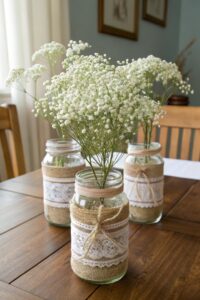

There was something adventurous about creating a fairy garden in such a limited space—staged on a narrow balcony between a folding chair and a line of herbs that were barely surviving. I had zero expectations, just a handful of pebbles, an old teacup, and this quiet curiosity about whether something magical could exist in such a small corner. As I arranged each piece, I realized it wasn’t about having space—it was about seeing possibility where others might just see clutter. That tiny setup ended up becoming the coziest, most enchanting spot in my home, and it completely changed how I looked at decorating small spaces.
There’s something incredibly comforting about building a miniature world with your own hands, especially when life feels a bit overwhelming or chaotic. I found myself slowing down, paying attention to textures, colors, and tiny details that I would normally overlook. It felt almost therapeutic, like creating a little escape that didn’t require packing a bag or going anywhere at all. And honestly, isn’t that kind of what we all need sometimes—a small, beautiful place that feels like it belongs only to us?
Since then, I’ve experimented with all kinds of fairy garden styles, from rustic woodland vibes to slightly whimsical, almost storybook-inspired setups that feel straight out of a dream. Some worked beautifully, others… not so much, but every single one taught me something new about creativity and space. If you’ve ever thought your home was too small for something magical, I promise you—it’s not. These ideas are designed to fit into the tiniest corners while still making a big, charming impact.
Teacup Fairy Garden
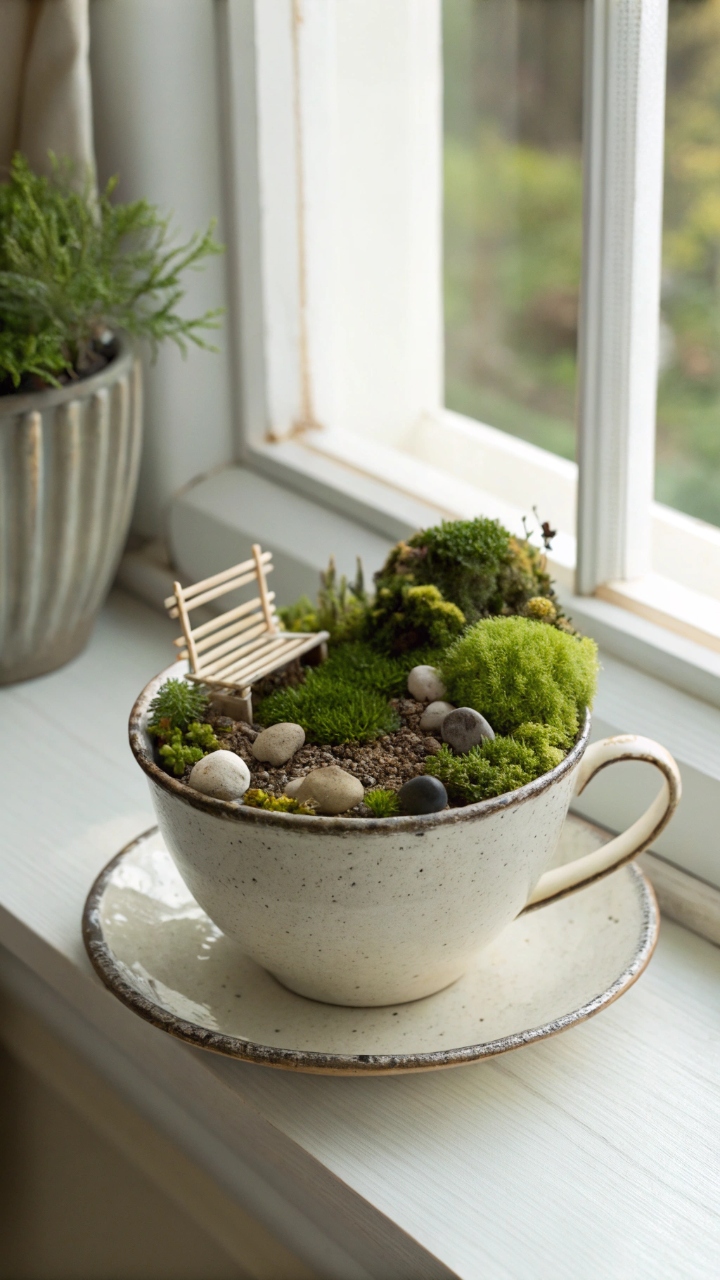
There’s something undeniably adorable about transforming a simple teacup into a miniature fairy paradise, especially when space is super tight and you want something quick but still impactful. I once used an old chipped cup I couldn’t bring myself to throw away, layering it with moss, tiny stones, and a delicate little bench that looked like it belonged in a storybook. The scale alone makes everything feel extra precious, and the way the elements fit together creates a sense of intimacy that larger setups sometimes lose. You can place it on a windowsill, a desk, or even your bedside table, and it instantly adds charm without overwhelming the space. Doesn’t it feel kind of magical to turn something forgotten into something beautiful? It’s low effort, high payoff, and honestly, a total win.
Pro Tip: Choose shallow-root plants like moss or baby succulents so your teacup garden stays healthy and easy to maintain.
Broken Pot Fairy Garden
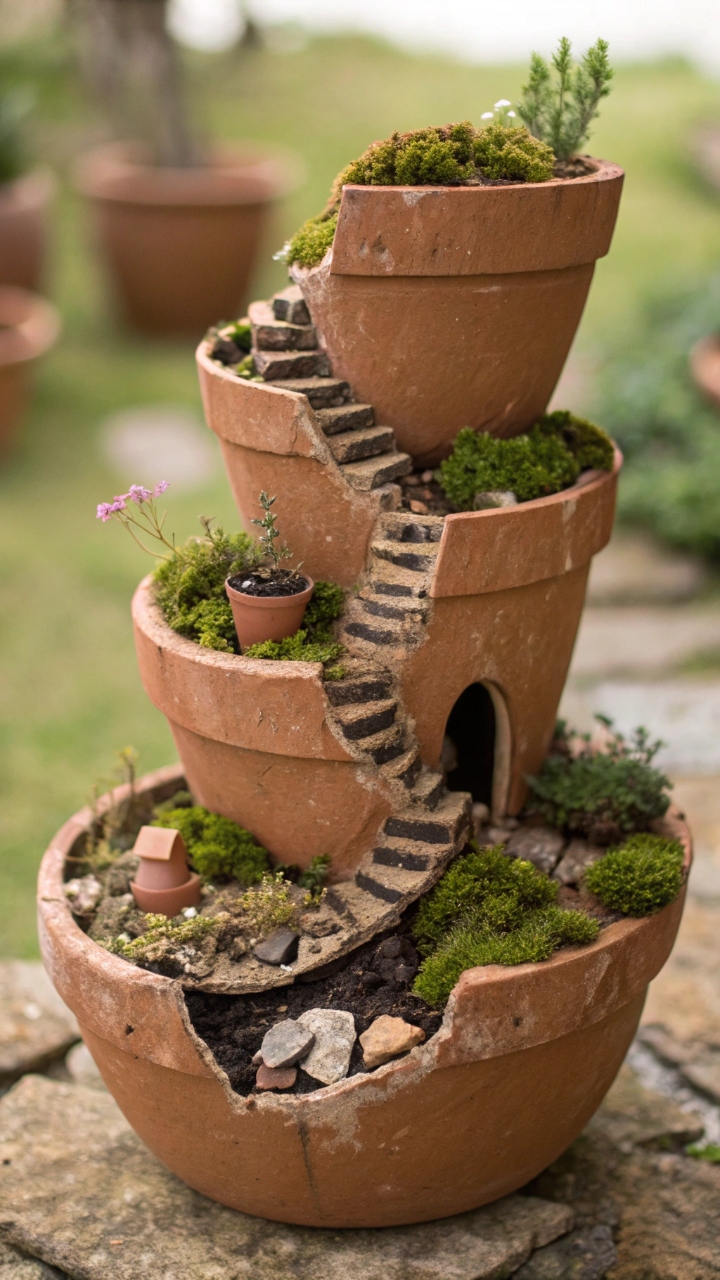
Instead of tossing out a cracked pot, why not turn it into a layered fairy garden that looks like a tiny hillside village bursting with character? I love how the broken edges naturally create levels, almost like terraces, giving you the perfect opportunity to add stairs, pathways, and little nooks that make the scene feel alive. When I made mine, I leaned into the imperfections, using the jagged edges as part of the design rather than trying to hide them. It ends up looking intentionally rustic, like a secret fairy town carved into the earth. Isn’t it funny how something “ruined” can become the most interesting piece in your space? The depth and dimension make it way more dynamic than a flat arrangement, which is honestly pretty cool.
Pro Tip: Secure broken pieces with soil or adhesive to create stable tiers before adding decorations.
Mason Jar Fairy Garden
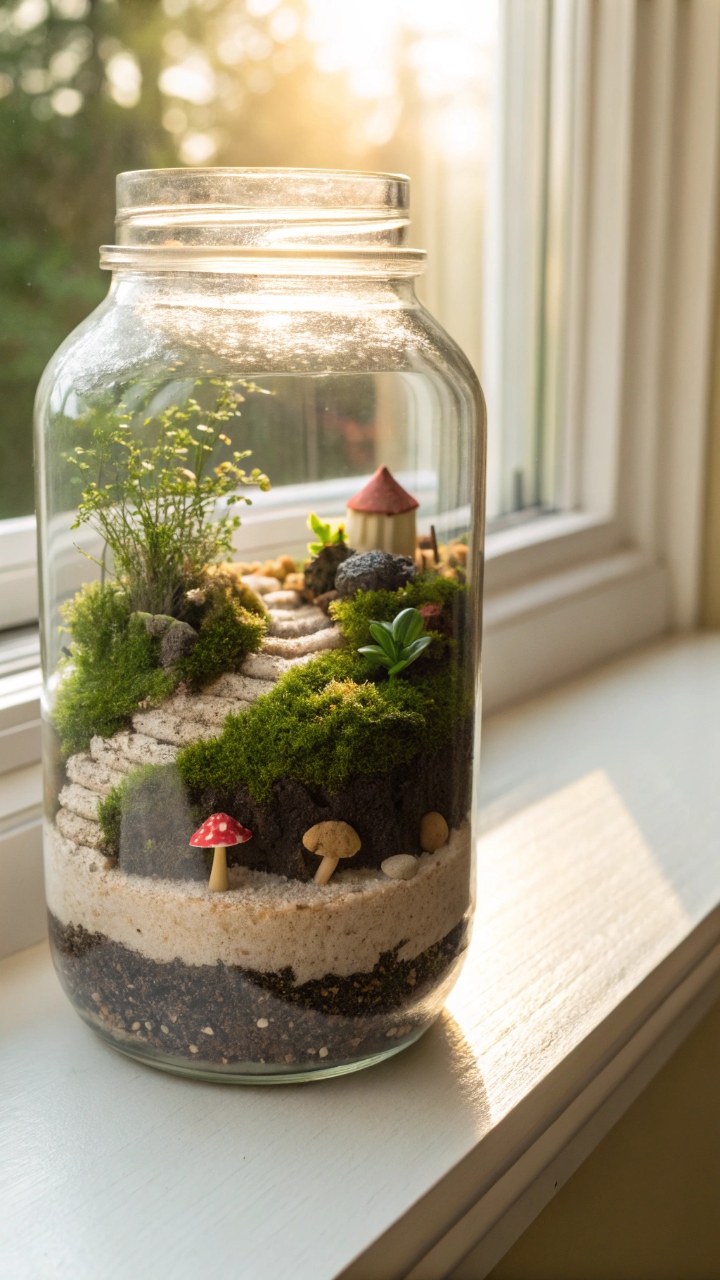
A mason jar fairy garden feels like capturing a tiny magical world inside glass, almost like a snow globe but with a natural, earthy twist. I remember placing one near my window where sunlight would hit it just right, and the way the light filtered through the layers made everything glow softly. Because it’s enclosed, it also feels more protected and contained, which is perfect if you want something low-maintenance. You can create little pathways, add miniature mushrooms, and even include tiny figurines that look like they’re mid-adventure. Doesn’t it feel a bit like bottling up a dream? Plus, it’s compact enough to fit literally anywhere, even on the smallest shelf.
Pro Tip: Leave the lid slightly open or use it intermittently to prevent excess moisture buildup inside the jar.
Wooden Crate Fairy Garden
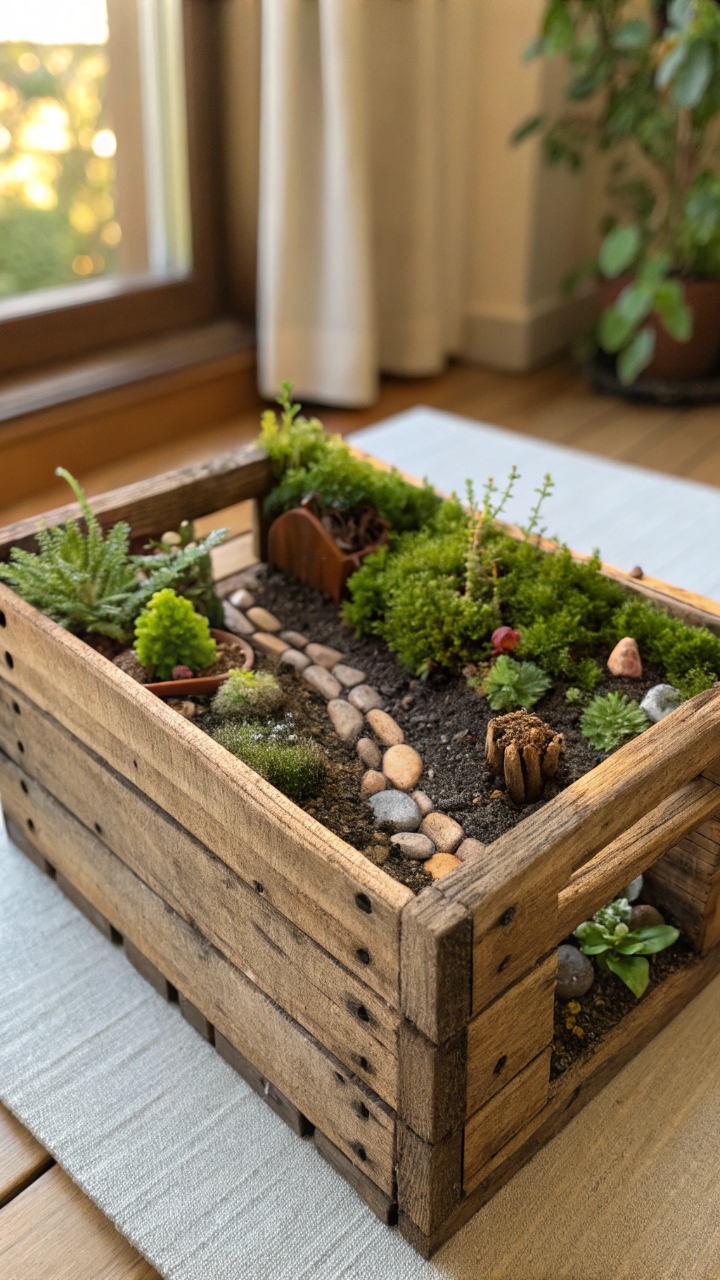
Using a small wooden crate gives your fairy garden a rustic, grounded feel that works beautifully in both indoor and outdoor spaces. I once found an old crate at a flea market and instantly saw the potential—it already had that weathered look that makes everything feel authentic. Filling it with layers of soil, moss, and tiny decorative elements creates a scene that feels like a forest floor brought to life. The structure also makes it easy to move around, which is great if you like rearranging your space (guilty, same). Isn’t it satisfying when something simple turns into a statement piece? It’s sturdy, versatile, and honestly kind of aesthetic in that effortless way.
Pro Tip: Line the crate with plastic or landscaping fabric to protect the wood and improve moisture control.
Hanging Basket Fairy Garden
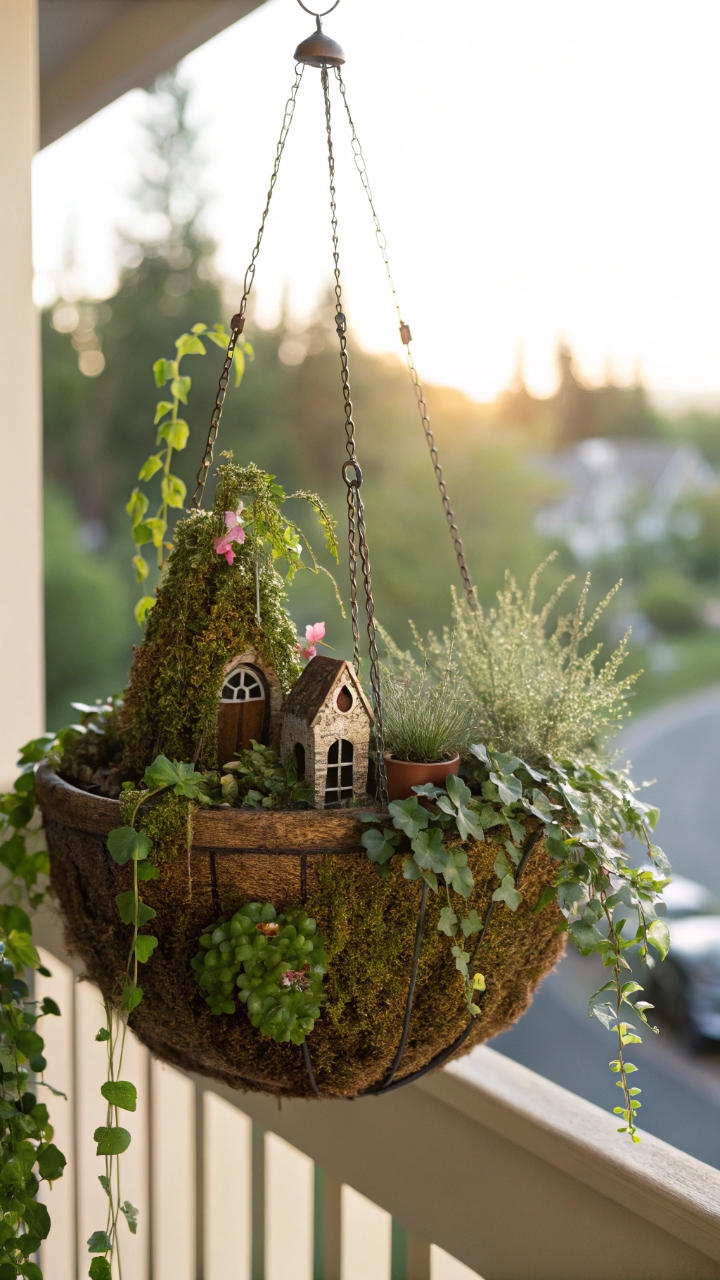
If you’re short on surface space, hanging your fairy garden is such a clever solution that feels both practical and visually interesting. I tried this once on my balcony, and it instantly made the area feel more layered and alive, like there was something magical floating in the air. The cascading plants add movement, while tiny decorations peek through in the most charming way. It’s unexpected, which makes it even more fun to look at, especially when it sways gently with the breeze. Doesn’t it feel like fairies would actually live somewhere like that? It’s a great way to maximize vertical space without cluttering your floor or shelves.
Pro Tip: Use lightweight soil and decorations to keep the basket easy to hang and secure.
Drawer Fairy Garden
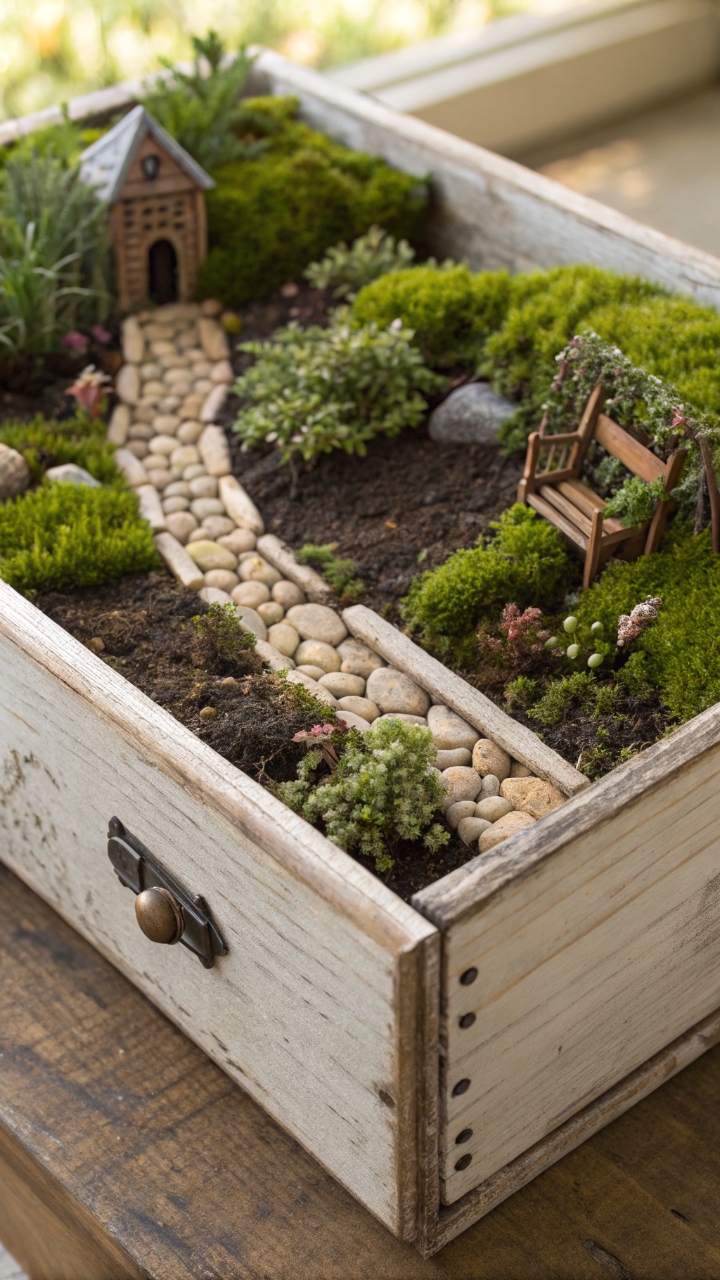
An old drawer can become the perfect base for a fairy garden that feels like a hidden world tucked inside forgotten furniture. I once used a drawer from a broken dresser, and the moment I filled it with greenery and tiny details, it felt like it had a whole new purpose. The rectangular shape gives you plenty of room to play with layout, creating paths, sections, and little focal points. It’s almost like designing a miniature landscape, which is honestly so satisfying. Doesn’t it feel amazing to repurpose something instead of throwing it away? Plus, it adds a unique, slightly vintage charm to your space.
Pro Tip: Drill small drainage holes at the bottom to prevent water from collecting.
Book Fairy Garden
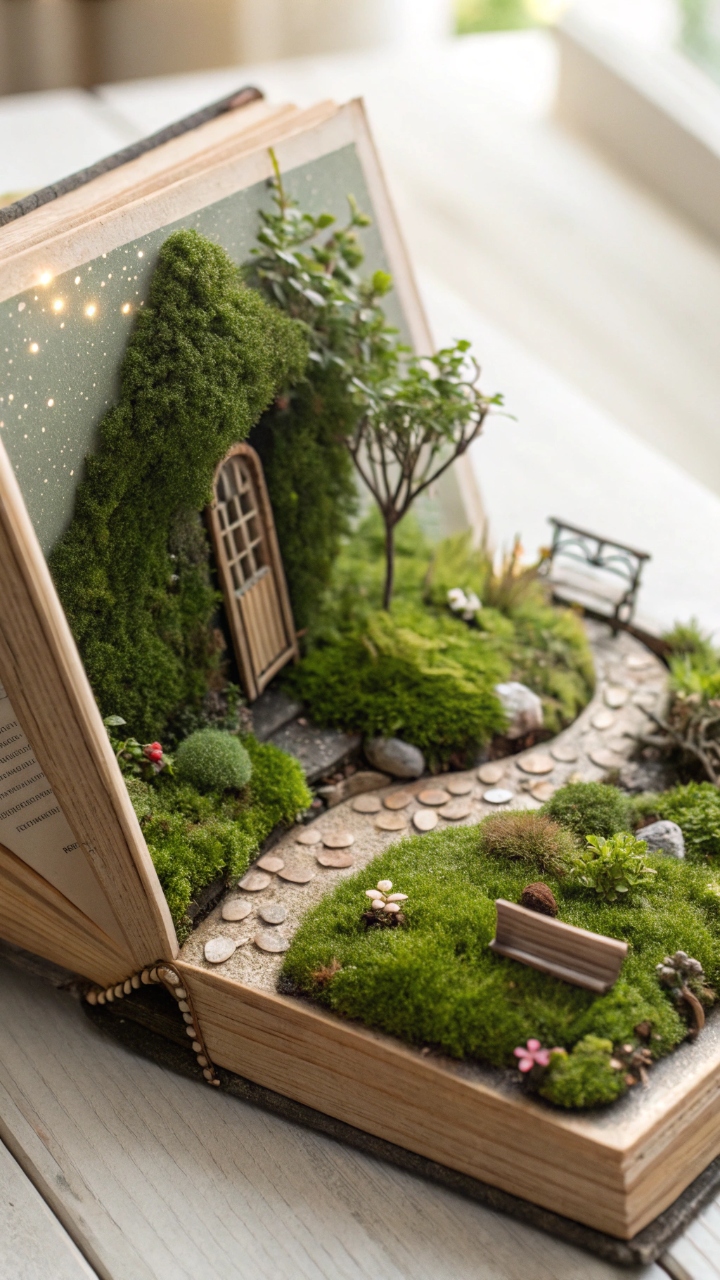
Turning an old hardcover book into a fairy garden is one of those ideas that feels both creative and slightly whimsical in the best way. I remember carving out the center pages carefully, then layering in moss and tiny decorations that made it look like a secret world hidden within the story itself. The contrast between the structured book and the organic elements creates something truly unique. It’s like blending imagination with nature in a literal way, which is honestly kind of genius. Doesn’t it feel like something straight out of a fantasy novel? It’s compact, eye-catching, and perfect for desks or shelves.
Pro Tip: Seal the inside pages with glue or mod podge to strengthen the structure and protect against moisture.
Tin Can Fairy Garden
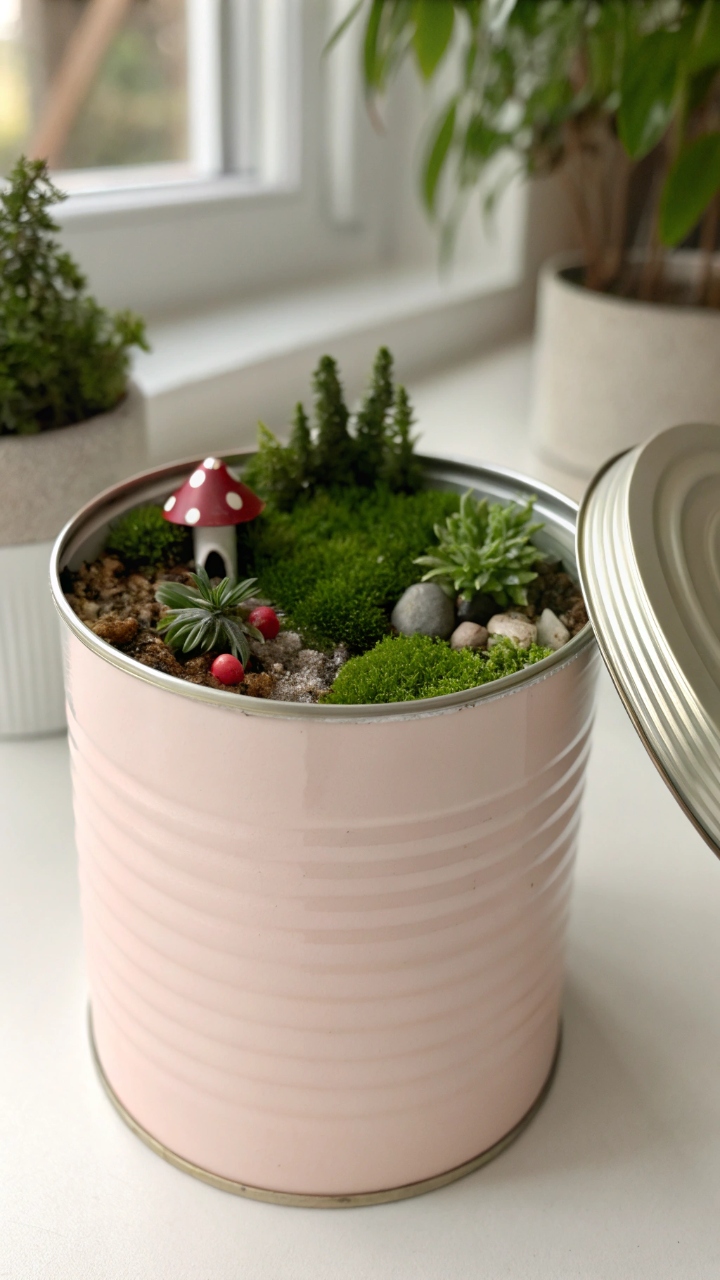
A simple tin can might not seem like much, but with a little creativity, it can turn into a charming mini garden that fits just about anywhere. I’ve painted cans in soft pastel colors before adding moss and tiny accessories, and the transformation is seriously satisfying. The cylindrical shape gives it a clean, modern look while still feeling playful and cute. It’s also super budget-friendly, which makes it perfect if you’re just starting out. Isn’t it wild how something so ordinary can become something so adorable? It’s small, versatile, and honestly kind of addictive to make.
Pro Tip: Smooth out sharp edges or cover them with decorative tape for safety.
Terrarium Fairy Garden
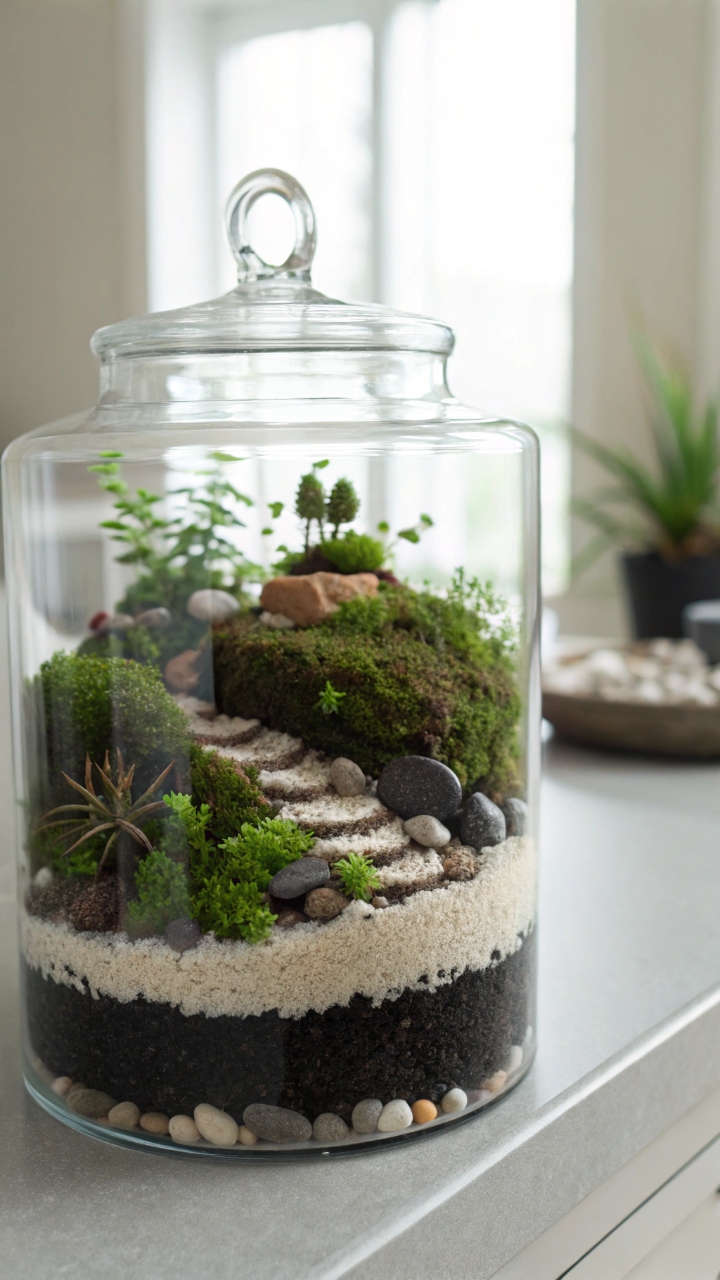
A terrarium-style fairy garden feels like a tiny ecosystem that you get to design and care for, which is both calming and rewarding. I love how the glass container creates a clear view from all angles, making every detail visible and important. When I built one, I focused on layering textures—soil, sand, moss—and it gave the whole setup depth and richness. It’s almost like creating a living piece of art that evolves over time. Doesn’t it feel satisfying to watch something grow in a space you designed? It’s perfect for small areas because it stays contained and neat.
Pro Tip: Use activated charcoal at the base to keep the environment fresh and odor-free.
Shoe Fairy Garden

Repurposing an old shoe into a fairy garden is one of those quirky ideas that somehow just works, especially if you lean into the playful vibe. I once used a worn-out boot, and the result was surprisingly charming, with plants spilling out like a tiny overgrown forest. The shape adds character automatically, so you don’t need to do much to make it interesting. It’s definitely a conversation starter, and honestly, people love it because it’s unexpected. Isn’t it fun when decor doesn’t take itself too seriously? It’s creative, slightly weird, and totally memorable.
Pro Tip: Add drainage holes and use breathable materials to keep plants healthy.
Mini Wheelbarrow Fairy Garden
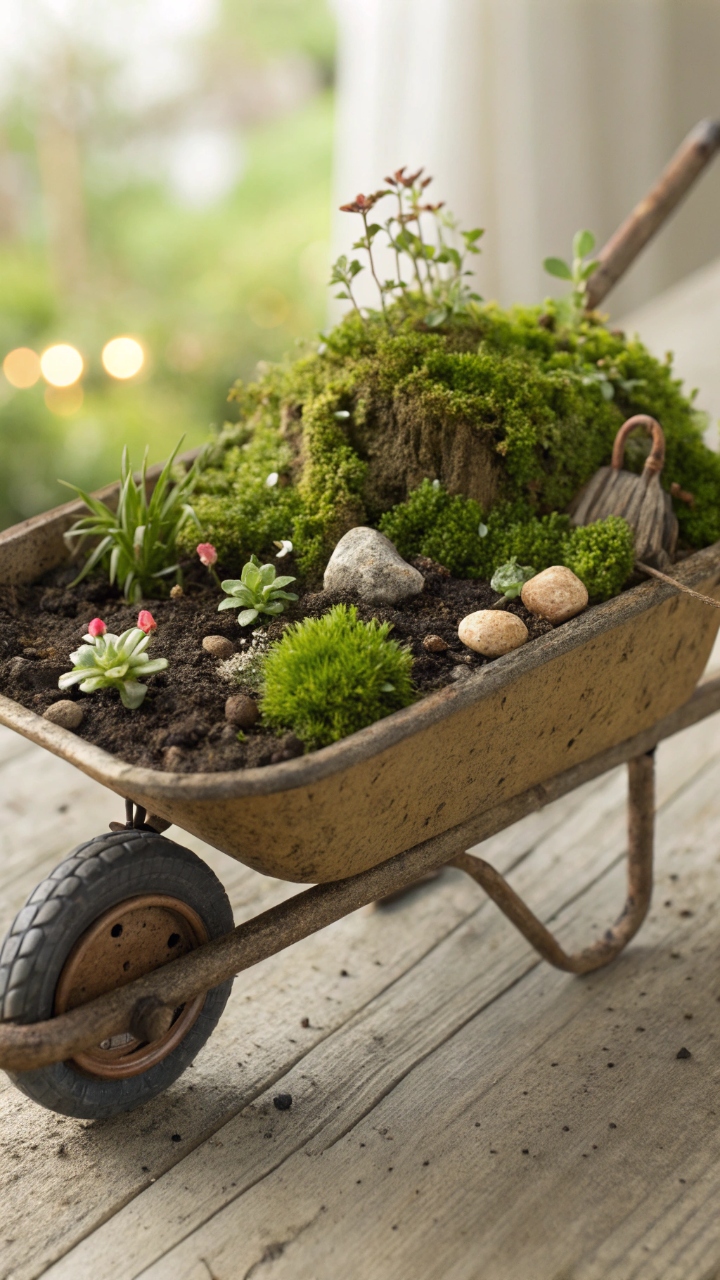
A miniature wheelbarrow instantly gives your fairy garden a story, like it’s mid-task in some tiny magical world. I found one at a garden shop and couldn’t resist turning it into a moving scene filled with greenery and tiny tools. The handles and shape make it easy to reposition, which is great if you like changing things up. It feels playful and dynamic, almost like the fairies just stepped away for a second. Doesn’t that sense of movement make it more engaging? It’s a small detail that adds a lot of personality.
Pro Tip: Balance the weight evenly so the wheelbarrow stays stable and doesn’t tip over.
Birdhouse Fairy Garden
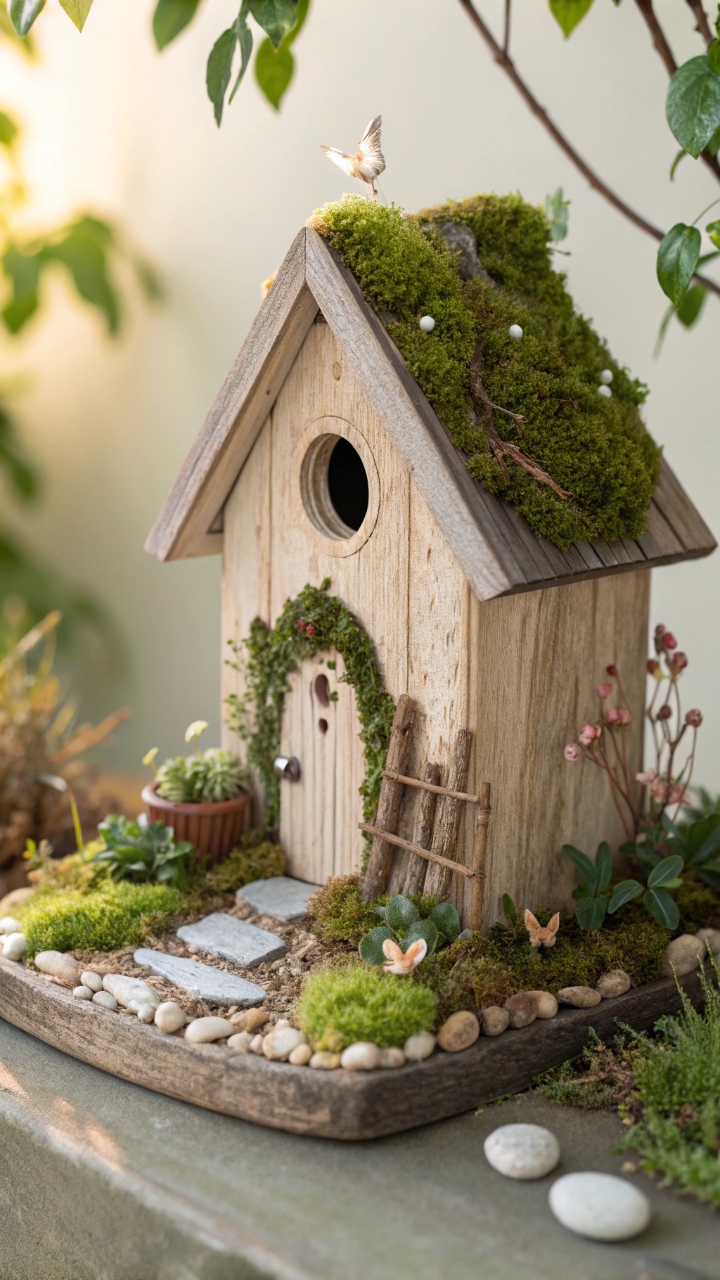
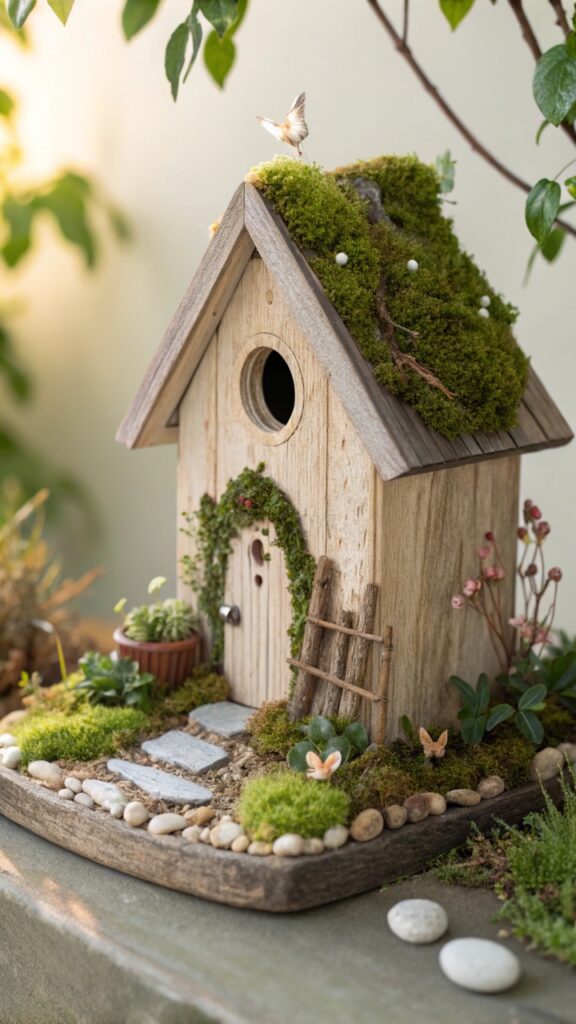
Transforming a birdhouse into a fairy garden creates a vertical design that feels cozy and a little whimsical. I once mounted one on a wall, and it became this charming focal point that drew attention without taking up floor space. The enclosed structure makes it feel like a real home, which adds to the magic. You can decorate both inside and around it, creating layers of interest. Doesn’t it feel like a tiny sanctuary? It’s perfect for small spaces that need a bit of height and character.
Pro Tip: Ensure proper ventilation and light if you’re adding live plants inside.
Glass Bowl Fairy Garden
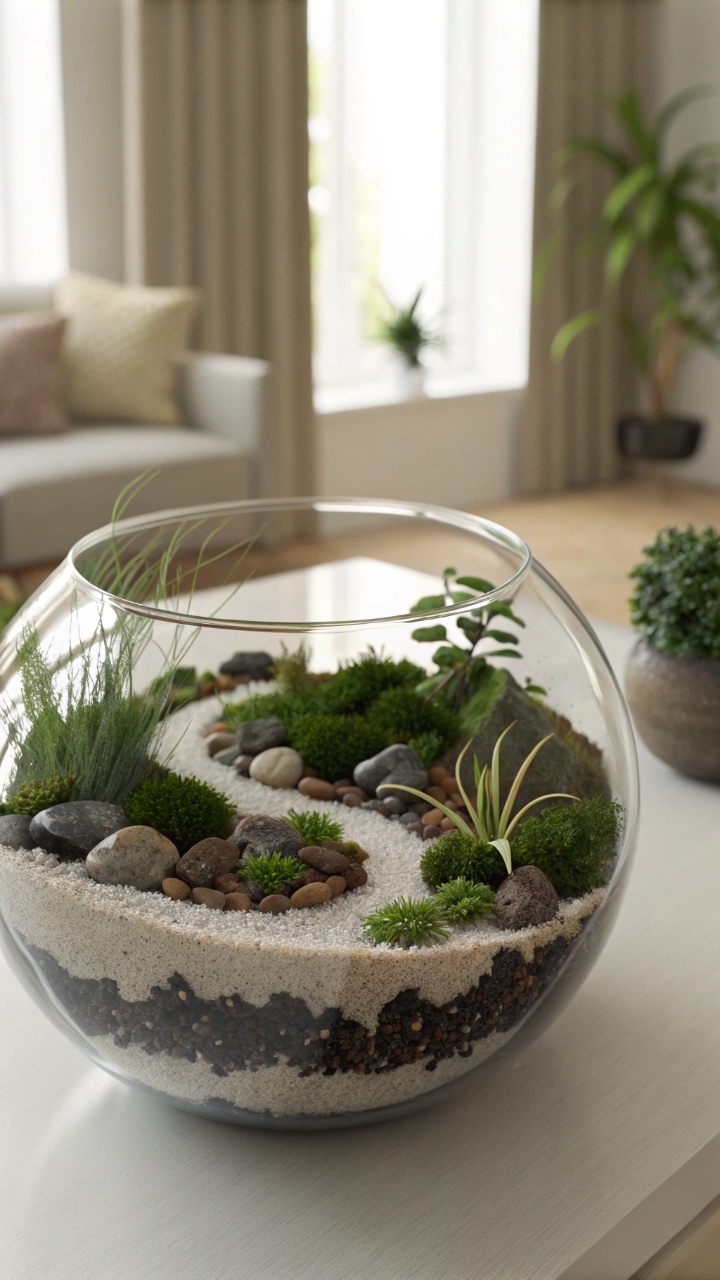
A simple glass bowl can become a stunning fairy garden that feels clean, modern, and incredibly easy to style. I like how the open top allows you to interact with it more freely, rearranging elements whenever inspiration hits. The transparency highlights every layer, making even simple designs look intentional and polished. It’s perfect for tabletops, especially when you want something subtle but still eye-catching. Doesn’t it feel nice to have something beautiful that’s also low effort? It’s minimal, elegant, and super versatile.
Pro Tip: Avoid overwatering since glass containers don’t have drainage holes.
Outdoor Tray Fairy Garden
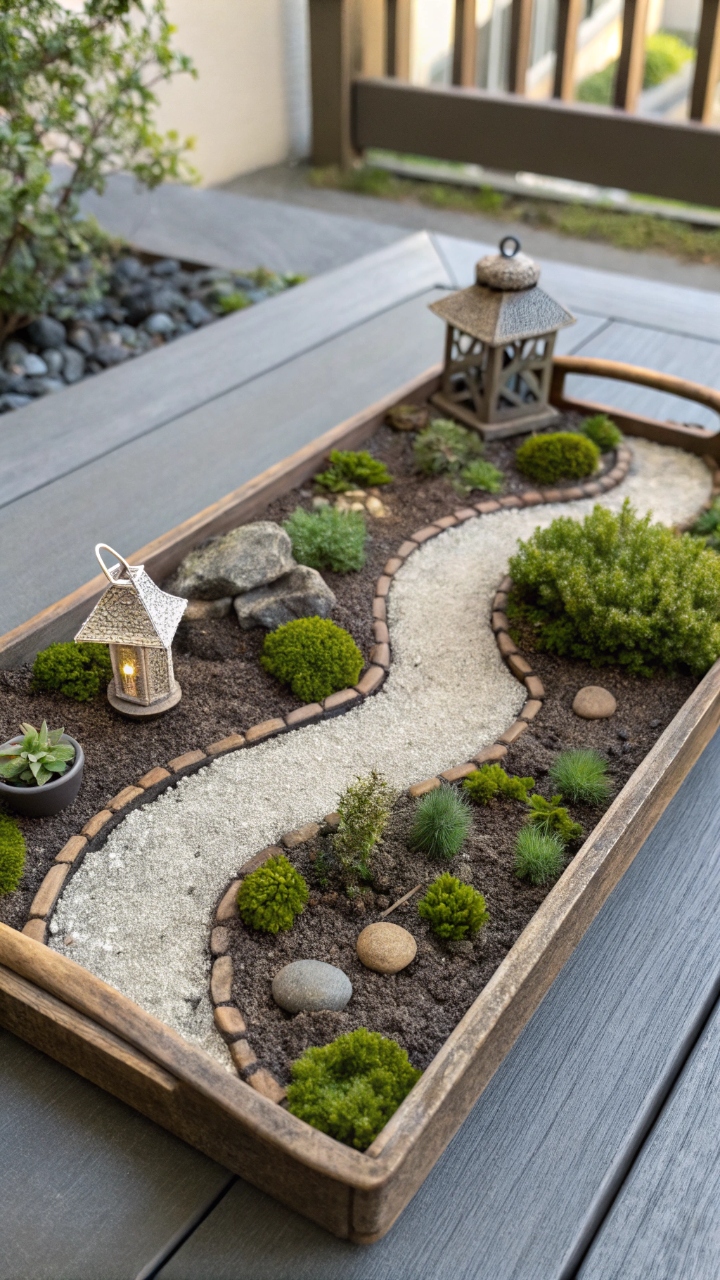
Using a tray for your fairy garden gives you a flexible, portable setup that’s perfect for patios, balconies, or even indoor spaces. I once styled one with tiny gravel paths and miniature lanterns, and it felt like a tiny outdoor escape right at my fingertips. The flat surface makes it easy to experiment with layouts, which is great if you’re still figuring out your style. It’s also easy to move, so you can change its location depending on your mood. Doesn’t that kind of flexibility make decorating more fun? It’s simple, adaptable, and quietly charming.
Pro Tip: Choose a tray with raised edges to keep soil and decorations contained.
Conclusion
Creating a fairy garden in a small space isn’t about limitations—it’s about imagination, intention, and finding beauty in the details that others might overlook. Each tiny setup becomes a reflection of your creativity, your mood, and even your memories, which makes it feel deeply personal in a way that store-bought decor rarely does. I’ve found that even the smallest projects can shift the entire atmosphere of a space, adding warmth, softness, and a sense of quiet magic that’s hard to explain but easy to feel. Isn’t it amazing how something so small can make such a big difference? It reminds you that creativity doesn’t need a lot of room to grow.
What I love most about these fairy garden ideas is how adaptable they are, whether you’re working with a windowsill, a corner of your desk, or a tiny balcony that barely fits a chair. You can keep things simple or go all out, depending on your mood and energy, and there’s no right or wrong way to do it. Every piece you add tells a story, even if it’s just for you, and that’s what makes it special. So if you’ve been waiting for the “perfect” space to start, this is your sign to just go for it. Because honestly, magic doesn’t need space—it just needs a little creativity and a willingness to begin.