
I remember looking at a pile of backyard scrap—cracked pots and skeletal furniture—and feeling a strange pull. It wasn’t just clutter anymore; it was a question. I stood there wondering if, with a little help, these forgotten things could speak again. The sun was hitting everything just right, casting long shadows and making even the worn-out pieces look oddly beautiful. That was the moment it hit me: maybe the problem wasn’t the stuff, maybe it was how I was seeing it. Instead of trash, what if this was untapped charm just waiting for a second life? That simple shift turned into a full-on backyard transformation I didn’t see coming.
At first, I kept it small, testing ideas without overthinking them, because let’s be real—who wants to invest a ton into something that might flop? But as I started placing pieces around the garden, mixing textures and layering elements, something magical happened. The space began to feel personal, almost like every item had a memory stitched into it. There’s something deeply satisfying about taking something forgotten and giving it purpose again, don’t you think? It’s like you’re creating beauty out of thin air, except it’s actually sitting right there in your backyard.
Now, I can’t even walk through my garden without noticing how much character those once-neglected items bring to the space. It’s not perfect, and honestly, that’s the whole point—it feels lived-in, creative, and a little bit rebellious in the best way. Repurposing junk isn’t just about saving money (although that’s a nice bonus); it’s about telling a story through design. And if you’ve got a pile of “junk” sitting somewhere, trust me—you’re sitting on gold, my friend.
Old Wheelbarrow Flower Planter
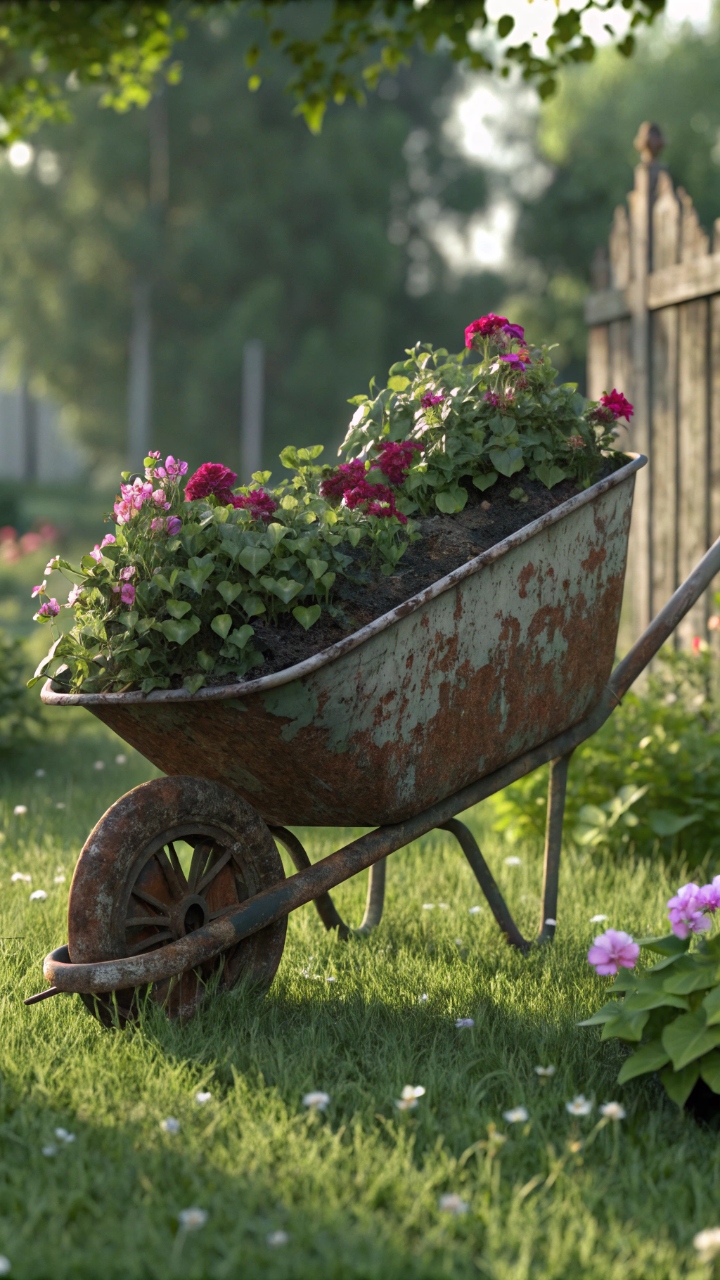
There’s something ridiculously charming about turning an old, beat-up wheelbarrow into a blooming garden feature, especially when the chipped paint and rust add that perfect vintage, weathered texture. I remember dragging mine out from behind the shed, thinking it was beyond saving, but once I filled it with soil and cascading flowers, it suddenly looked like it belonged in a cozy countryside magazine spread. The way the flowers spill over the edges creates this effortless, slightly wild look that feels organic and alive. It’s not about perfection—it’s about embracing that imperfect, layered charm. And honestly, isn’t that what makes a garden feel real?
Pro Tip: Drill small drainage holes at the bottom and slightly tilt the wheelbarrow for a natural “overflowing” effect.
Broken Chair Plant Stand
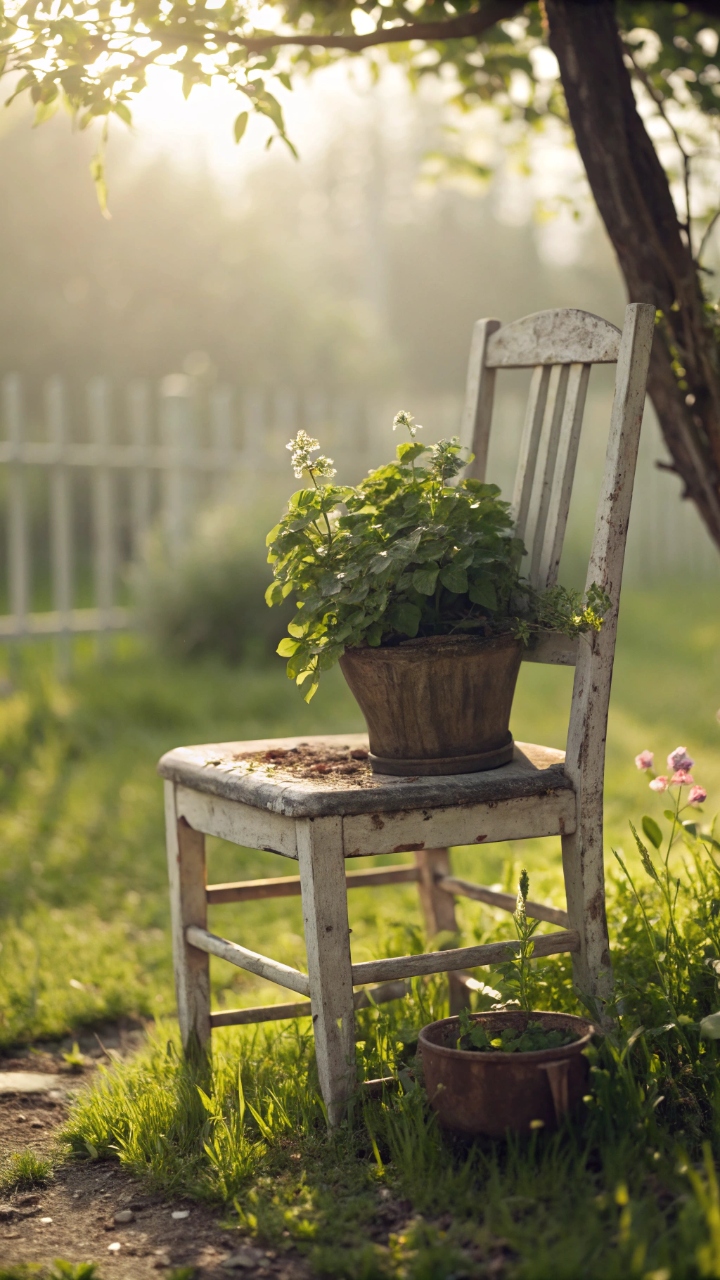
That old chair missing a seat might seem useless, but wow, it becomes something else entirely when you turn it into a plant stand with a bit of creativity and imagination. I once placed a pot right where the seat used to be, letting greenery peek through the frame, and suddenly the whole piece felt like art with a purpose. The backrest adds height, making your garden visually more dynamic, while the open structure keeps things light and airy. It’s one of those ideas that feels a little quirky, but in a good way—like, “Wait, why didn’t I think of this sooner?” kind of vibe. And let’s be honest, quirky pieces always spark conversation.
Pro Tip: Secure a wire mesh or wooden base inside the frame to hold pots safely in place.
Vintage Teapot Mini Garden
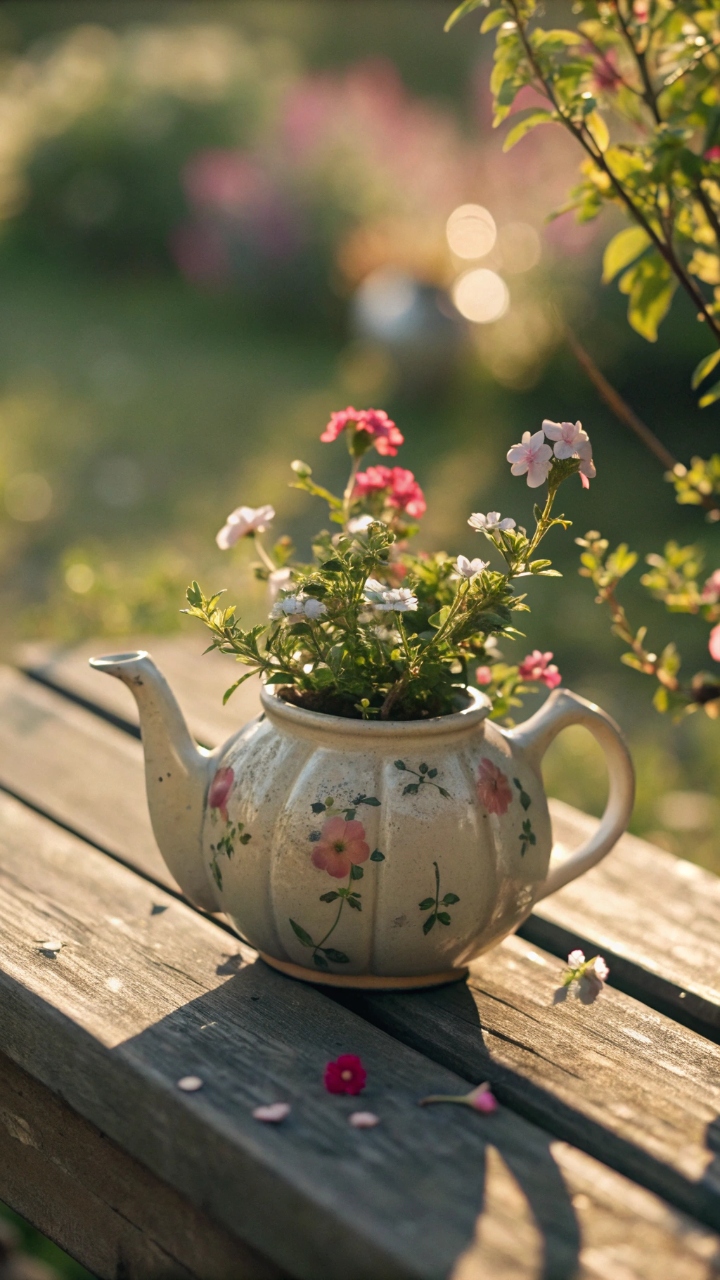
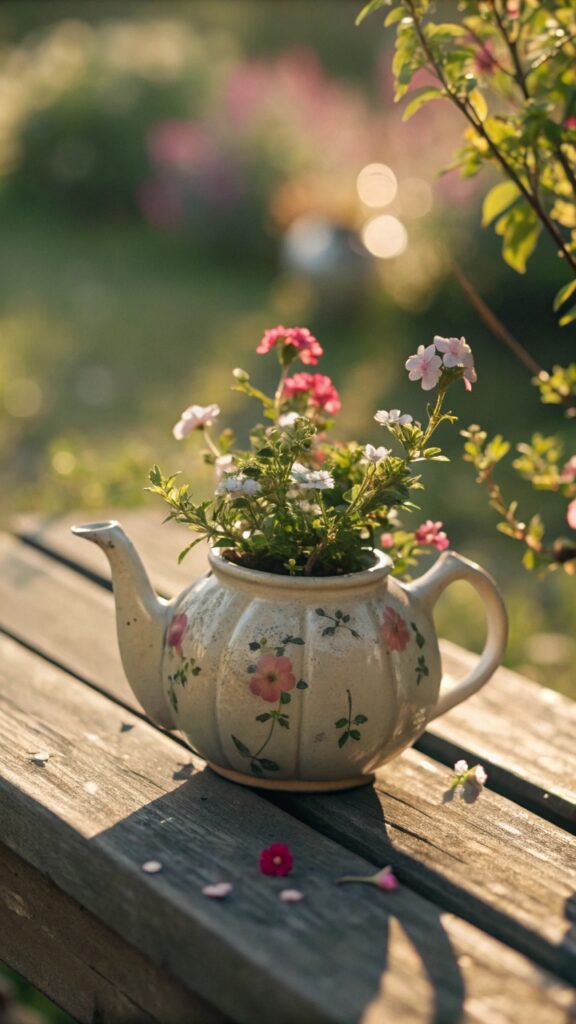
Using an old teapot as a planter feels almost poetic, especially when delicate flowers spill out like they’re being gently poured into your garden. I tried this with a chipped floral teapot I almost threw away, and now it’s one of my favorite little details because it feels so unexpectedly charming. The contrast between the fragile ceramic and vibrant greenery creates a soft, whimsical moment that draws your eye without overpowering the space. It’s small, yes, but it carries personality in a way that bigger pieces sometimes can’t. Isn’t it wild how something so tiny can shift the entire mood of a garden corner?
Pro Tip: Use succulents or herbs to keep maintenance low and preserve the teapot’s structure.
Old Ladder Vertical Garden
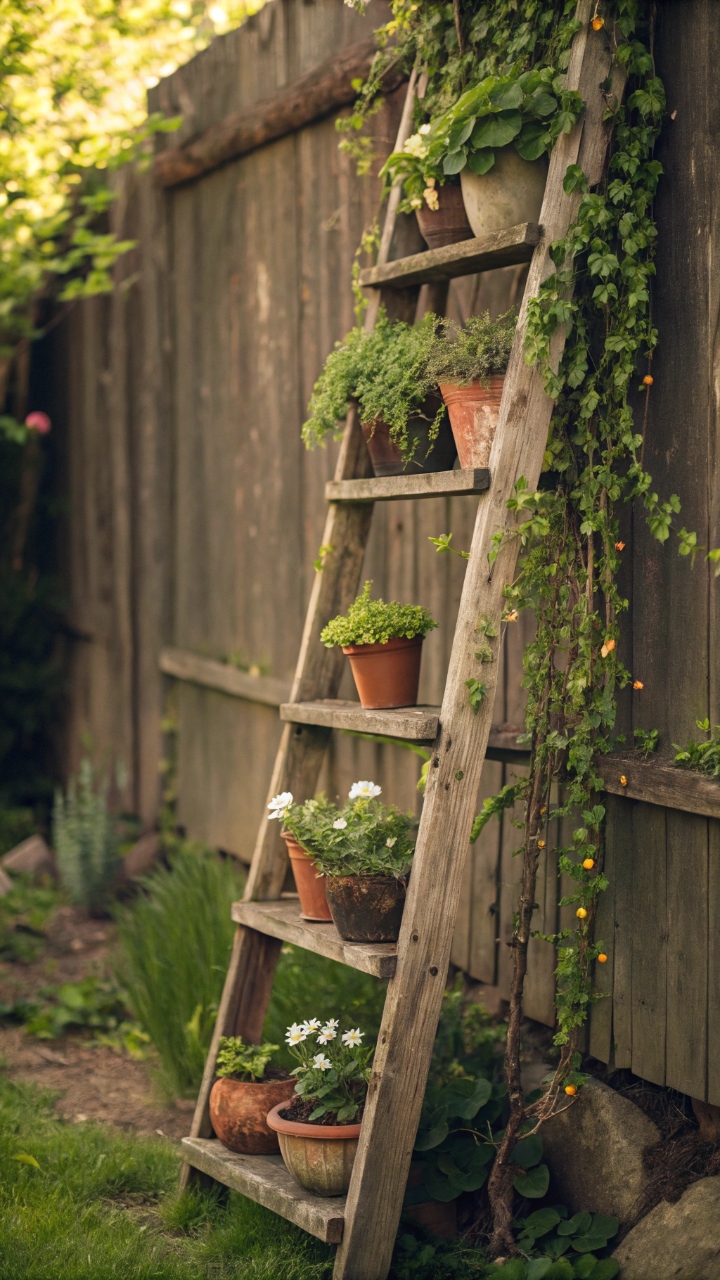
An old wooden ladder leaning against a wall or fence can instantly transform into a layered vertical garden that feels both practical and stylish. I remember propping one up just to see how it would look, and before I knew it, I was arranging pots on each step like I was styling shelves in a home decor shoot. The height variation naturally creates depth, while the worn wood adds that earthy, rustic warmth that ties everything together. It’s such an easy way to maximize space, especially if your garden is on the smaller side. And honestly, it just looks cool—no overthinking needed.
Pro Tip: Secure the ladder firmly and vary plant sizes for a more dynamic, cascading look.
Tin Can Herb Garden
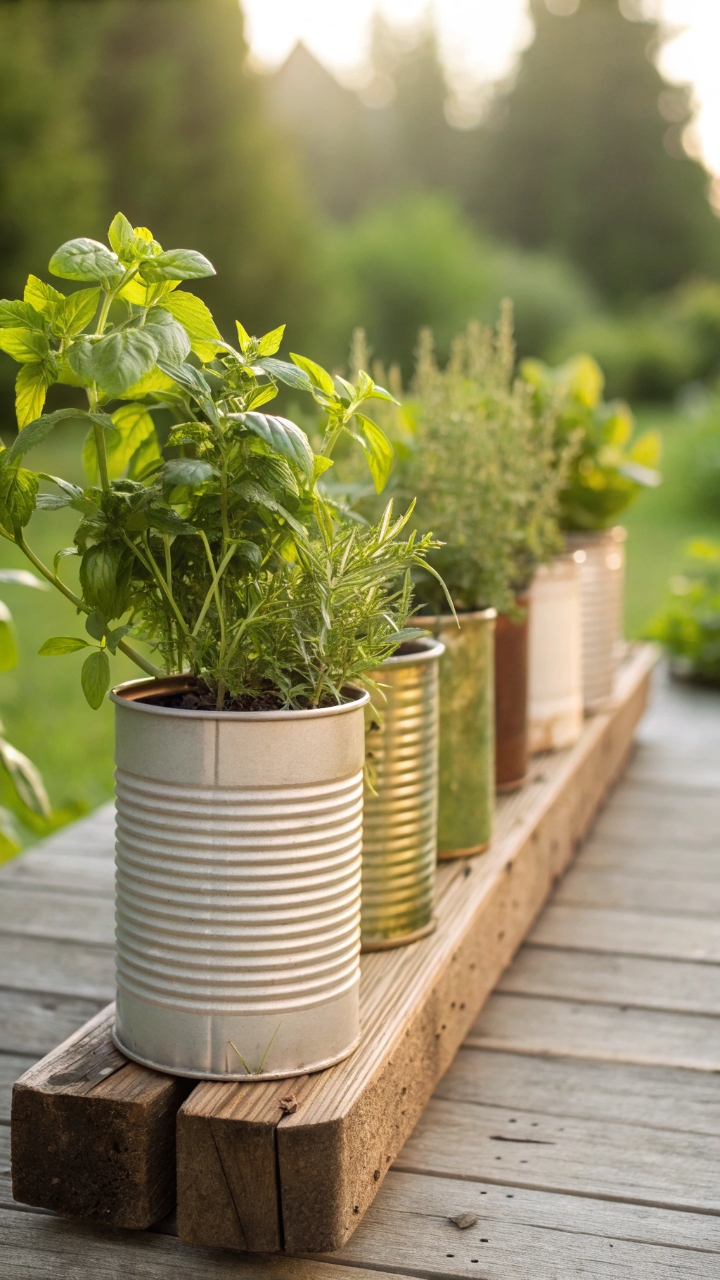
You know those empty tin cans you almost toss without a second thought? Turns out, they can become a super charming herb garden with just a little effort, and yes, it’s as easy as it sounds. I lined a few up along a wooden plank, planted basil and mint, and suddenly my space felt like a cozy little kitchen garden straight out of a lifestyle blog. The metallic finish, especially when slightly aged, adds a subtle industrial touch that balances the softness of greenery. It’s simple, affordable, and surprisingly aesthetic—like, low effort but high impact.
Pro Tip: Punch drainage holes and label each can for a neat and functional display.
Old Tires Painted Planters
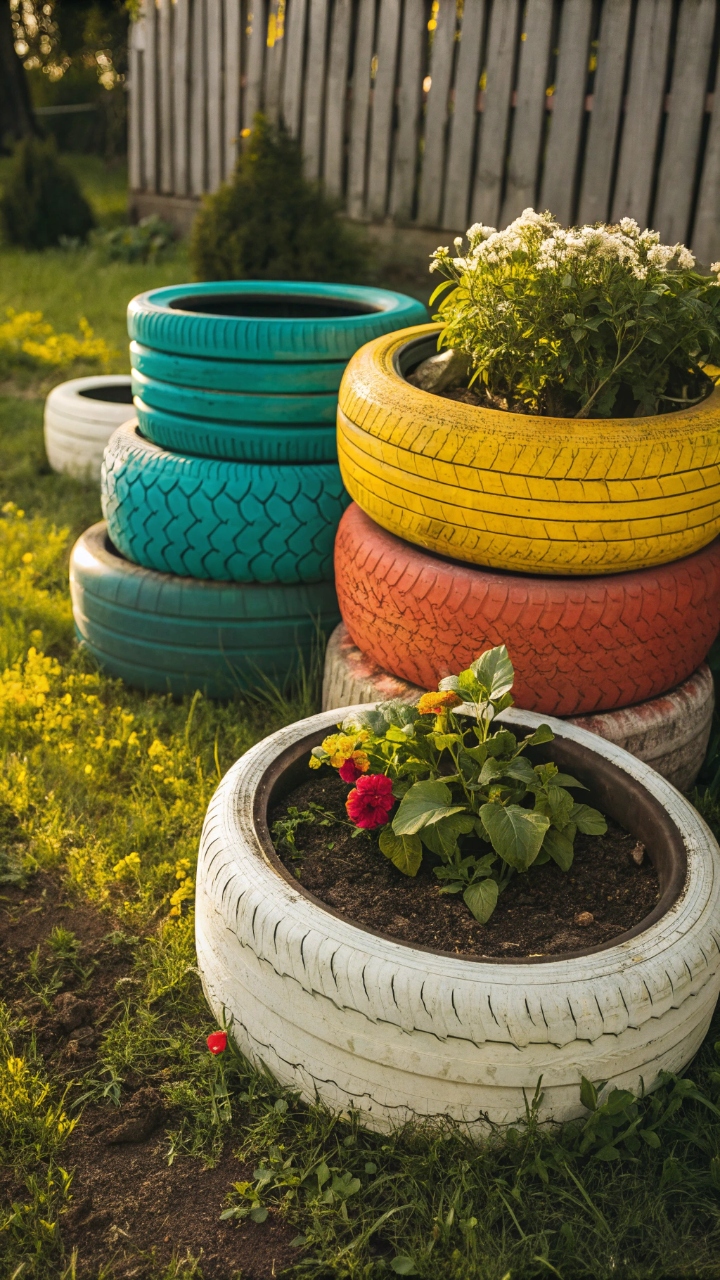
I’ll admit, I was skeptical about using old tires at first, but once painted in bold colors and stacked creatively, they became one of the most eye-catching elements in my garden. The circular shape adds a playful structure, while the bright paint transforms something gritty into something totally fun and vibrant. It’s a bit of a glow-up moment, honestly, and it proves that even the most unexpected items can have serious design potential. Plus, they’re durable and perfect for larger plants or even small shrubs. Who knew something so rough could turn into something so lively?
Pro Tip: Use weather-resistant paint and stack tires securely for added visual interest.
Rusty Tool Garden Wall Decor
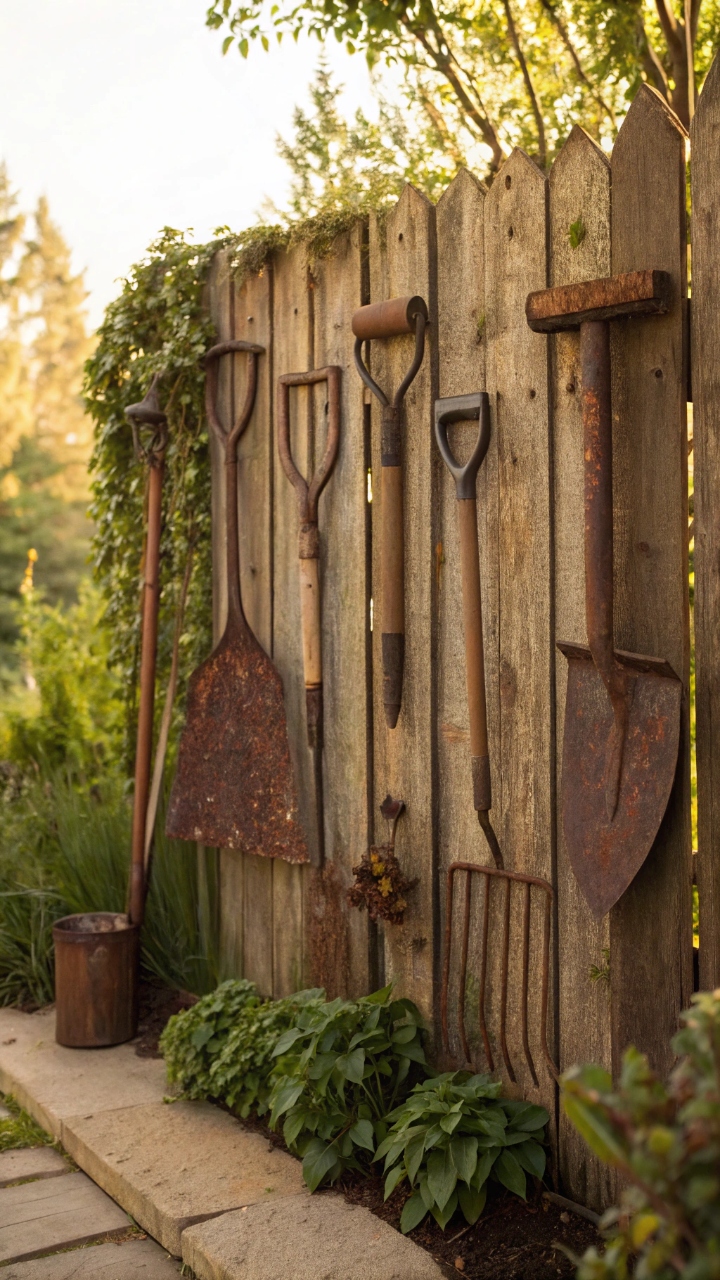
Instead of hiding old, rusty tools, I decided to hang them on a fence like a gallery wall, and wow—it completely changed the vibe of the space. The textures, shapes, and natural patina create this industrial-meets-rustic aesthetic that feels curated without trying too hard. Each piece tells a story, and together they create a layered visual that’s both rugged and artistic. It’s one of those design choices that feels bold at first, but once it’s up, it just works. And honestly, it gives your garden a bit of edge, which is kinda cool.
Pro Tip: Seal tools with a clear coat to preserve their look and prevent further rusting.
Wooden Pallet Garden Bed
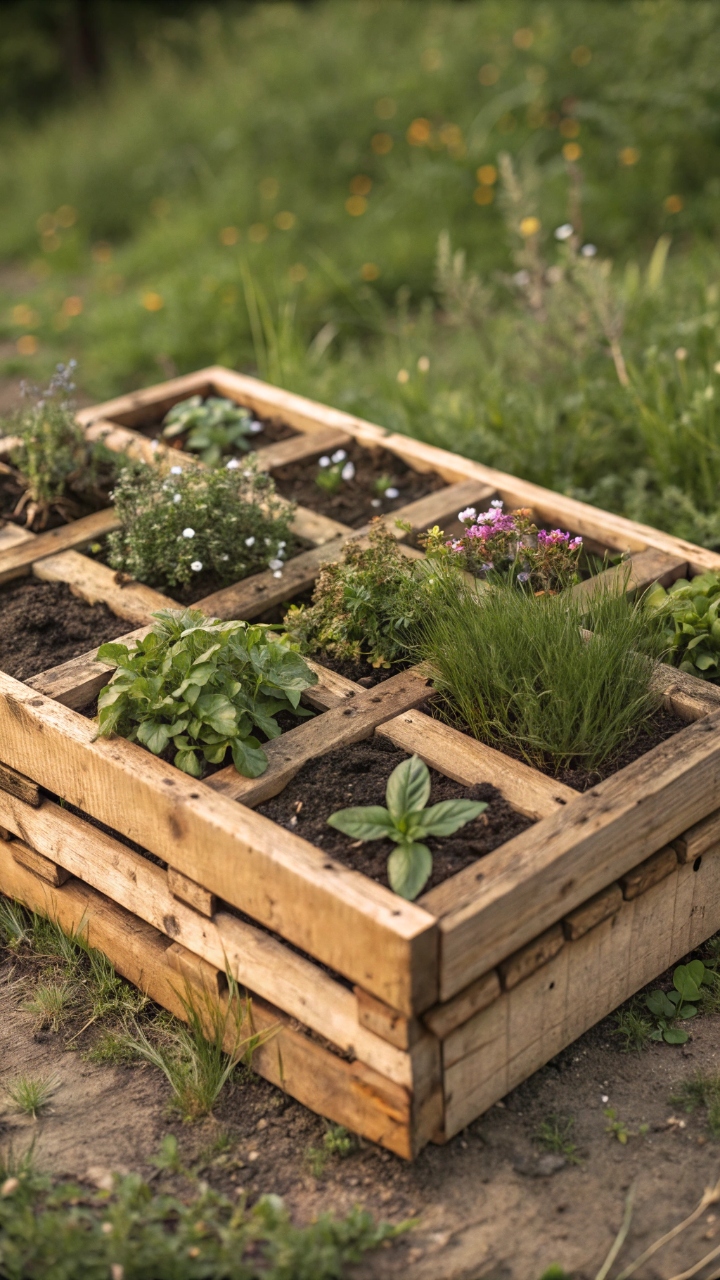
Wooden pallets are like the MVP of repurposed decor, and turning one into a garden bed is both practical and visually satisfying. I laid one flat, filled the gaps with soil, and planted herbs and flowers, and it instantly created this structured yet organic layout that felt intentional. The grid-like design keeps everything organized while still allowing for a natural, slightly wild growth pattern. It’s perfect if you want something that looks put-together without being overly polished. And let’s be honest, who doesn’t love a good DIY win?
Pro Tip: Line the pallet with landscape fabric to keep soil in place and improve durability.
Old Sink Garden Feature
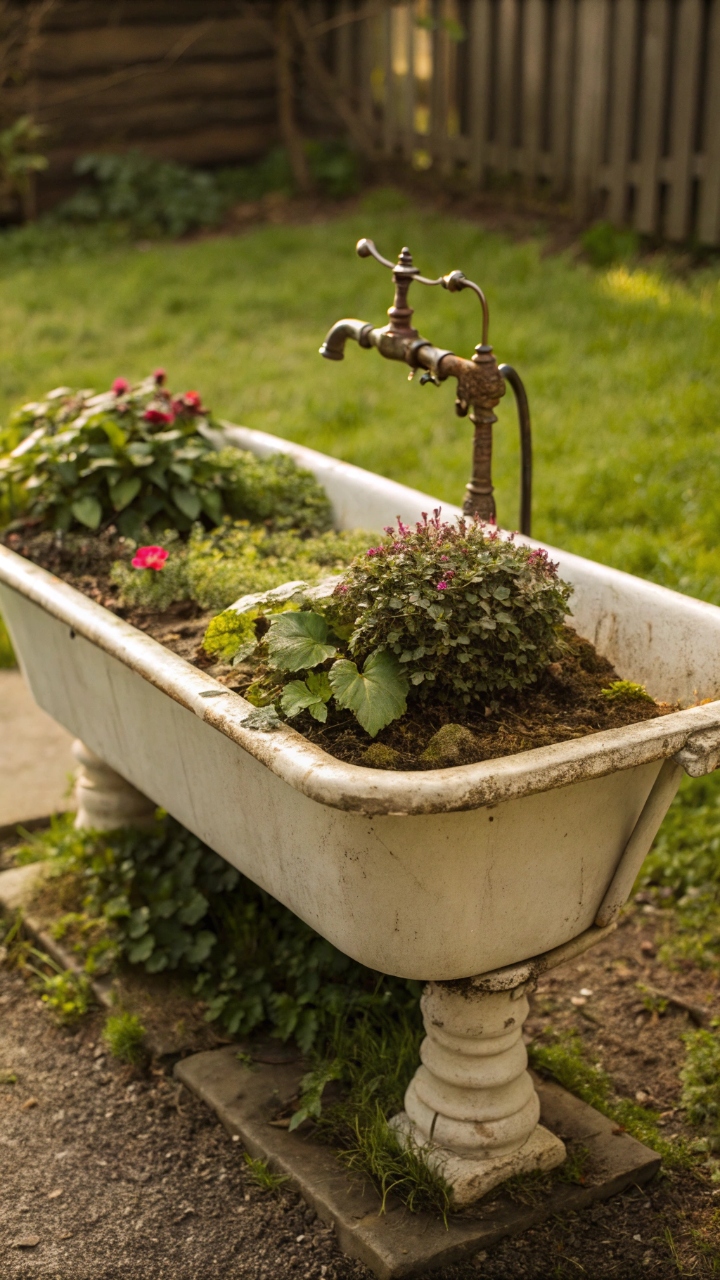
An old sink might sound like an odd choice, but trust me, it can become a stunning garden feature when filled with plants and placed strategically. I found one with a bit of wear and tear, and instead of seeing flaws, I saw character—and it paid off big time. The basin holds soil beautifully, while the faucet and structure add this unexpected architectural element that stands out in the best way. It’s quirky, yes, but also incredibly unique, and it gives your garden a personality boost like no other. Isn’t it fun when design breaks the rules a little?
Pro Tip: Ensure proper drainage by checking or modifying the sink’s outlet before planting.
Mason Jar Hanging Lights
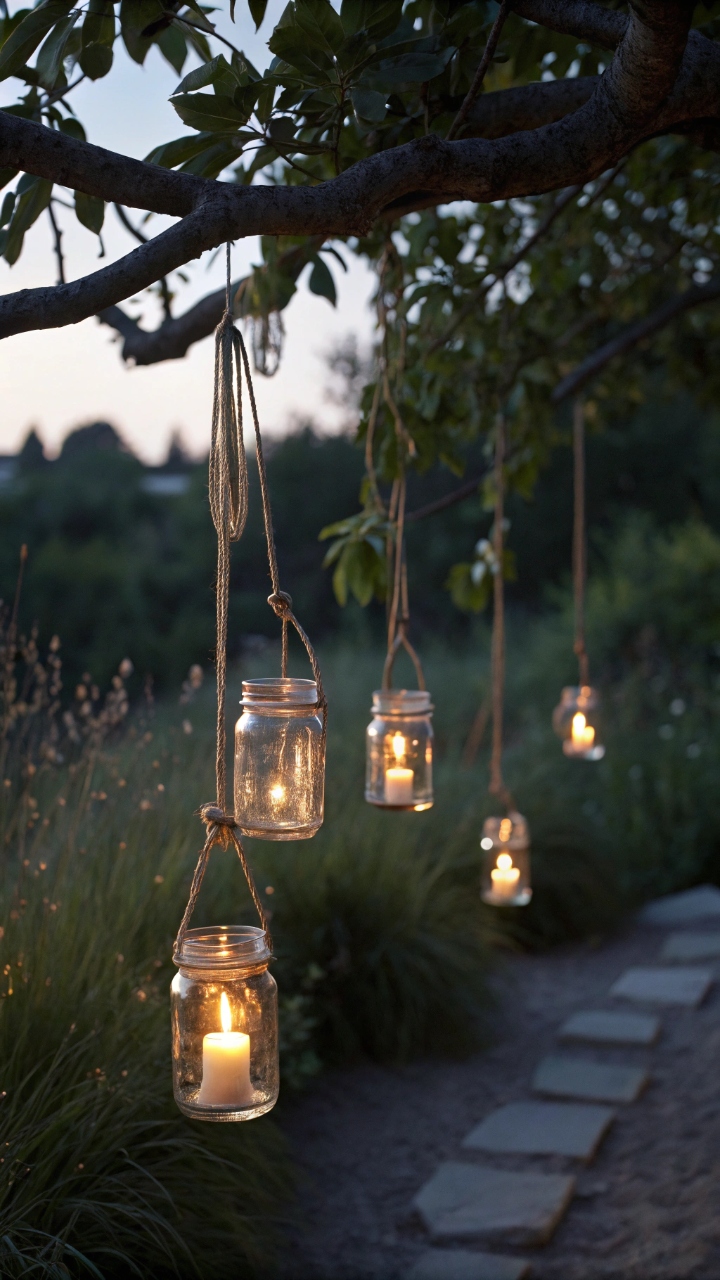
Repurposing mason jars into hanging lights adds a soft, magical glow that transforms your garden in the evening. I hung a few along a tree branch, and when the sun went down, the space felt instantly cozy and inviting. The glass catches the light beautifully, creating a warm ambiance that’s perfect for relaxing or entertaining. It’s one of those touches that feels simple but delivers major atmosphere, like your garden just leveled up overnight. And honestly, who doesn’t love a little glow-up moment like that?
Pro Tip: Use solar-powered lights inside jars for an eco-friendly and low-maintenance setup.
Old Boots Flower Planters
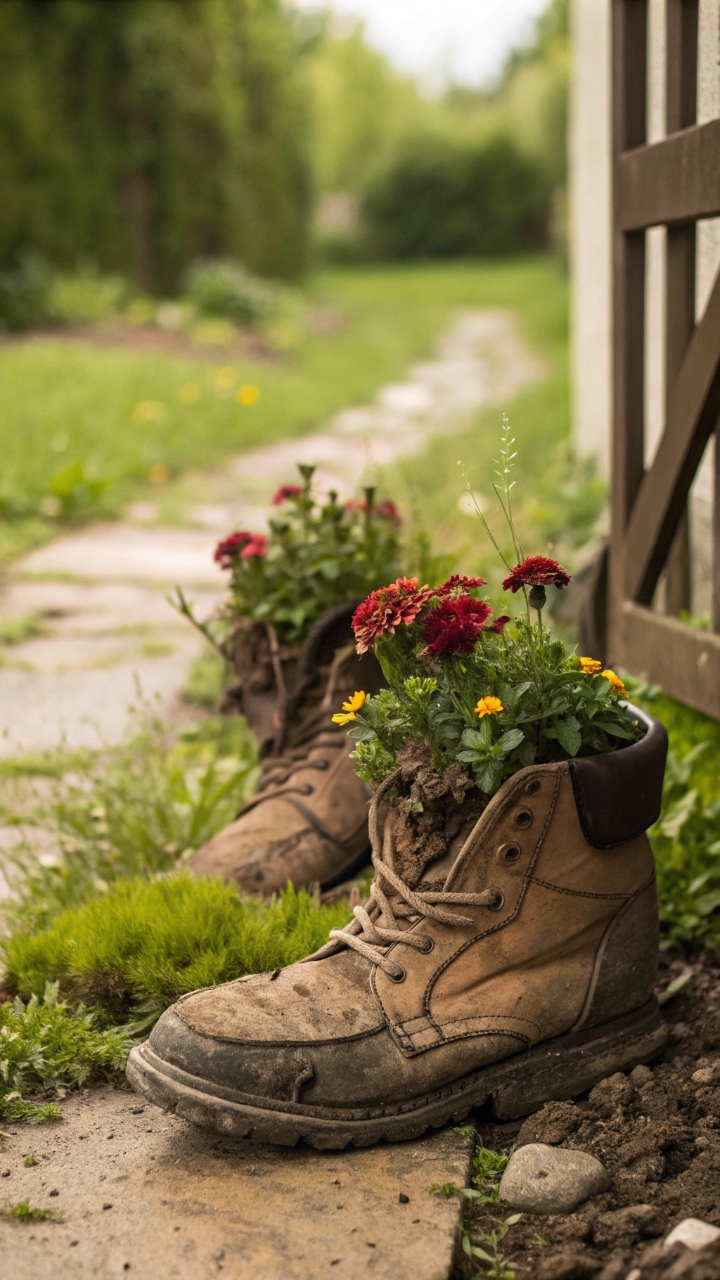
Turning old boots into planters might sound a bit out there, but once you see flowers blooming from them, it just makes sense in a playful, unexpected way. I placed a pair near the garden entrance, and they instantly became a conversation starter because they felt so full of personality. The shape holds soil well, and the worn texture adds a rugged charm that contrasts beautifully with delicate blooms. It’s fun, it’s creative, and it doesn’t take itself too seriously—which honestly makes it even better. Sometimes the weird ideas are the best ones, right?
Pro Tip: Drill drainage holes and use compact plants like petunias or herbs.
Wine Bottle Garden Border
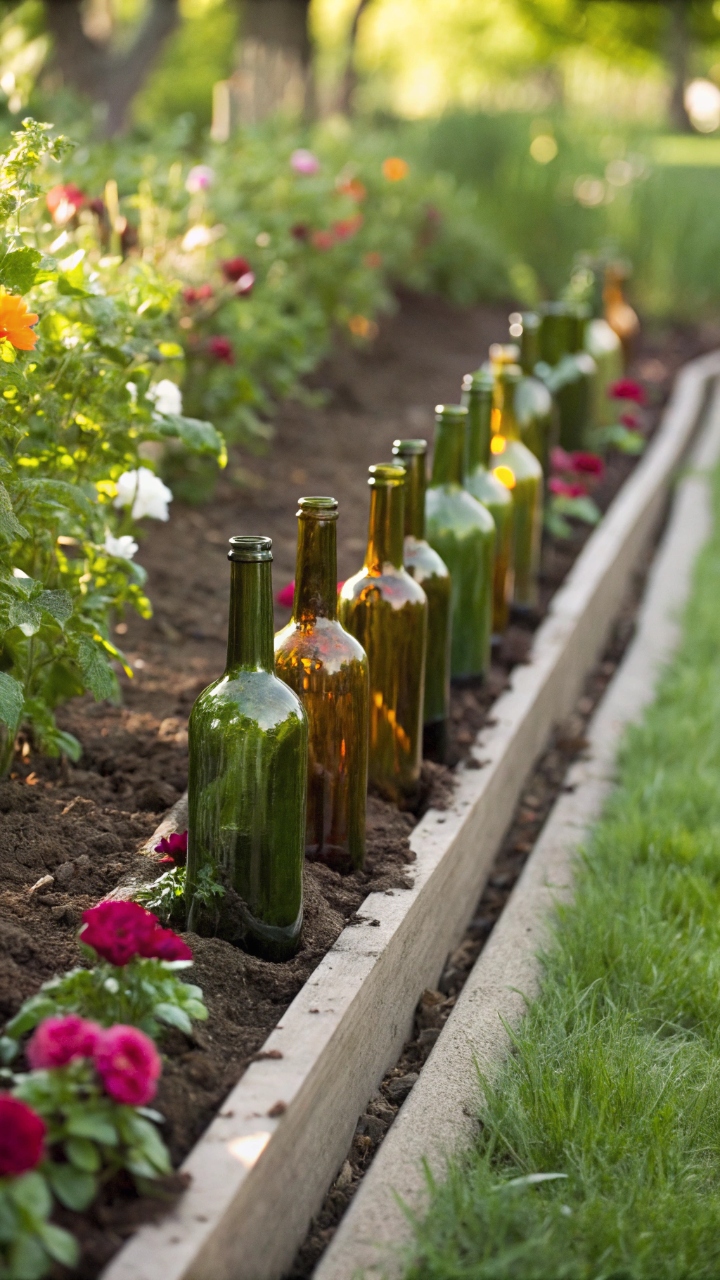
Using wine bottles as a garden border adds a pop of color and structure that feels both artistic and functional. I lined mine along a flower bed, partially buried, and the sunlight hitting the glass created this subtle sparkle that caught my eye every time I walked by. The repetition of shapes gives a sense of rhythm, while the varying colors add depth and visual interest. It’s one of those details that feels small but makes a big impact overall. And hey, it’s a great excuse to save bottles—just saying.
Pro Tip: Bury bottles neck-down securely to keep them stable and evenly spaced.
Drawer Garden Planters
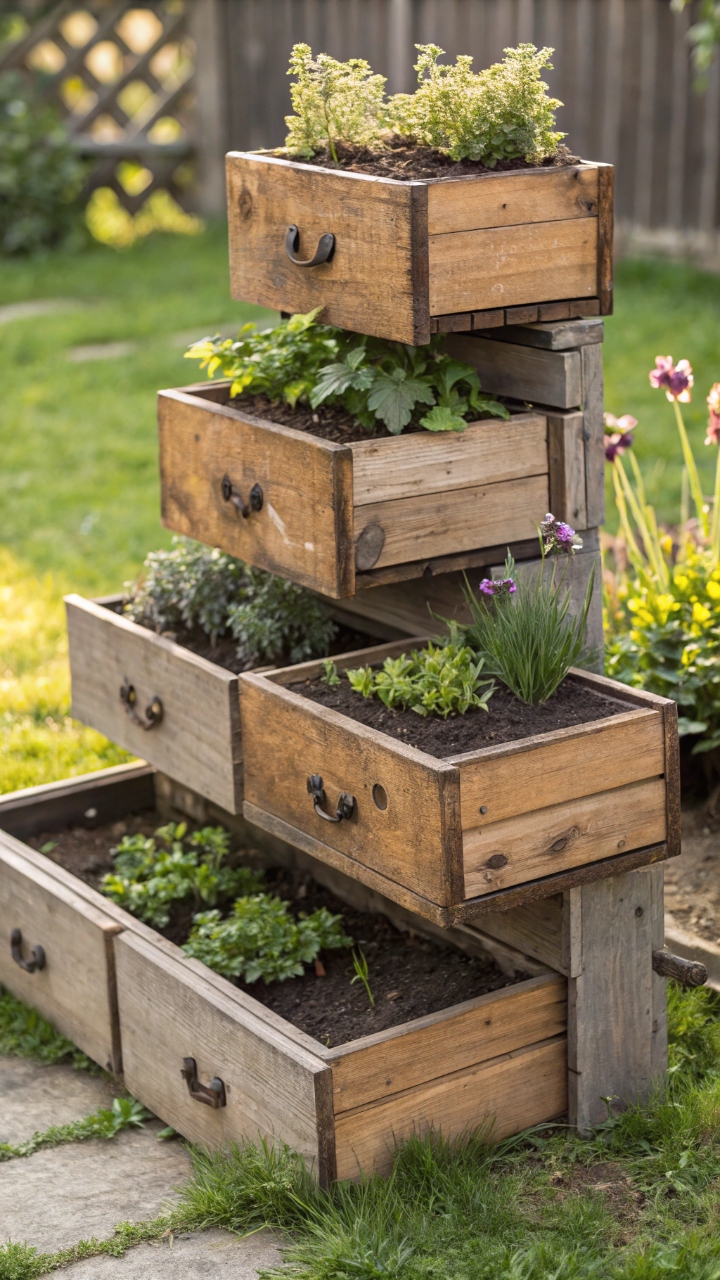
Old drawers can easily become layered garden planters that add both height and dimension to your space. I stacked a few at different angles, filled them with soil, and suddenly I had this multi-level display that looked straight out of a design magazine. The worn wood and hardware add character, while the structure keeps everything organized yet relaxed. It’s functional, creative, and honestly pretty fun to put together. Isn’t it satisfying when something so simple turns into something so cool?
Pro Tip: Seal the wood or line drawers to protect them from moisture damage.
Bicycle Garden Display
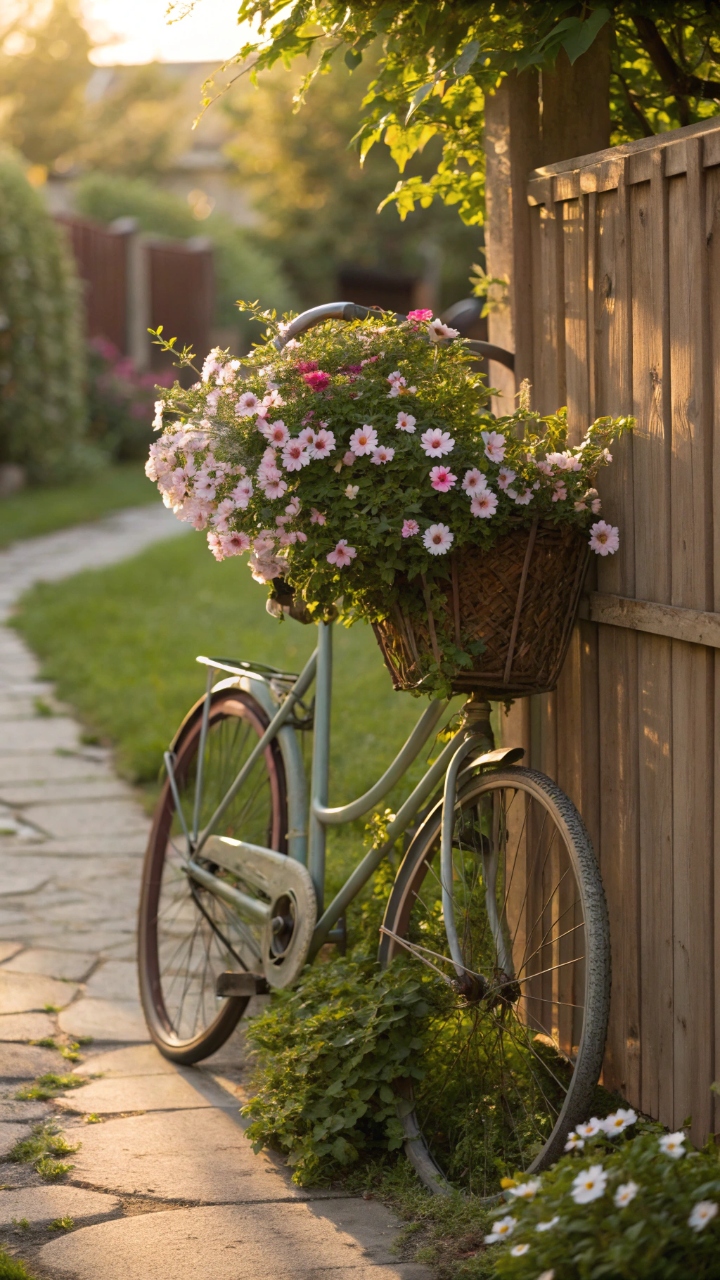
An old bicycle can transform into a stunning garden centerpiece when decorated with baskets and overflowing flowers. I leaned one against a fence, added a front basket filled with blooms, and it instantly became this whimsical focal point that felt both nostalgic and fresh. The curved lines and metal frame add visual movement, while the plants soften the overall look. It’s romantic, slightly vintage, and totally eye-catching without being over the top. And honestly, it just makes the whole space feel alive.
Pro Tip: Secure the bicycle firmly and choose trailing plants for a fuller, more dynamic effect.
Conclusion
As I look back on how my garden evolved, it’s kind of wild to realize that most of my favorite pieces started as things I almost threw away. There’s something deeply fulfilling about seeing potential where others might not, and turning forgotten objects into something meaningful and beautiful. It changes how you approach design entirely—you stop chasing perfection and start embracing creativity instead. And honestly, that shift makes the whole process way more enjoyable.
Repurposing junk isn’t just a budget-friendly trick; it’s a mindset that invites you to experiment, play, and trust your instincts a little more. Your garden becomes more than just a space—it becomes a reflection of your personality, your memories, and your creativity. So if you’ve got a pile of “junk” sitting around, maybe it’s time to take another look at it, because you never know what kind of magic is hiding there.