
There was a specific afternoon where I just stood there, staring at a pile of clutter I’d been ignoring for months. It was a strange mix of emotions: part of me was overwhelmed by how fast it had all accumulated, while the other part felt a weirdly sentimental hesitation to actually let any of it go. There were rusty cans, an old chair missing a leg, cracked pots, and even a bicycle that hadn’t been ridden in years, and somehow I couldn’t bring myself to toss any of it out just yet. It wasn’t just clutter—it felt like forgotten potential waiting for a second chance. That day, instead of hauling everything to the curb, I decided to experiment a little and see what I could actually create with what I already had.
At first, I’ll be honest, I didn’t expect much, and my expectations were pretty low-key because I had zero professional design skills and an even smaller budget. But as I started placing things around the garden, adding soil, planting flowers, and stepping back to see the results, something clicked in a way I didn’t expect at all. The space began to feel more personal, more layered, and honestly more alive than it ever had before. It was like each piece told a tiny story, and suddenly my garden didn’t feel like just a yard—it felt like me.
Now whenever someone comes over, they always ask where I bought certain pieces, and I can’t help but laugh a little because most of it used to sit in my “junk corner” collecting dust. There’s something so satisfying about turning something overlooked into something beautiful, especially when it costs next to nothing. If you’ve ever looked at your old stuff and thought, “Should I just throw this out?”—hold up, because you might be sitting on your next favorite garden feature. Let me show you how to turn everyday junk into something seriously charming.
1. Tin Can Herb Garden
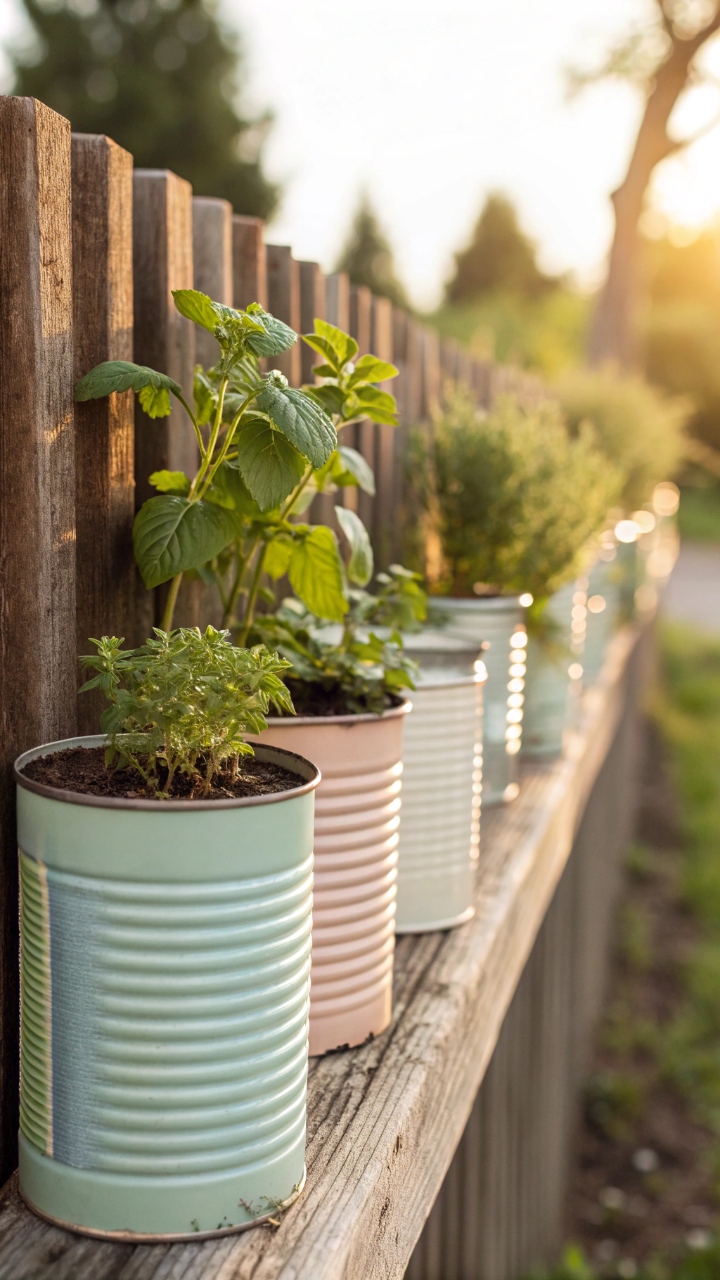
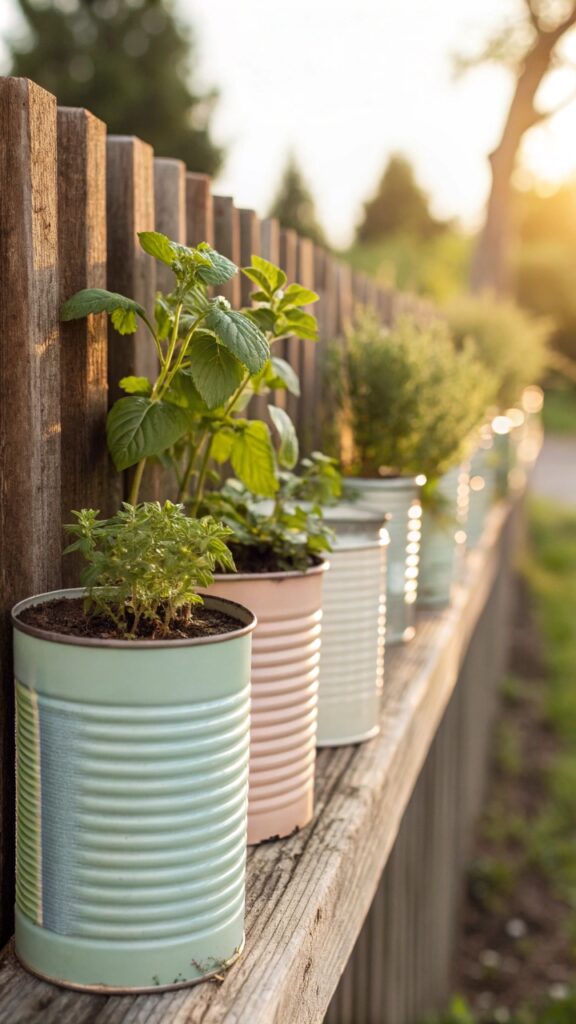
There’s something oddly satisfying about turning a bunch of empty tin cans into a neat little herb garden that feels both practical and surprisingly cute, especially when you line them up along a fence or windowsill and watch them catch the sunlight just right. I remember scrubbing mine clean, punching small drainage holes at the bottom, and painting them in mismatched colors that somehow still worked together, giving off that effortless, lived-in vibe. Once I planted basil, mint, and a few herbs I actually use daily, it felt like I had my own mini kitchen garden within arm’s reach. The texture of the metal against fresh greenery creates such a simple but striking contrast that honestly feels designer without the price tag. And the best part? You can rearrange them anytime when you feel like switching things up, which keeps the space feeling fresh. Who knew something you’d normally toss could end up looking this good?
Pro Tip: Use a clear sealant over painted cans to prevent rust and keep colors vibrant longer.
2. Old Tire Flower Planters
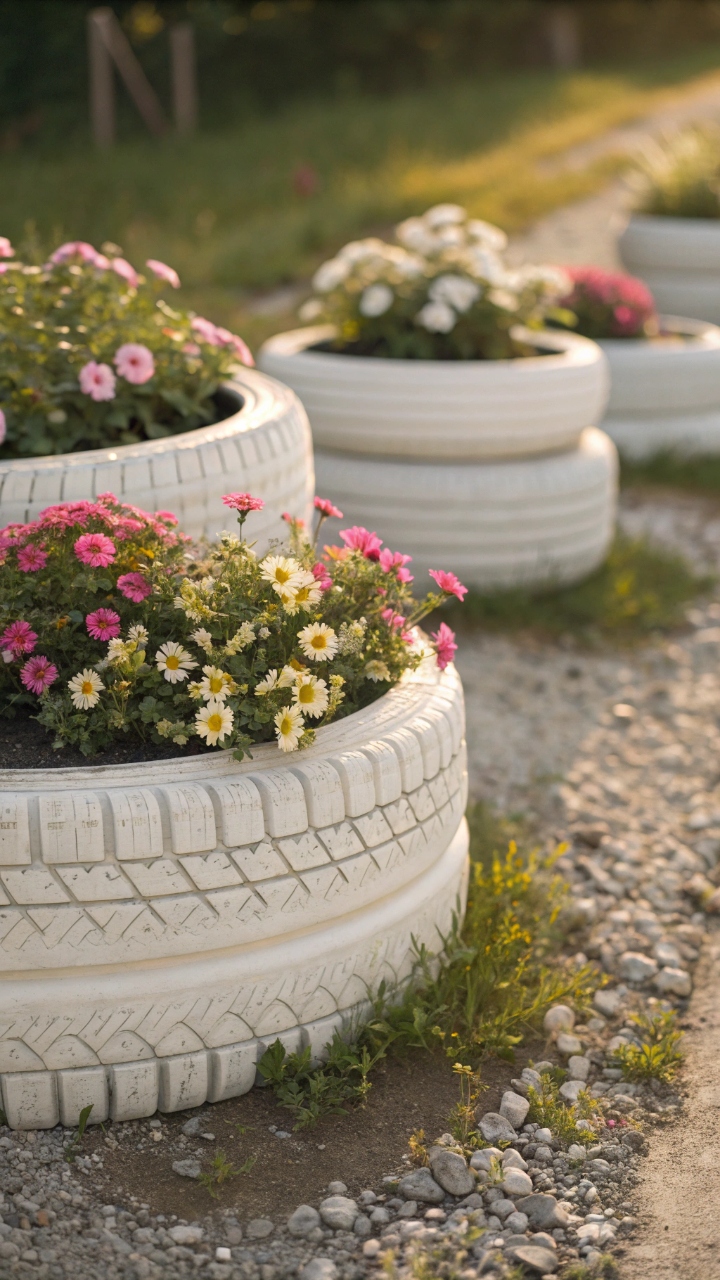
Old tires might not scream “garden decor” at first glance, but once you paint them and stack or hang them creatively, they become bold, eye-catching planters that add serious personality to your space. I tried this on a whim with one leftover tire, painted it white, and suddenly it looked like something straight out of a quirky outdoor café. The circular shape frames flowers beautifully, almost like a living wreath sitting right in your yard, and stacking them gives you height variation without spending extra. It’s one of those projects that feels a little unexpected but works so well once you see it in place. Plus, it’s durable and weather-resistant, so you’re not constantly worrying about replacing it. Honestly, it’s kinda genius how something so rugged can look so soft once filled with blooms.
Pro Tip: Drill drainage holes at the bottom to prevent water buildup and root rot.
3. Wooden Crate Garden Shelves
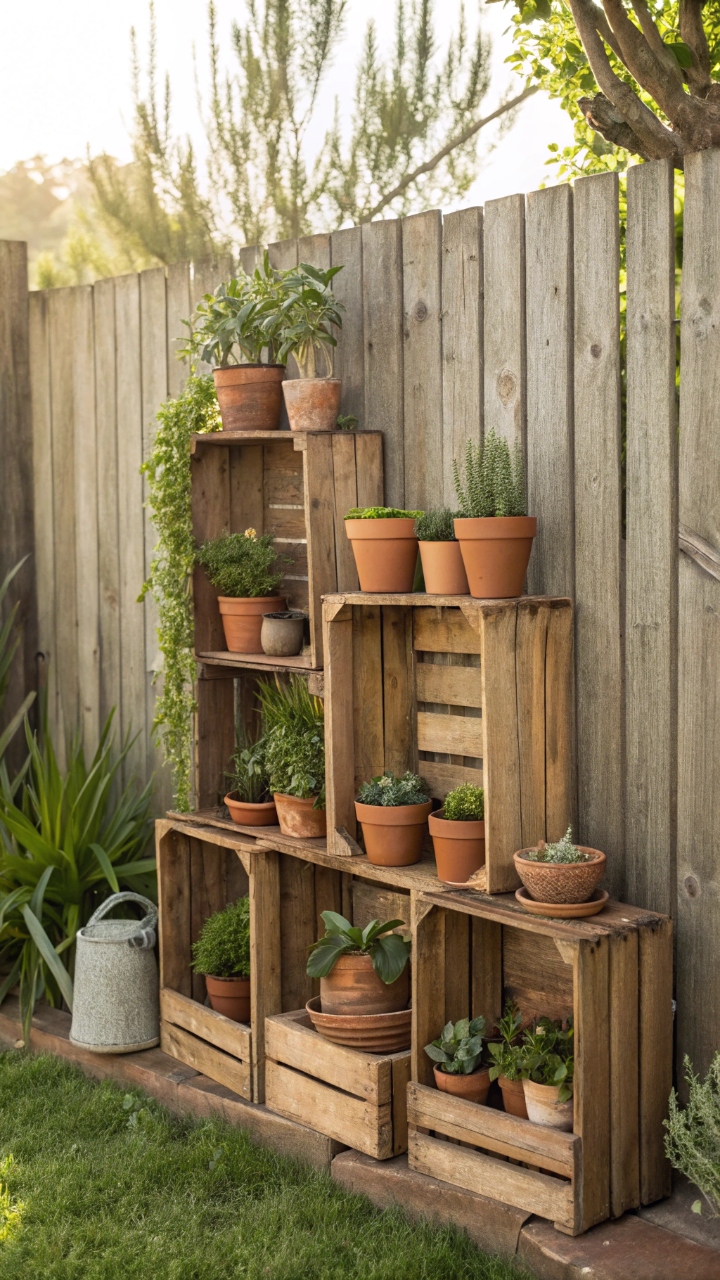
Wooden crates are one of those things that just instantly add warmth and structure to a garden, especially when you stack them into shelves or mount them on a wall for a layered display. I found a few old crates lying around and decided to stack them unevenly, which gave the whole setup a relaxed, slightly rustic feel that didn’t look too staged. Once I filled them with small pots, succulents, and even a few decorative items, the space started to feel more styled without trying too hard. The natural wood texture pairs beautifully with greenery, creating that cozy, earthy vibe we all love. It’s also super flexible because you can rearrange or expand anytime, depending on what you find or need. Isn’t it amazing how something so simple can completely shift the mood of a space?
Pro Tip: Sand rough edges and apply a weatherproof finish to extend the life of your crates.
4. Broken Chair Planter
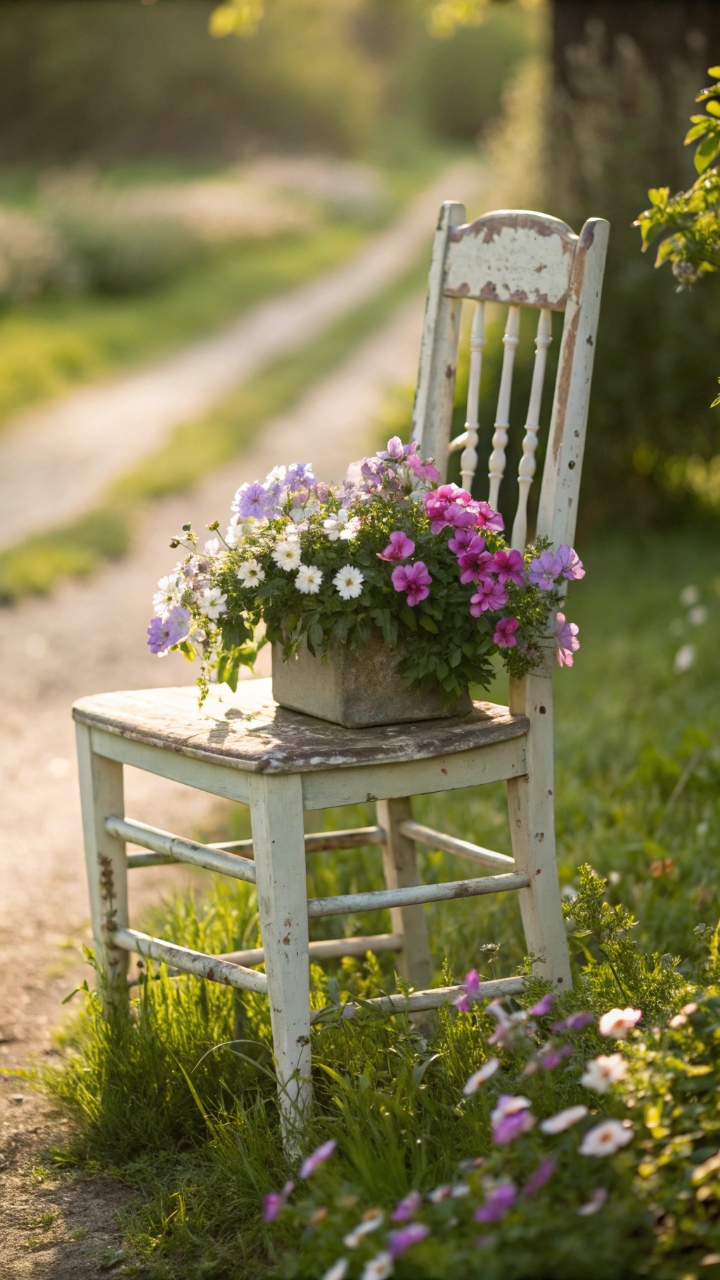
That old chair you’ve been meaning to throw away might actually be one of the most charming planters you’ll ever own, especially when you remove the seat and replace it with a pot or directly plant flowers into the base. I had one sitting in storage, and turning it into a planter instantly gave my garden a whimsical, slightly vintage touch that felt straight out of a storybook. The backrest adds height, which naturally draws the eye upward, making the whole display feel more dynamic. It’s one of those pieces that sparks conversation because it’s unexpected but still functional. And honestly, there’s something kind of poetic about giving a broken chair a new purpose instead of letting it go to waste. Doesn’t it feel good when something old gets a second life?
Pro Tip: Secure a liner or pot inside the seat area to prevent soil from spilling out.
5. Glass Bottle Garden Borders
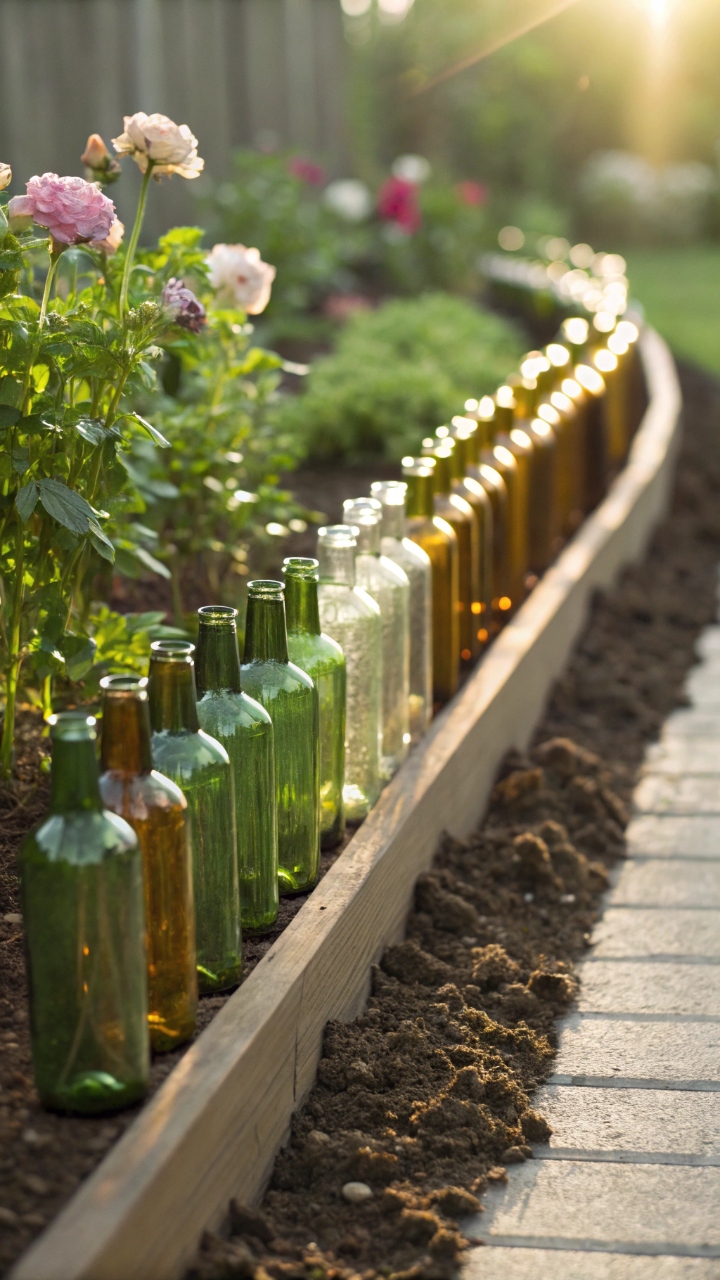
Using glass bottles as garden borders adds a subtle sparkle and color variation that looks especially beautiful when sunlight hits just right, creating little reflections that make the space feel almost magical. I started collecting bottles without really knowing what I’d do with them, but lining them upside down along my garden bed created a clean edge with a creative twist. The different shapes and shades add visual interest without feeling cluttered, and it’s surprisingly sturdy once placed firmly into the soil. It’s one of those low-effort ideas that delivers high impact, especially when viewed from a distance. And let’s be real, it’s a pretty cool way to recycle something that would otherwise end up in the trash. Why not turn waste into something eye-catching?
Pro Tip: Use bottles of similar height for a more polished and uniform border look.
6. Ladder Plant Stand
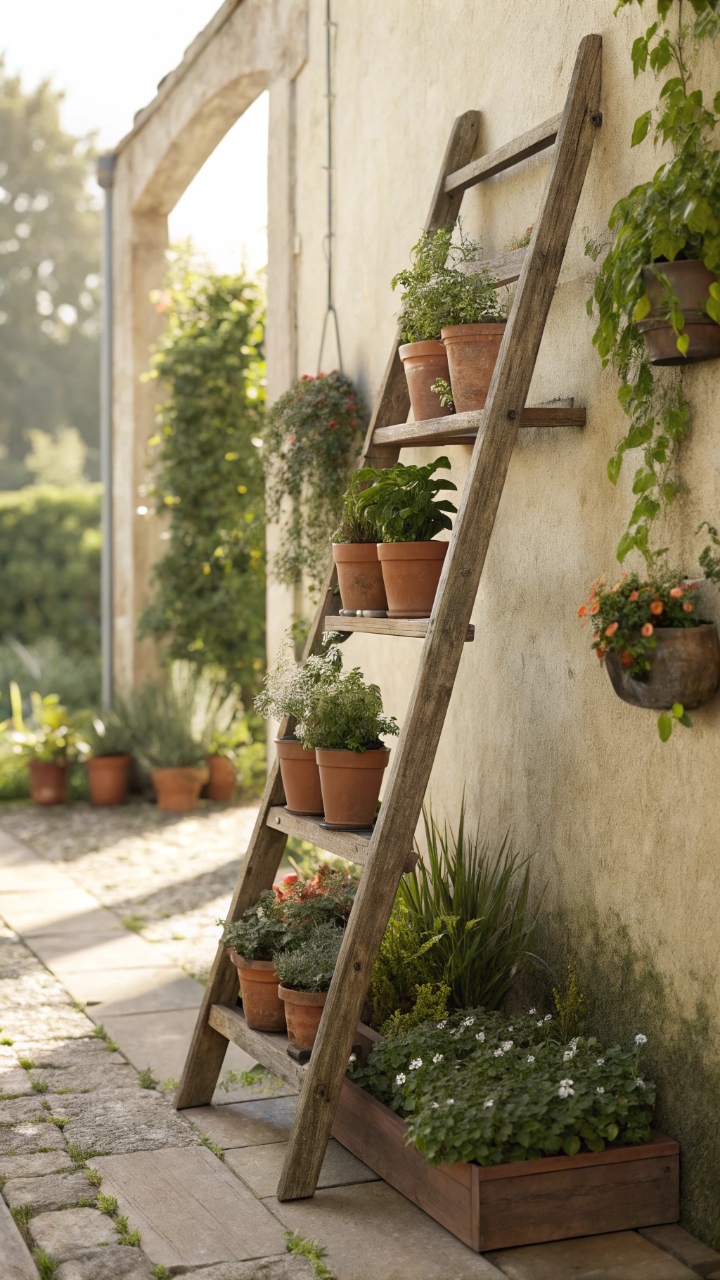
An old ladder can easily become a stunning vertical plant stand that maximizes space while adding a rustic charm that feels both functional and decorative at the same time. I leaned mine against a wall and placed potted plants on each step, creating this layered greenery effect that instantly made the area feel fuller and more alive. The height variation naturally draws your eyes upward, making even a small garden feel bigger and more intentional. It’s also incredibly versatile because you can switch out plants depending on the season or your mood. Honestly, it’s one of those transformations that makes you pause and think, “Wait, why didn’t I do this sooner?”
Pro Tip: Secure the ladder properly to prevent tipping, especially during windy weather.
7. Teacup Succulent Planters
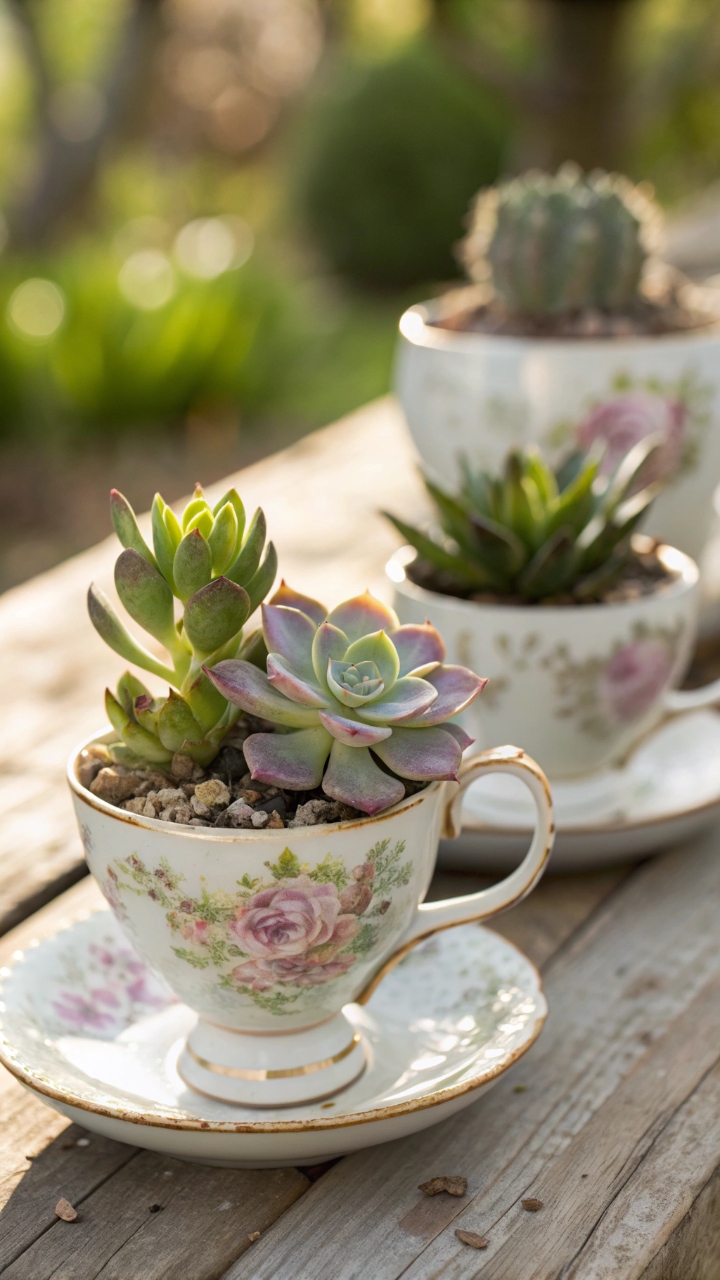
There’s something undeniably charming about using old teacups as tiny succulent planters, especially when they come in mismatched patterns that add a playful yet elegant touch to your garden. I had a few chipped ones I couldn’t use anymore, and turning them into mini planters felt like the perfect way to keep them around. The delicate porcelain contrasts beautifully with the hardy, textured look of succulents, creating this unexpected balance that’s just so pleasing to look at. It’s a small detail, but it adds personality in a way that feels thoughtful and unique. And honestly, it’s just plain cute without trying too hard. Don’t you love those little details that make a space feel special?
Pro Tip: Add small pebbles at the bottom for drainage since most teacups don’t have holes.
8. Pallet Vertical Garden
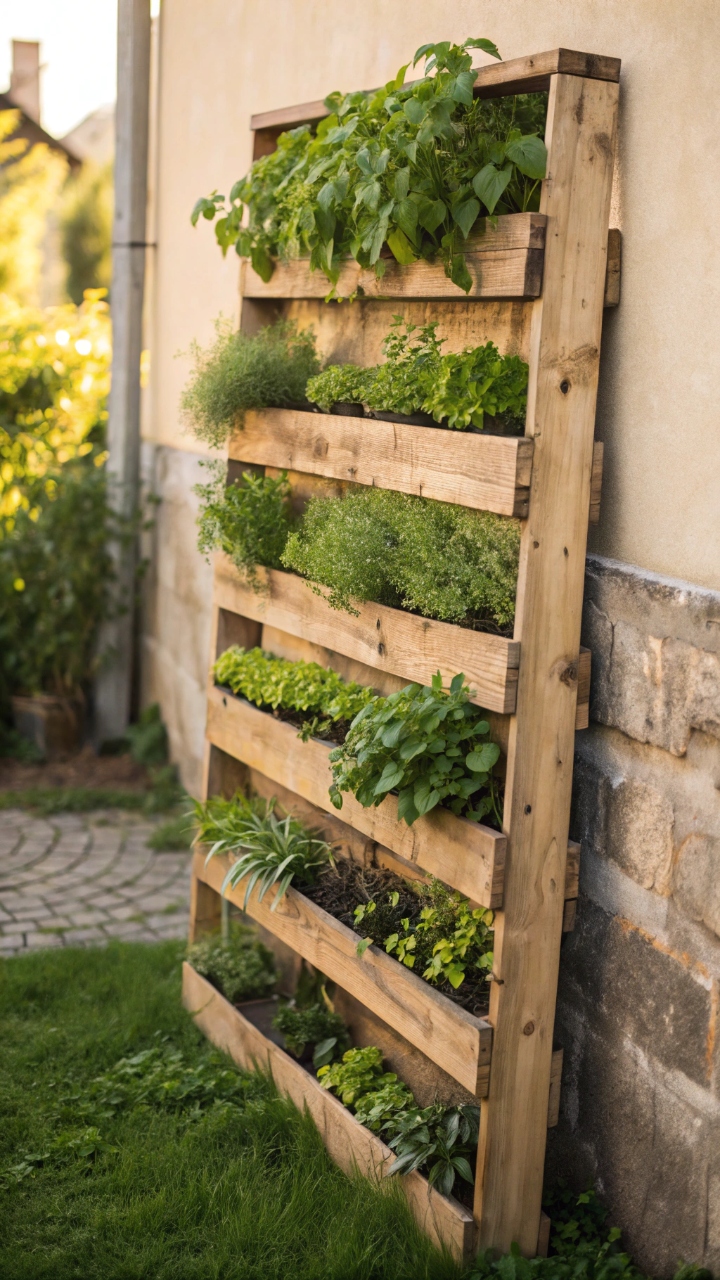
Wooden pallets are basically a blank canvas when it comes to garden design, and turning one into a vertical garden is one of the most budget-friendly ways to add greenery without taking up much ground space. I propped one up, added some backing and soil, and suddenly I had a living wall filled with herbs and small plants that felt both modern and rustic. The structure keeps everything organized while still looking relaxed, which is a balance that’s surprisingly hard to achieve. It’s also perfect for smaller yards where space is limited but you still want that lush feel. Once you see it fully planted, it’s hard not to feel a little proud of what you created from basically scrap wood.
Pro Tip: Line the back with landscape fabric to keep soil in place and retain moisture.
9. Old Sink Garden Feature
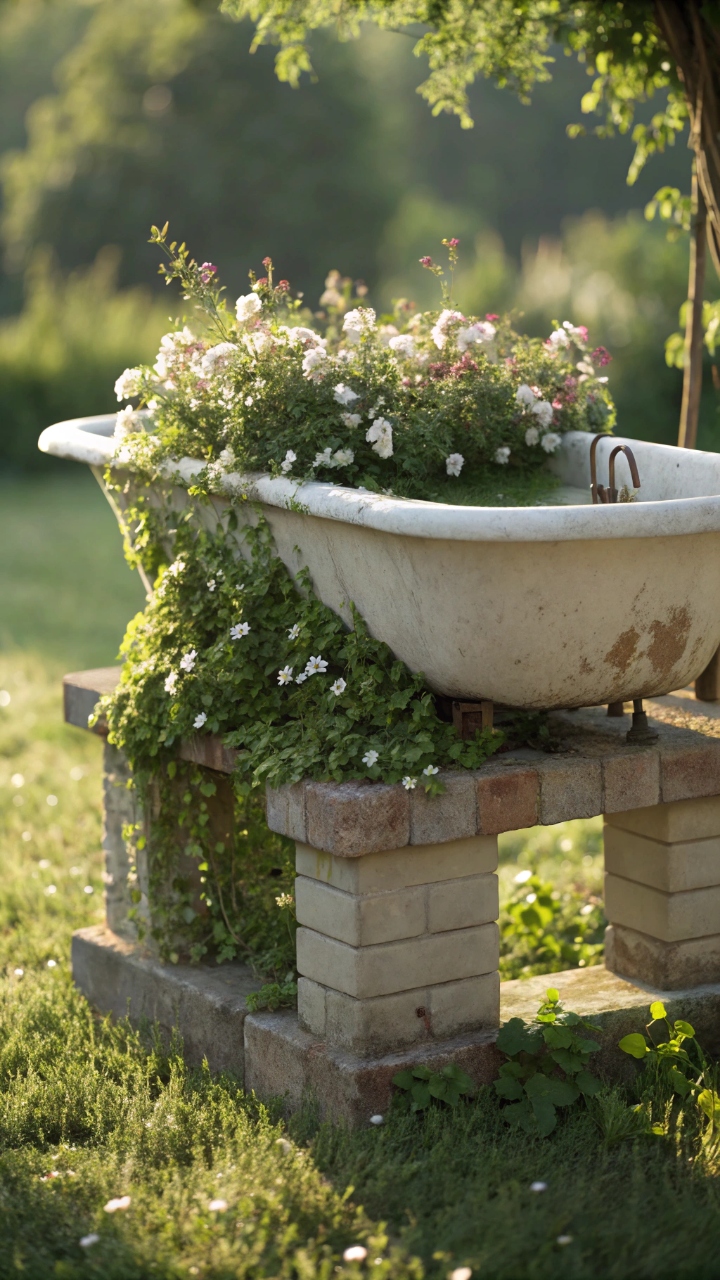
An old sink might sound like a weird addition to a garden, but once you see it filled with flowers or cascading plants, it becomes a unique focal point that’s both functional and fun. I stumbled upon one and decided to give it a shot, and honestly, it turned out way better than I expected. The built-in drainage is already there, which makes it super convenient, and the shape naturally draws attention. It adds a slightly quirky vibe that feels intentional rather than random, especially when styled with the right plants. It’s one of those pieces that people double-take at, in a good way. Who knew a sink could look this cool outdoors?
Pro Tip: Elevate the sink on bricks or a stand to make it more visually prominent.
10. Bicycle Garden Display
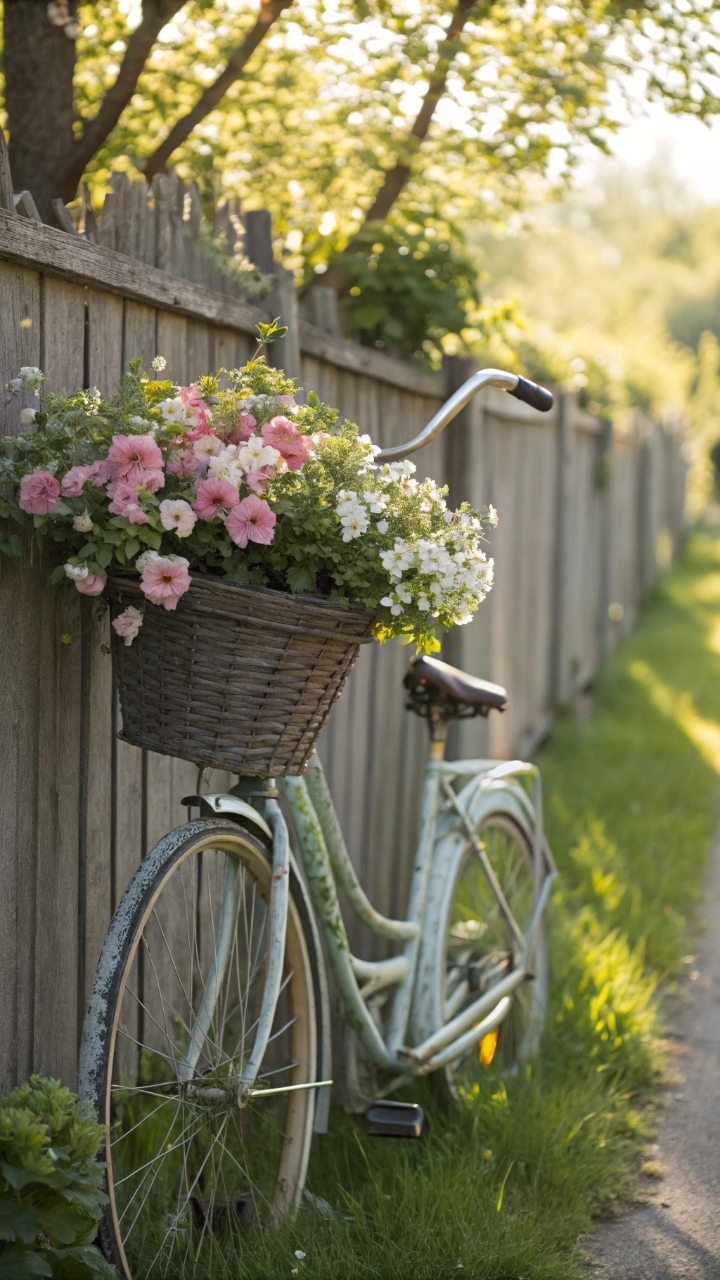
An old bicycle can transform into a stunning garden centerpiece when decorated with baskets and overflowing flowers, creating a whimsical focal point that feels both nostalgic and fresh. I leaned one against a fence, added a front basket filled with blooms, and instantly the space felt more alive and dynamic. The curved lines of the frame add movement, while the plants soften the overall look in the most beautiful way. It’s romantic without being overly styled, which makes it feel natural and effortless. And honestly, it just makes you smile every time you see it. Isn’t that what a garden should do?
Pro Tip: Use zip ties or wire to securely attach baskets and keep them stable.
11. Drawer Planter Stack
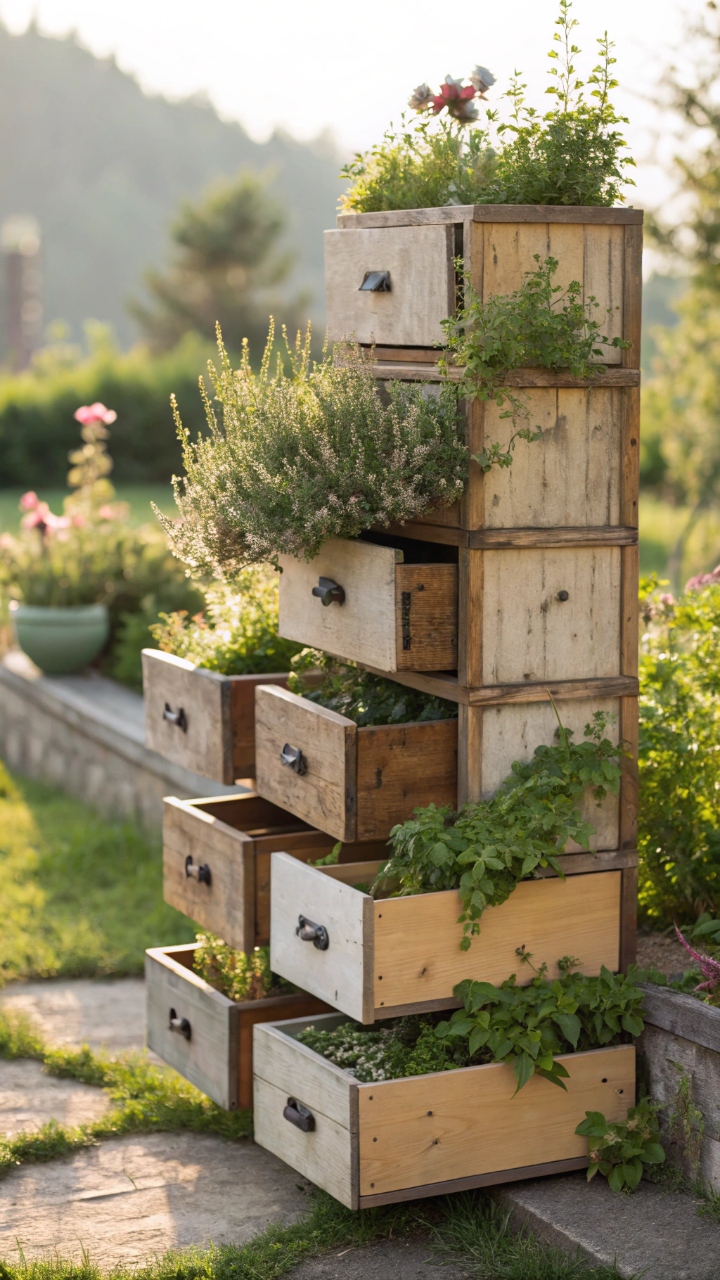
Old drawers can be stacked or arranged at angles to create a tiered planter that adds depth and visual interest to your garden, especially when each level holds different plants. I played around with placement until it felt right, and the uneven layout ended up being the most interesting part. The varying heights make the display feel dynamic, almost like a living sculpture that evolves over time. It’s a great way to use multiple drawers without needing a full piece of furniture. Plus, it adds that slightly eclectic vibe that feels very “you.” Isn’t it fun when things don’t match perfectly but still work?
Pro Tip: Drill drainage holes and use a liner to protect the wood from moisture damage.
12. Colander Hanging Planters
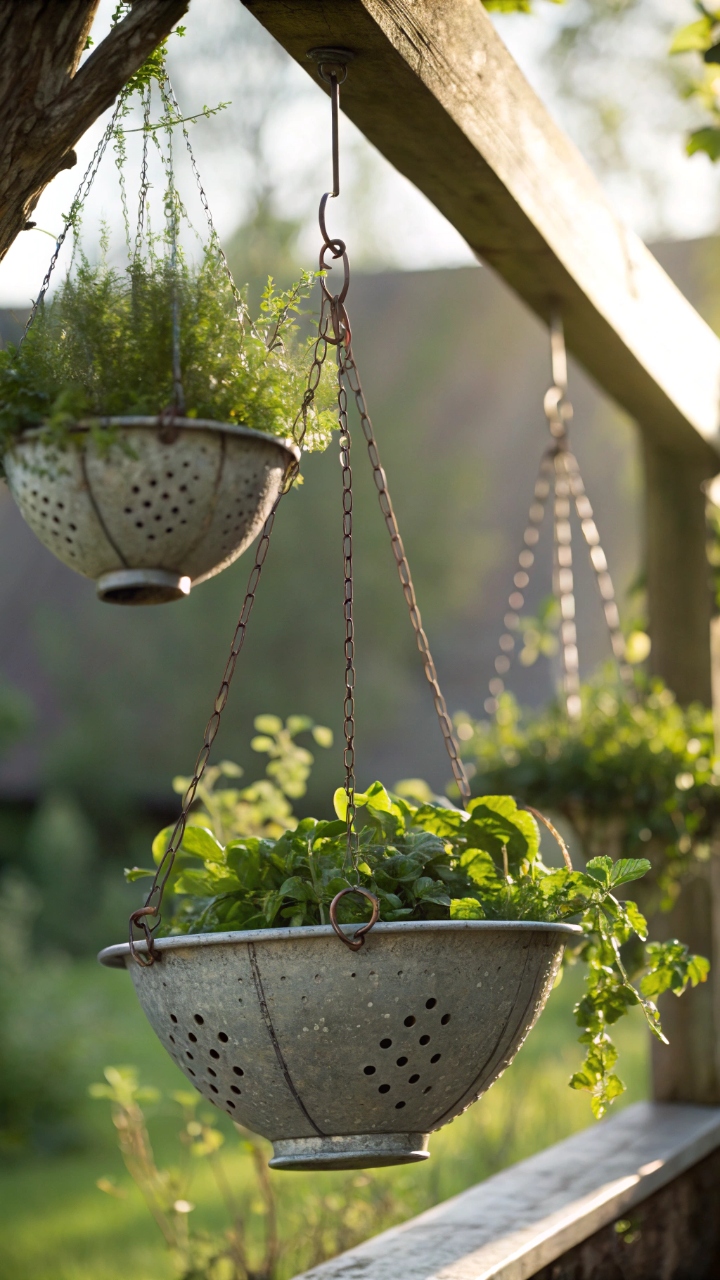
Colanders are surprisingly perfect for hanging planters because they already have built-in drainage, which makes them both functional and visually interesting. I hung a few at different heights, and the result was this layered, floating garden effect that felt light and airy. The metal texture adds a bit of industrial charm, which contrasts nicely with soft greenery. It’s one of those ideas that feels random at first but totally works once you see it in place. And honestly, it’s a pretty clever way to repurpose something you probably already have. Why not let it shine in a new way?
Pro Tip: Use sturdy hooks and chains to safely support the weight when filled with soil.
13. Boot Plant Pots
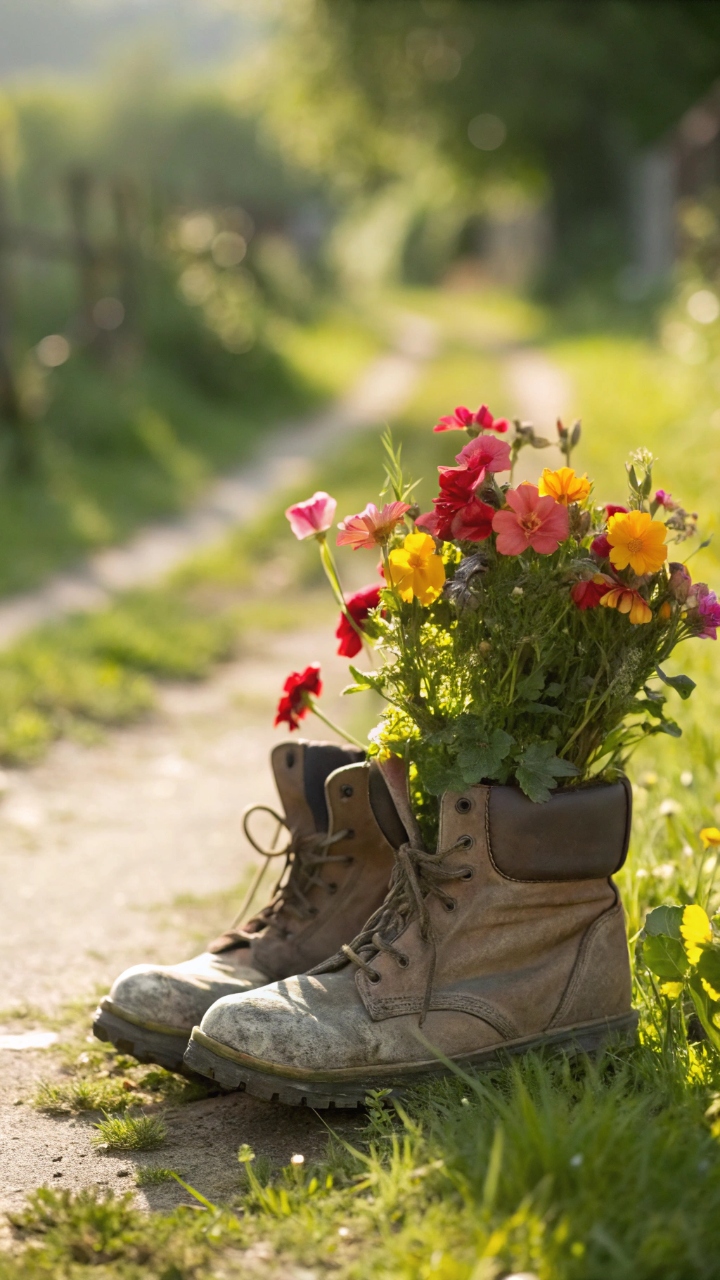
Old boots can make the quirkiest plant pots, especially when filled with bright flowers that spill out from the top, creating a playful and unexpected display. I tried this with a worn-out pair, and it instantly added character to a quiet corner of my garden. The shape naturally guides the eye upward, while the texture adds a rugged charm that contrasts beautifully with soft petals. It’s a little unconventional, but that’s exactly what makes it so fun. And honestly, it’s a great conversation starter when guests notice it for the first time. Who says planters have to be boring?
Pro Tip: Punch drainage holes in the sole to prevent water buildup.
14. Rusty Metal Bucket Planters
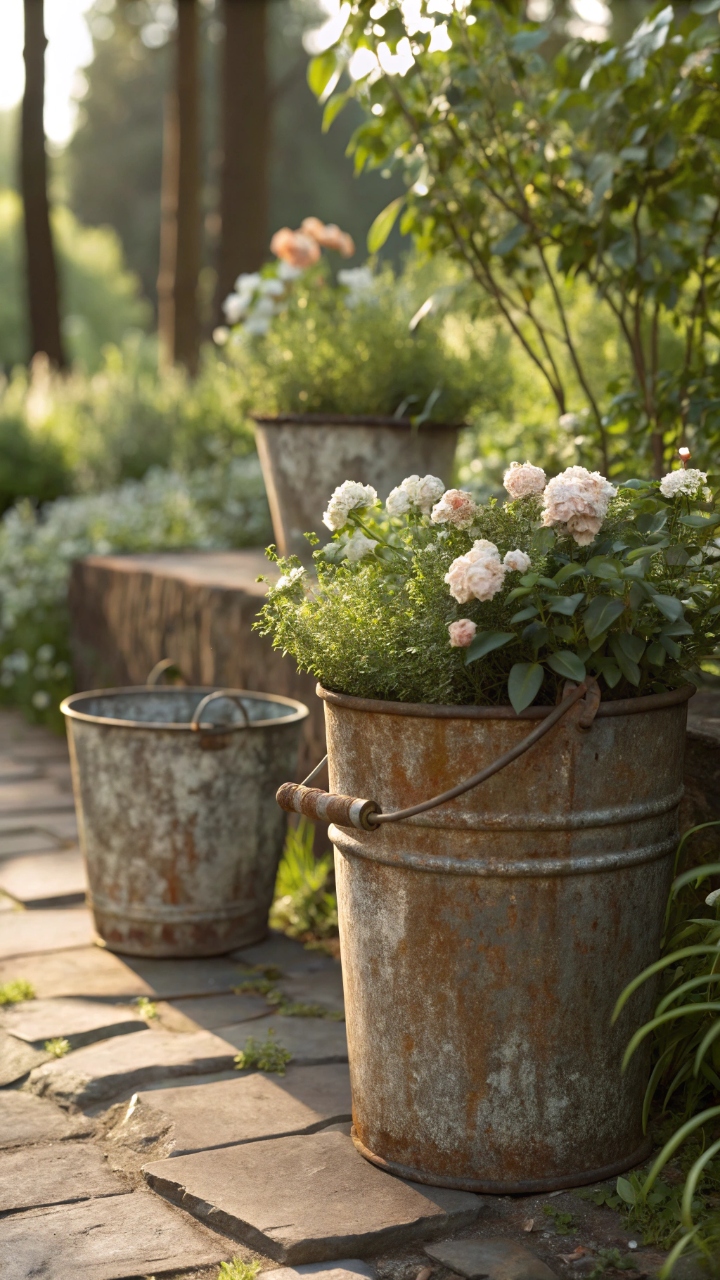
Rusty metal buckets bring this raw, weathered look that adds depth and authenticity to your garden, especially when paired with lush greenery that softens their edges. I found a couple tucked away and decided to use them as planters, and the contrast between old metal and fresh plants was just chef’s kiss. The imperfections actually make them more beautiful because they tell a story of time and use. It’s one of those designs that feels effortlessly styled without trying too hard. And let’s be real, it’s budget-friendly in the best way possible. Why buy new when old looks this good?
Pro Tip: Add a plastic liner inside to prevent further rusting and extend usability.
Conclusion
Looking back, I never thought that a pile of discarded items would end up becoming one of the most meaningful parts of my home, but here we are, and honestly, I wouldn’t have it any other way. There’s something incredibly grounding about creating beauty from what you already have, especially in a world that constantly pushes us to buy more, spend more, and replace things too quickly. Each repurposed piece in my garden carries a story, a memory, or even just a moment of creativity that made me pause and see things differently. And isn’t that what makes a space truly feel like yours?
What I love most about these ideas is that they’re not about perfection or following strict design rules, but about experimenting, having fun, and trusting your own sense of style, even if it feels a little unconventional at first. You don’t need a huge budget or professional skills to create something beautiful—you just need a bit of imagination and the willingness to try. So next time you look at something you’re about to throw away, maybe give it a second glance, because it might just be your next favorite garden piece. And who knows, you might surprise yourself with what you can create.