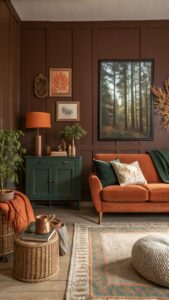

Everything was in its place—the soft glow of the lamps, the comfort of the sofa—yet the room felt incomplete. I remember staring at those vast, empty walls and realizing they were blank canvases waiting for a story that I hadn’t yet found the words to tell. I kept scrolling through expensive art online, bookmarking pieces I loved but couldn’t justify buying, and thinking, “Why does good taste have to cost this much?” That’s when it hit me—maybe the problem wasn’t my budget, but my approach to decorating. Maybe I didn’t need to buy expensive art at all.
So one weekend, I decided to experiment with DIY art, and honestly, I wasn’t expecting much. I figured I’d end up with something “cute” at best, something I’d politely ignore after a week or two. But as I started layering textures, playing with color, and trusting my instincts, something shifted. The pieces began to look… legit. Like, “wait—is this gallery-worthy?” kind of legit. And suddenly, my living room didn’t just look styled, it felt personal in a way store-bought decor never had.
Now, every time someone walks in and compliments my space, there’s this little moment where I get to say, “Oh, I made that.” And yeah, it still feels kinda surreal. If you’ve ever wanted your home to feel elevated without draining your wallet, you’re in the right place. These DIY living room art ideas are modern, stylish, and surprisingly easy to pull off—and trust me, they look way more expensive than they are.
1. Oversized Abstract Canvas Art
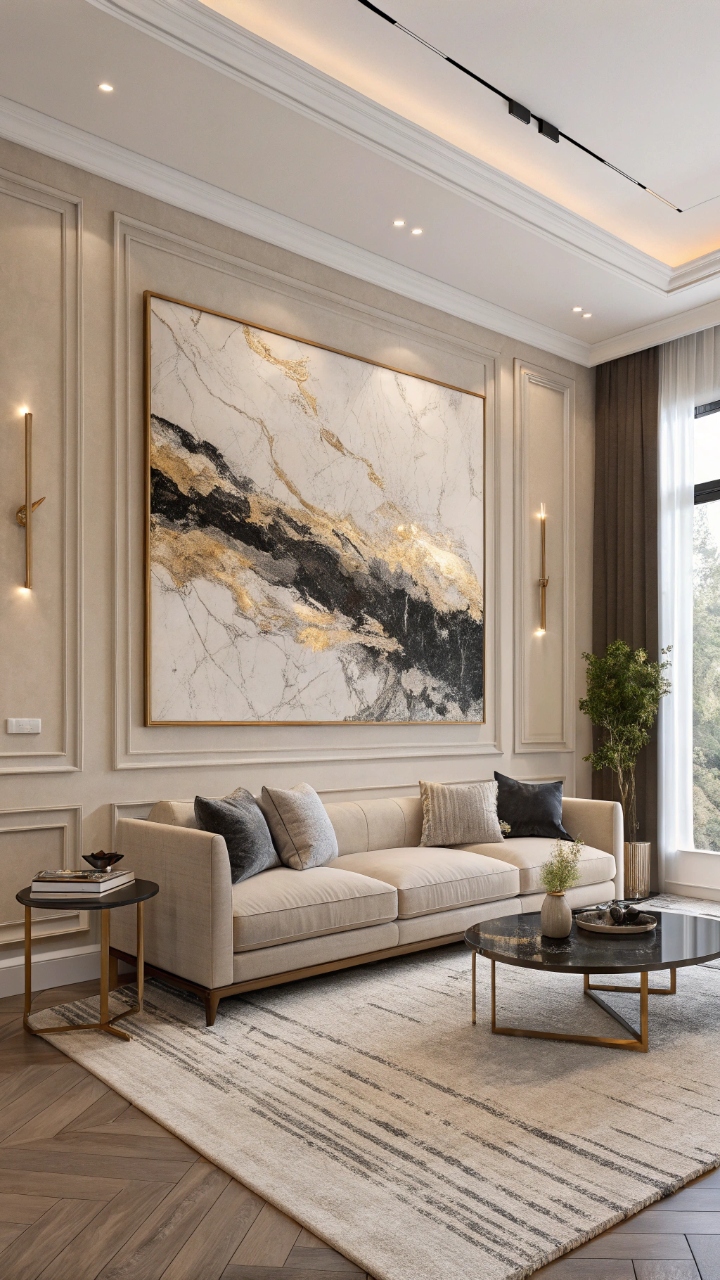
There’s something undeniably powerful about a large-scale abstract painting that instantly anchors a room and makes everything feel intentional, and when I first tried this, I was honestly just winging it with leftover paint and a big blank canvas. I layered soft neutrals with bold strokes of black and a hint of gold, letting each brush movement feel expressive instead of perfect, and somehow it created this high-end, gallery-style vibe that completely transformed my space. The texture, the movement, the subtle imperfections—it all added depth that looked incredibly curated without being overthought. Have you ever noticed how expensive abstract art often feels effortless, like it wasn’t trying too hard? That’s exactly the energy you want to capture here. The key is confidence, even if you’re faking it at first, because bold strokes always look more intentional than hesitant ones.
Pro Tip: Use a large canvas (at least 24×36 inches) and stick to a limited color palette for a cohesive, high-end look.
2. Textured Plaster Art Panels
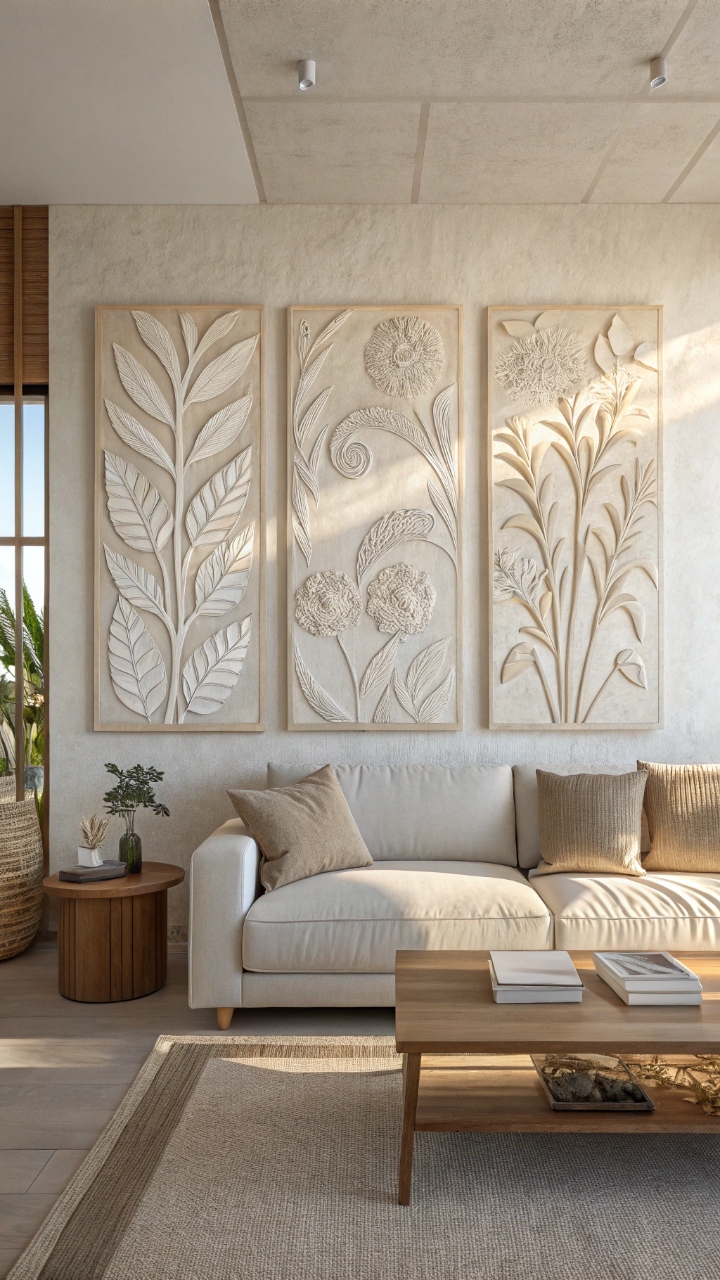
I got obsessed with textured plaster art after seeing it in a boutique hotel, and I remember thinking, “There’s no way this is DIY-able,” but turns out, it totally is—and it’s actually kinda addictive. Using joint compound or plaster, I spread uneven layers across a canvas and carved subtle patterns with a spatula, creating this soft, organic texture that catches light in the most beautiful way. The finished piece looked minimal yet luxurious, like something straight out of a designer showroom, and it added this quiet sophistication to my living room wall. It’s not loud or flashy, but that’s exactly what makes it feel expensive. Don’t you love art that whispers instead of shouts? That’s the vibe here.
Pro Tip: Keep your design subtle and monochromatic—white or beige tones enhance the texture and give that modern, upscale finish.
3. DIY Framed Fabric Art
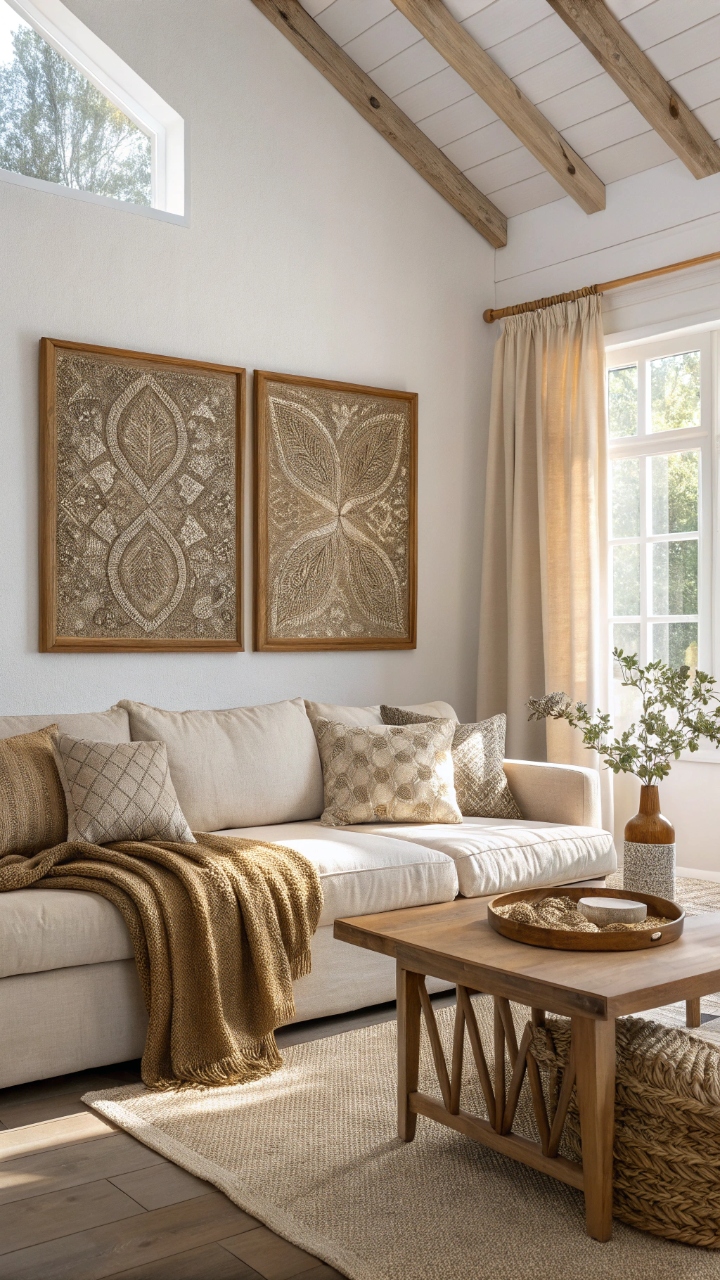
One day, while reorganizing my closet, I stumbled across a piece of fabric I couldn’t throw away because it was just too pretty, and that’s when the idea hit me—why not frame it? I stretched it over a simple wooden frame, and suddenly it looked like a designer textile piece you’d find in a high-end home store. The patterns, the texture, the richness of the fabric—it all came together so effortlessly, and it added warmth to my living room in a way paint never could. It’s such a simple concept, but the result feels incredibly elevated. Have you ever noticed how luxury spaces often incorporate textiles as art? This is your chance to do the same without the hefty price tag.
Pro Tip: Choose fabrics with bold patterns or subtle metallic threads to mimic designer-level finishes.
4. Minimalist Line Art Prints
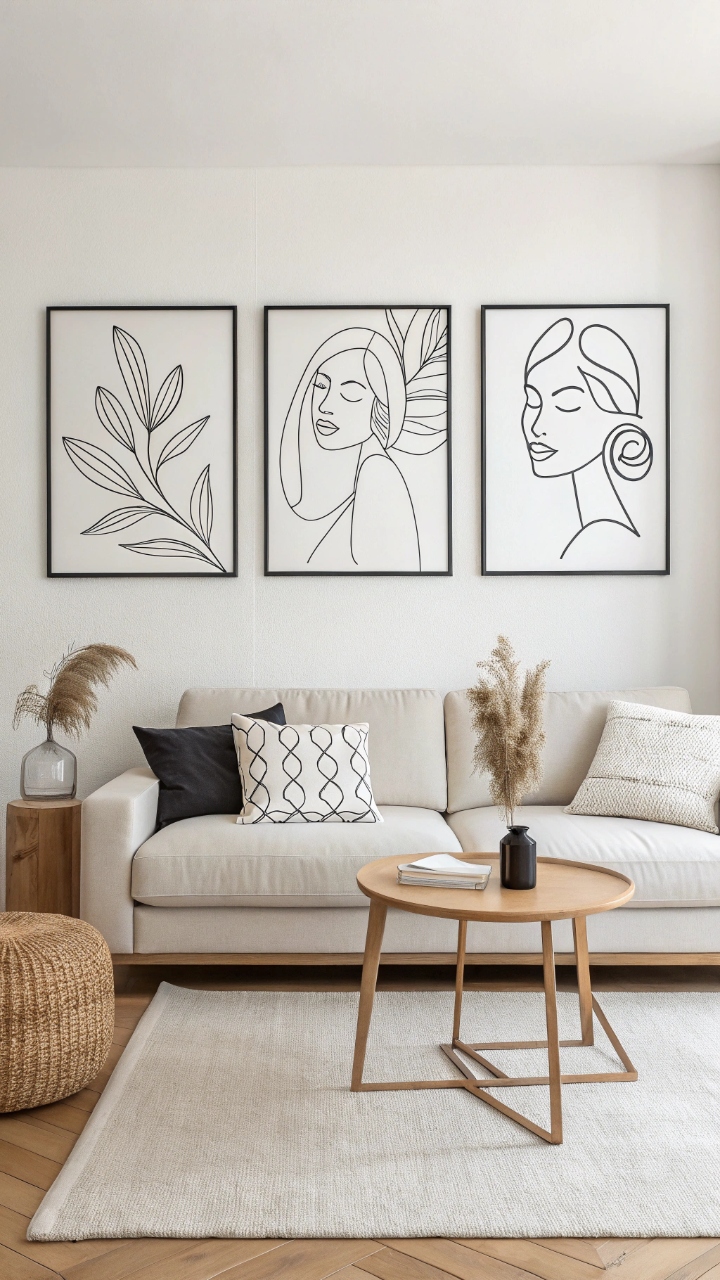
There’s something so effortlessly chic about minimalist line art, and the first time I tried creating my own, I was surprised by how calming the process felt. Using a black pen or brush on white paper, I sketched simple faces and abstract shapes, focusing on flow rather than perfection, and the result looked strikingly modern. Framed in thin black frames, these pieces instantly gave my living room that “art gallery meets cozy home” aesthetic. It’s amazing how something so simple can feel so intentional, right? The beauty lies in restraint, in knowing when to stop adding.
Pro Tip: Stick to black and white for a timeless look, and use matching frames to keep everything cohesive.
5. Gallery Wall with Thrifted Frames
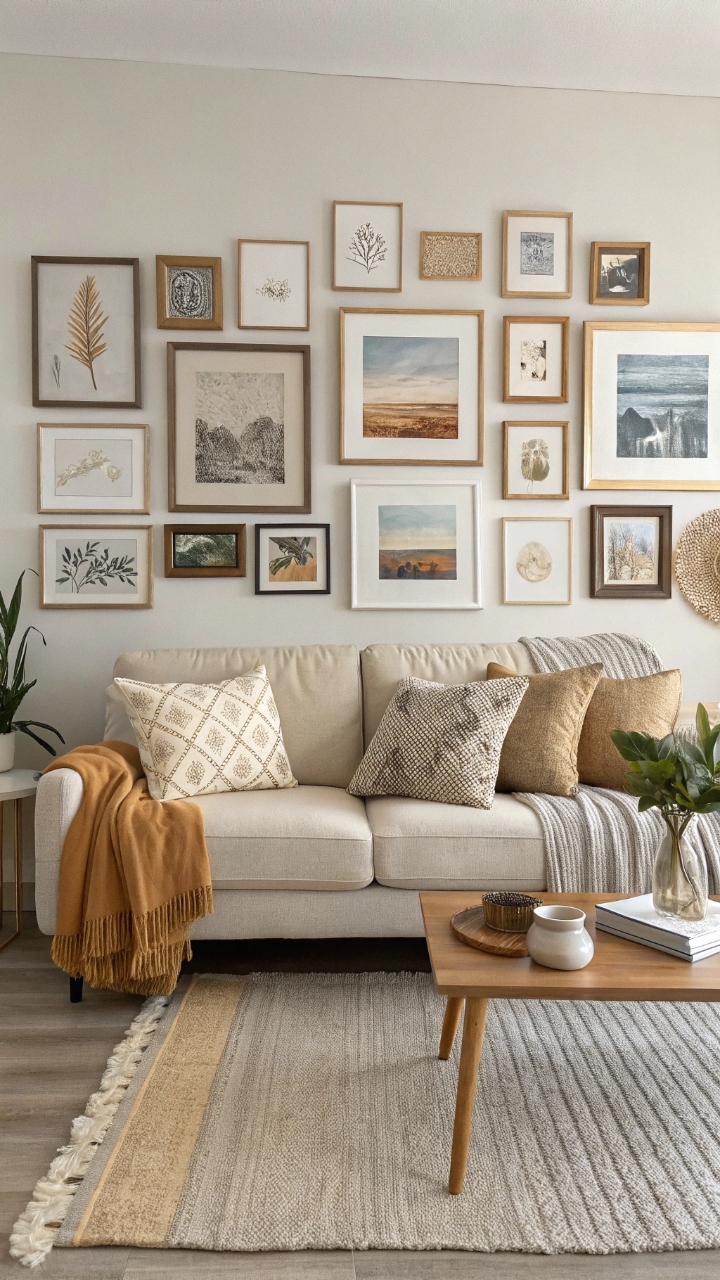
I used to think gallery walls had to be perfectly coordinated and expensive, but honestly, the magic happens when they’re a little mismatched and full of character. I spent an afternoon thrifting frames in different shapes and finishes, then unified them with a consistent color palette for the artwork inside. The result felt curated yet personal, like a visual story unfolding across the wall. There’s something about mixing old and new that just hits differently—it adds depth you can’t fake. Doesn’t it feel more special when every piece has a story?
Pro Tip: Spray-paint mismatched frames in one color for a more polished, cohesive look.
6. Painted Arch Wall Accent
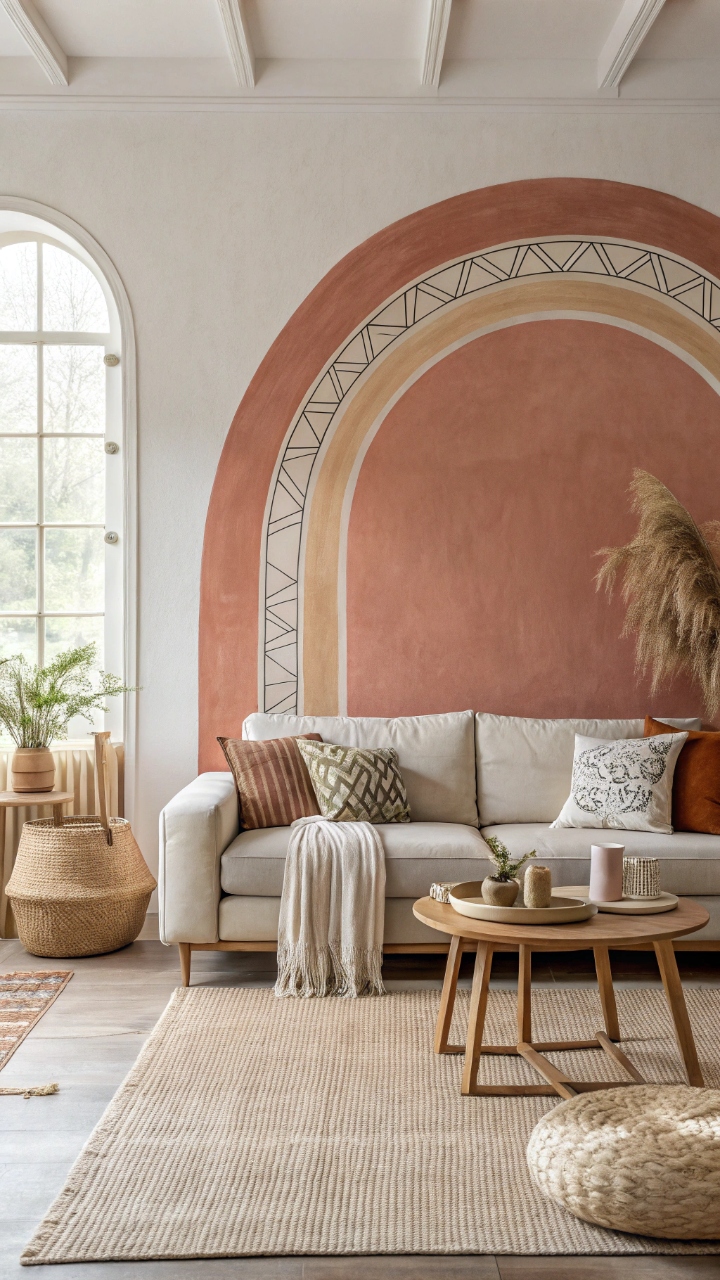
Okay, this one changed the game for me, no joke. Painting a simple arch directly on the wall created an instant focal point that looked architectural and intentional, like it was part of the home’s original design. I used a muted earthy tone behind my sofa, and suddenly the entire space felt layered and thoughtfully styled. It’s bold without being overwhelming, and it adds structure in a really subtle way. Have you ever wanted art that feels built-in rather than added on? This is it.
Pro Tip: Use painter’s tape and a string to create a clean, symmetrical arch shape.
7. DIY Canvas Diptych or Triptych
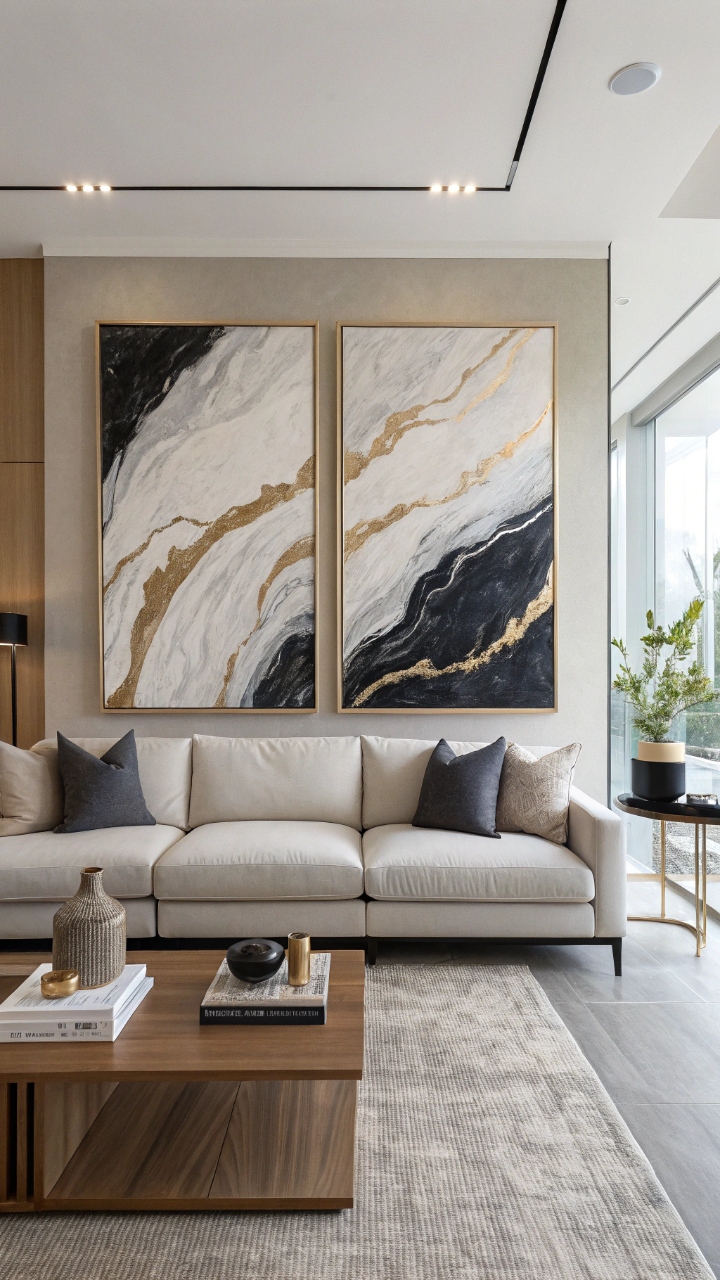
Breaking one large artwork into multiple panels adds a level of sophistication that feels straight out of a modern art gallery. I created a diptych using two canvases with a continuous abstract design flowing across both, and the visual impact was incredible. It draws your eye across the space, making the room feel larger and more dynamic. There’s something about repetition and symmetry that just feels expensive, don’t you think? It’s like your brain instantly recognizes it as “designed.”
Pro Tip: Lay canvases side by side while painting to ensure continuity in your design.
8. Pressed Botanical Art
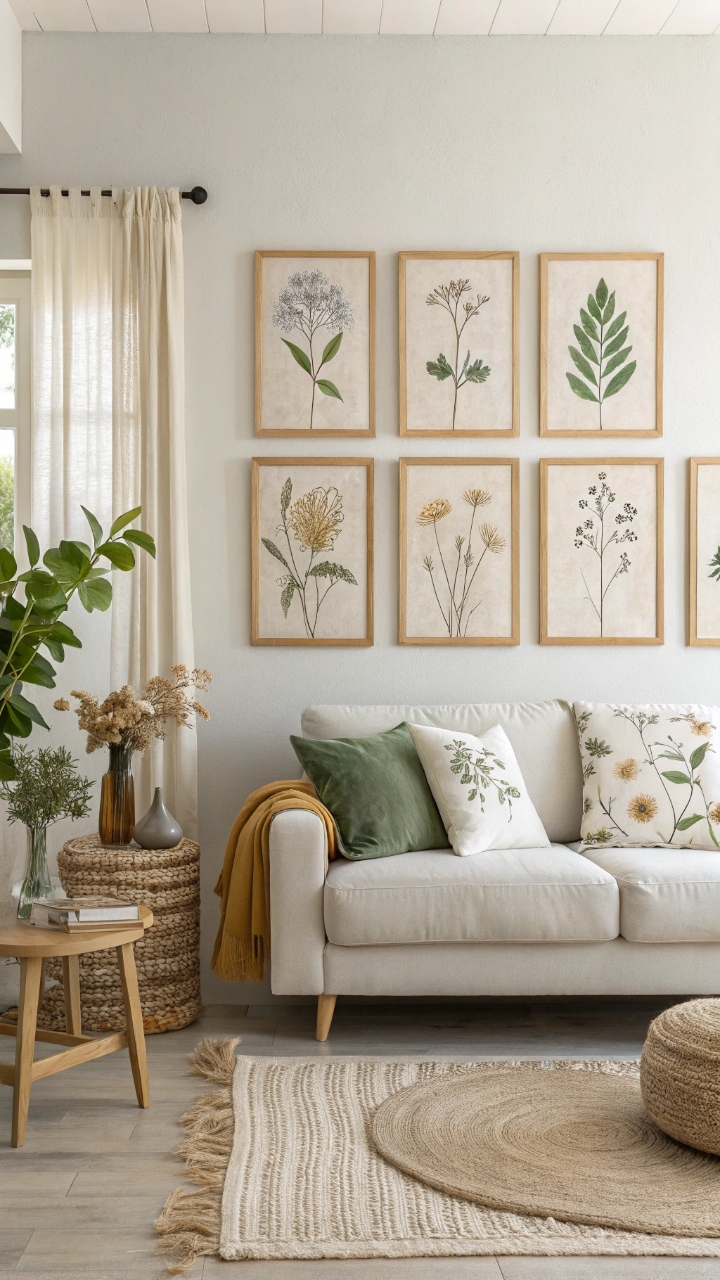
I’ve always loved bringing a bit of nature indoors, and pressed botanical art does that in such a soft, elegant way. I collected leaves and flowers, pressed them between books, and arranged them in simple frames, and the result felt delicate and timeless. It adds a quiet beauty that doesn’t overpower the room but enhances it. There’s something grounding about real elements, isn’t there? It makes the space feel alive in a subtle way.
Pro Tip: Use neutral backgrounds like linen or handmade paper to elevate the look.
9. DIY Metallic Leaf Art
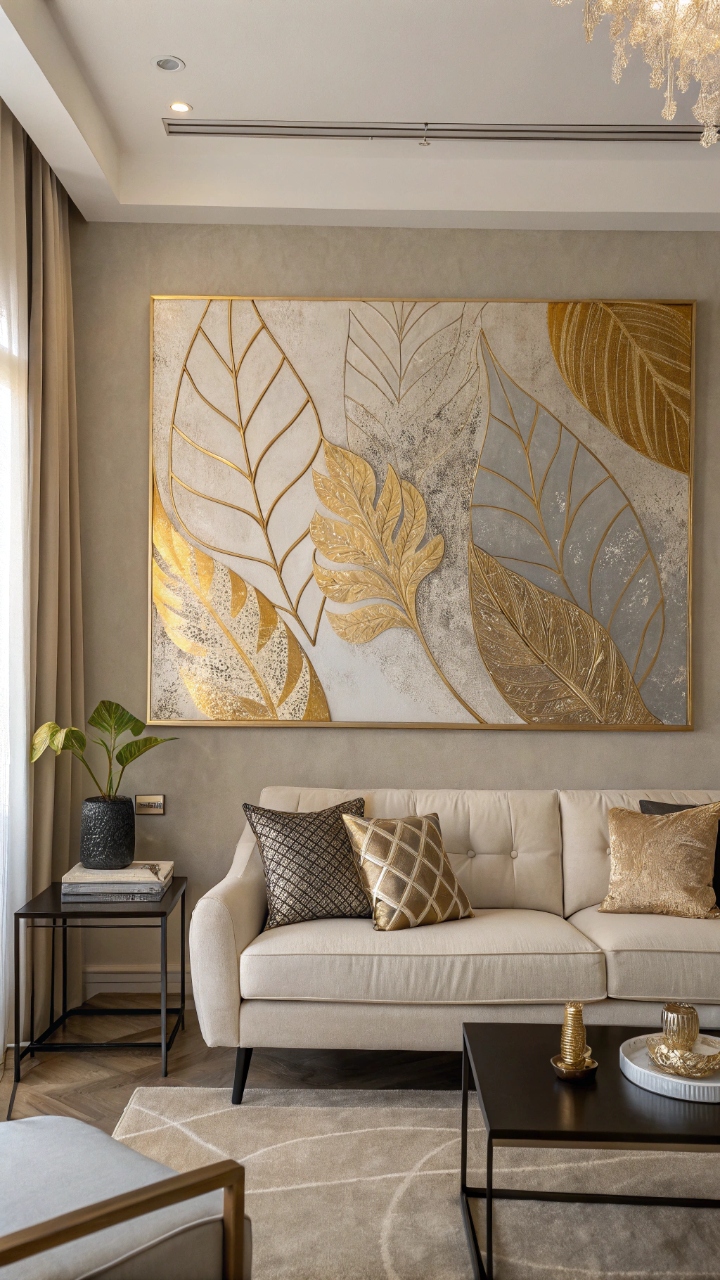
Gold leaf has this magical ability to make anything look expensive, and when I first experimented with it, I couldn’t believe how easy it was to use. I applied it in abstract patterns over a painted canvas, letting some areas remain imperfect, and that contrast created a stunning, high-end finish. The way it catches light adds dimension and a bit of drama without being over the top. Isn’t it wild how a little shimmer can elevate everything?
Pro Tip: Use adhesive sparingly and embrace imperfections—they make the piece look more organic.
10. Floating Acrylic Frame Art
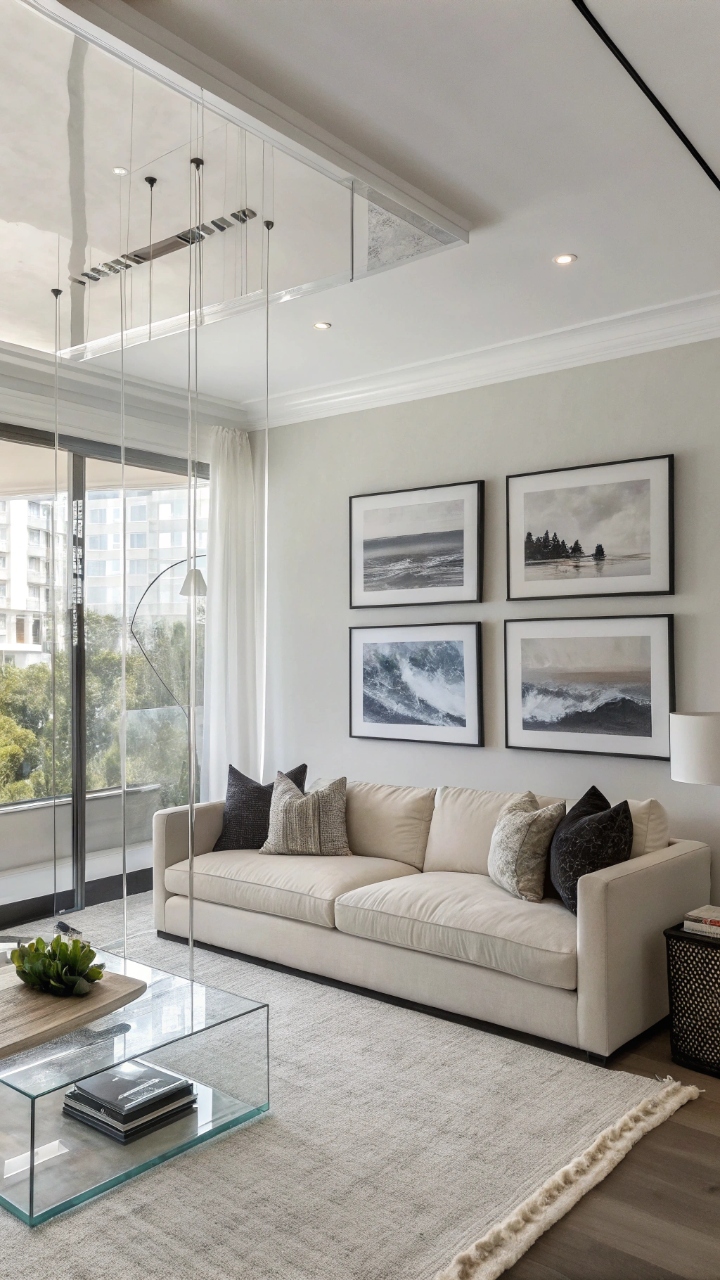
This one feels so modern and sleek, and I was honestly surprised by how professional it looked when I finished. By sandwiching artwork between two acrylic sheets, it creates this floating effect that feels clean and sophisticated. It’s minimal but impactful, and it works beautifully with both bold and subtle designs. Don’t you love decor that feels light and airy? This does exactly that.
Pro Tip: Use spacers between the acrylic sheets for a more dimensional, gallery-style presentation.
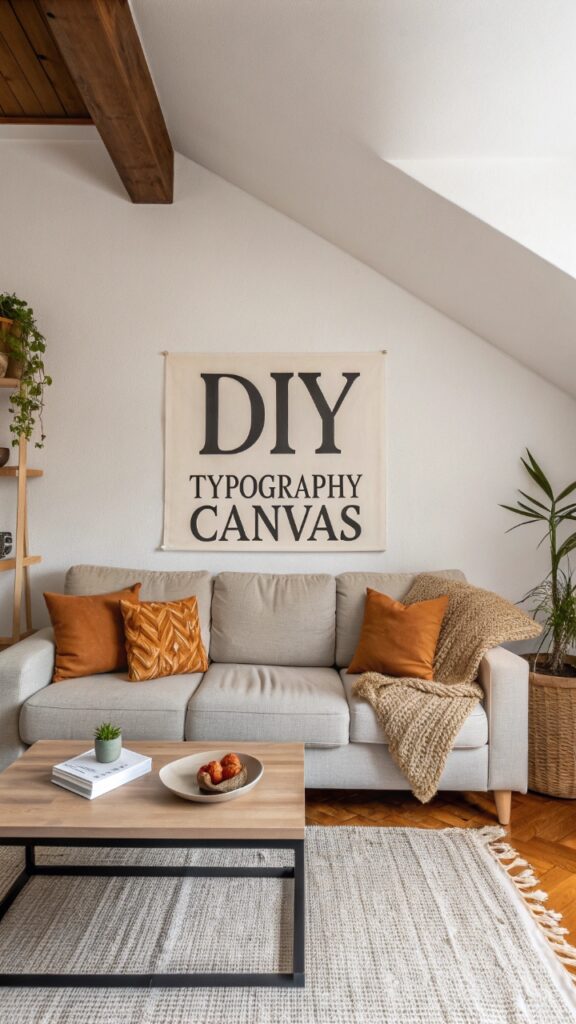
11. DIY Typography Canvas
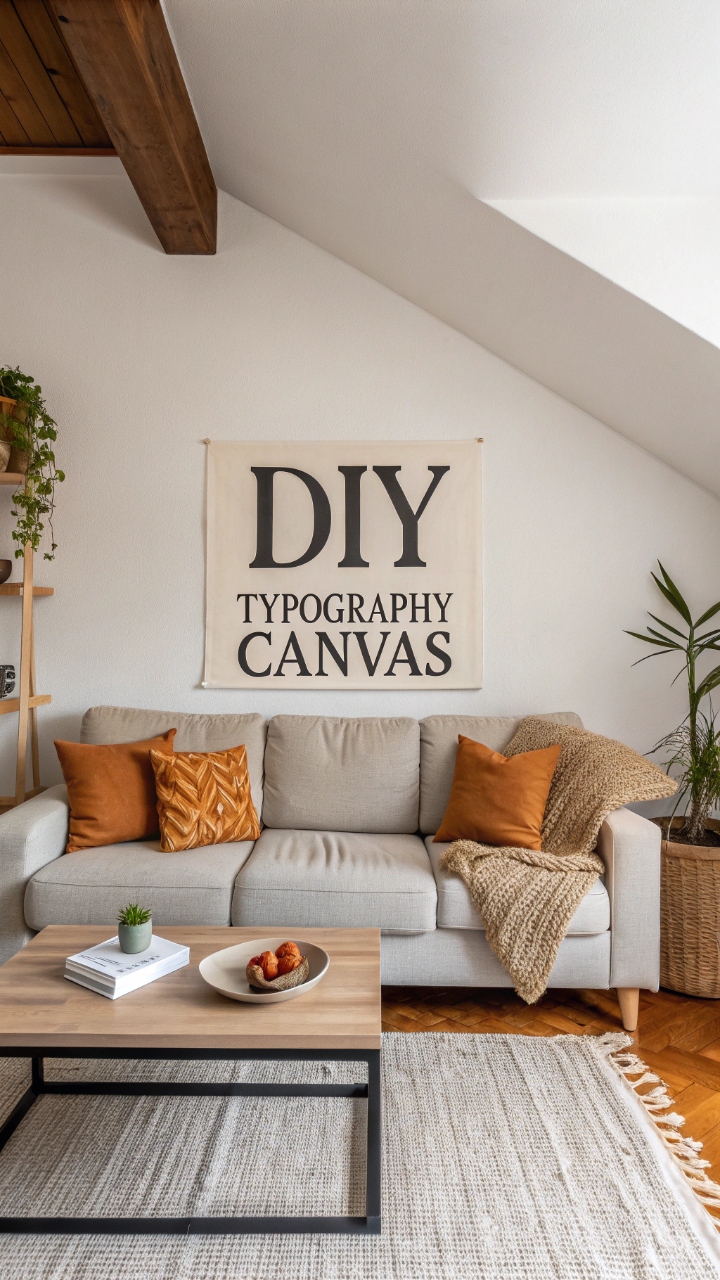
There’s something powerful about words, especially when they’re displayed in a bold, intentional way. I created a typography canvas with a phrase that actually means something to me, and every time I see it, it feels grounding. The design was simple—just strong lettering on a neutral background—but the emotional impact made it feel priceless. Isn’t that what great art does? It connects with you on a deeper level.
Pro Tip: Use bold, clean fonts and keep the message short for maximum impact.
12. Wood Slat Wall Art
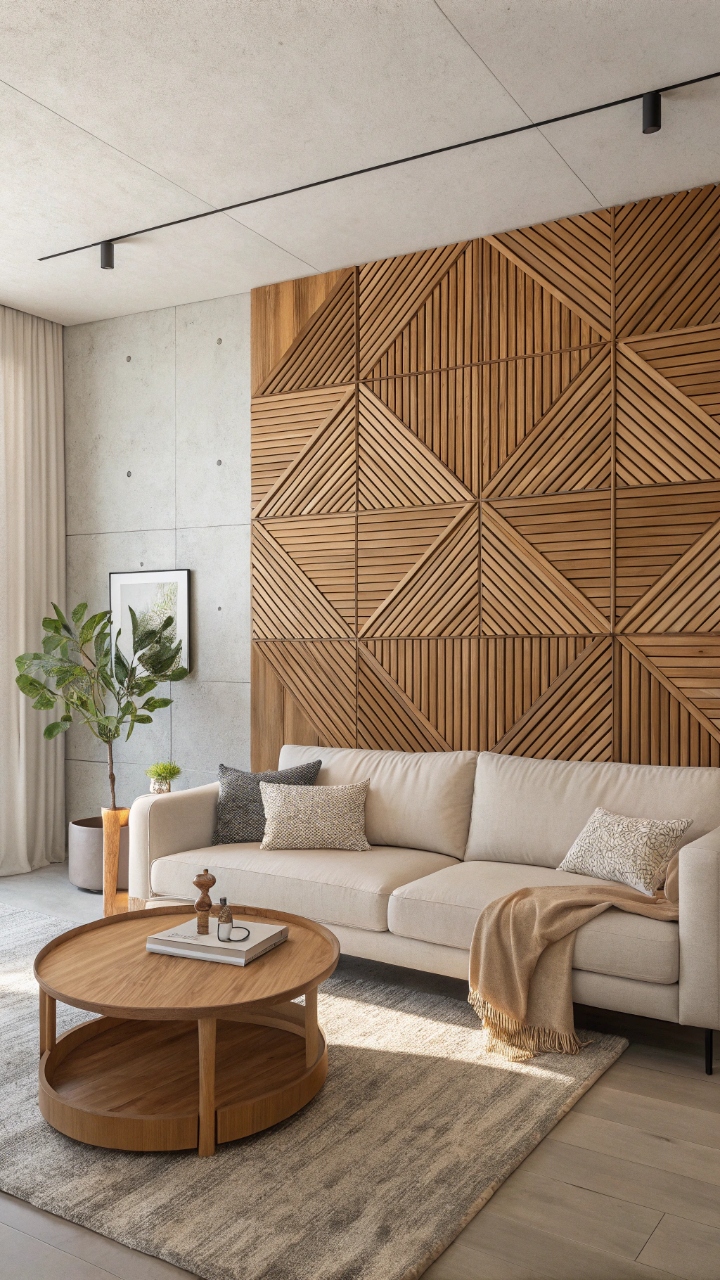
Adding wood elements instantly warms up a space, and creating a wood slat panel gave my living room this modern, architectural feel. I arranged thin wooden strips in a geometric pattern, and the texture alone made it feel high-end. It’s subtle but striking, especially when light hits it from different angles. Doesn’t natural material always make a space feel more grounded? It’s like bringing a piece of the outdoors inside.
Pro Tip: Stain the wood in a consistent tone for a more polished, designer look.
13. Abstract Watercolor Art
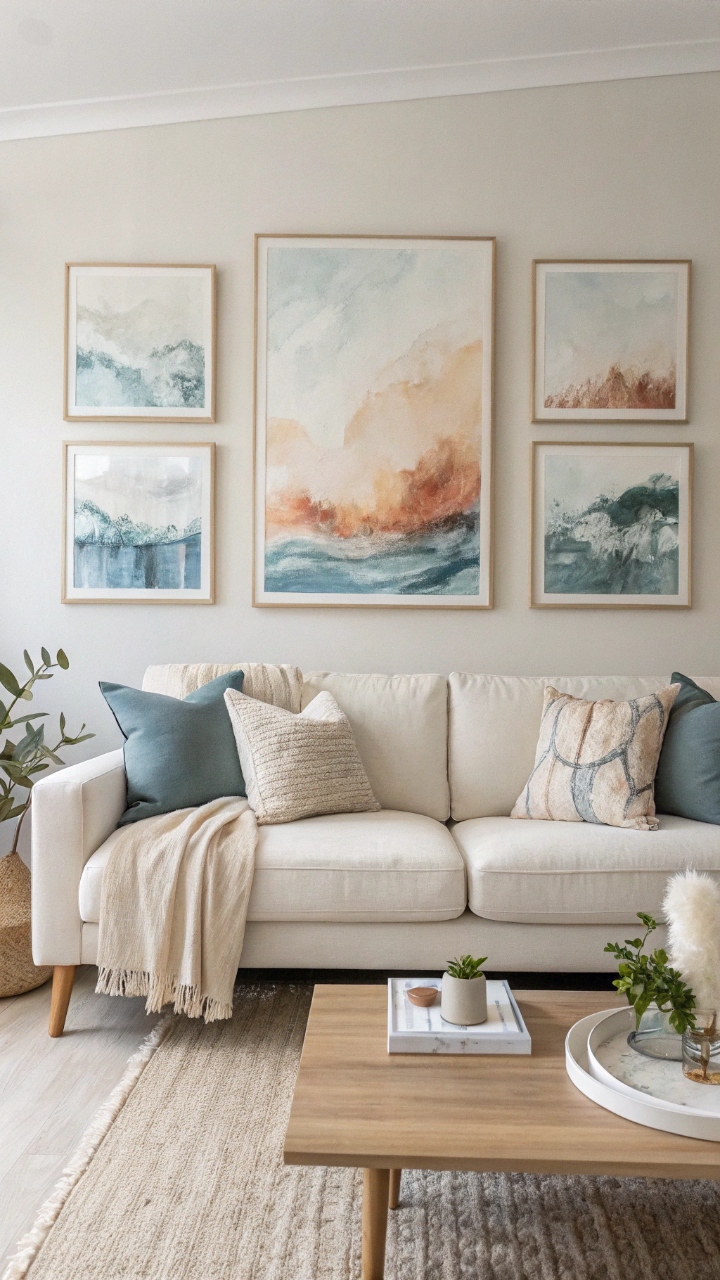
Watercolor has this dreamy, fluid quality that feels soft yet intentional, and when I started experimenting with it, I was hooked. Letting colors blend naturally created these organic shapes that looked effortlessly artistic. Framed simply, the pieces felt light and calming, perfect for a relaxed living room vibe. Isn’t it nice when art doesn’t feel rigid or forced? This is all about flow.
Pro Tip: Use high-quality watercolor paper to prevent warping and enhance the final look.
14. DIY Shadow Box Displays
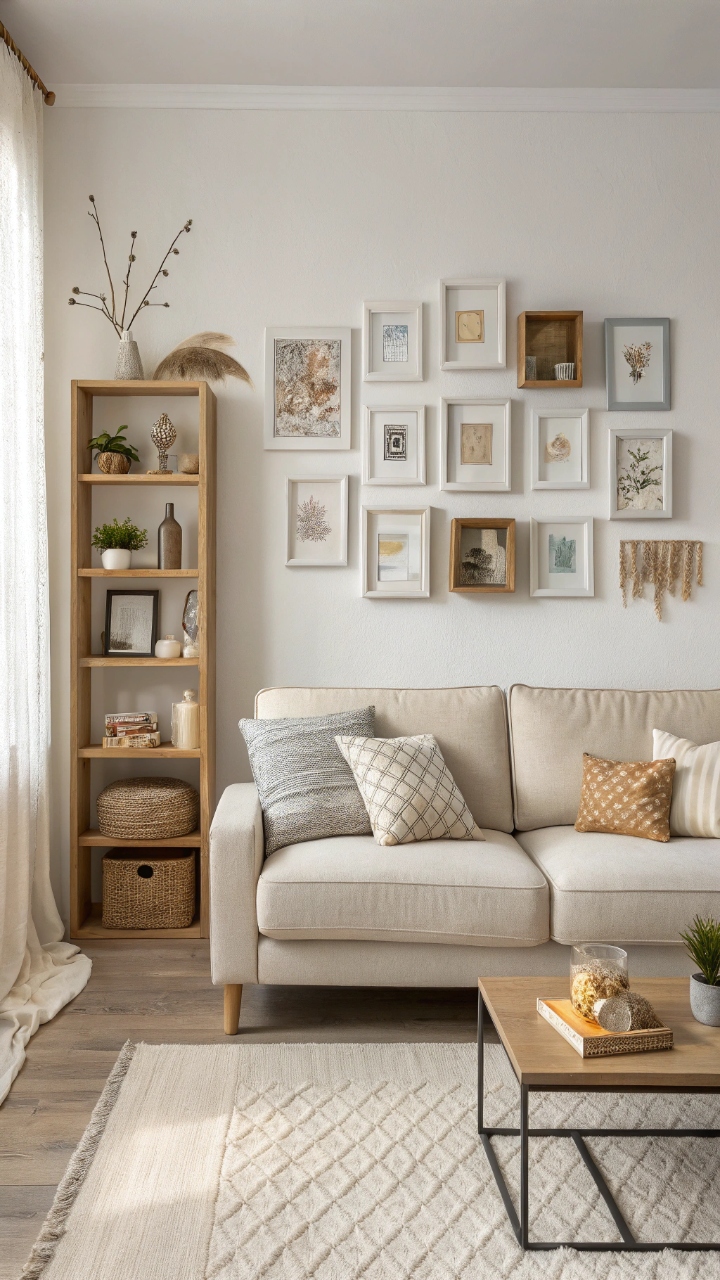
Shadow boxes are such an underrated way to create dimensional art, and I love how they let you showcase objects instead of just images. I filled mine with small keepsakes and arranged them thoughtfully, and it instantly became a conversation piece. It’s like telling a story in a frame, which feels so much more personal than traditional art. Don’t you love decor that sparks curiosity?
Pro Tip: Stick to a consistent color palette inside the box for a cohesive design.
15. Mirror Collage Art
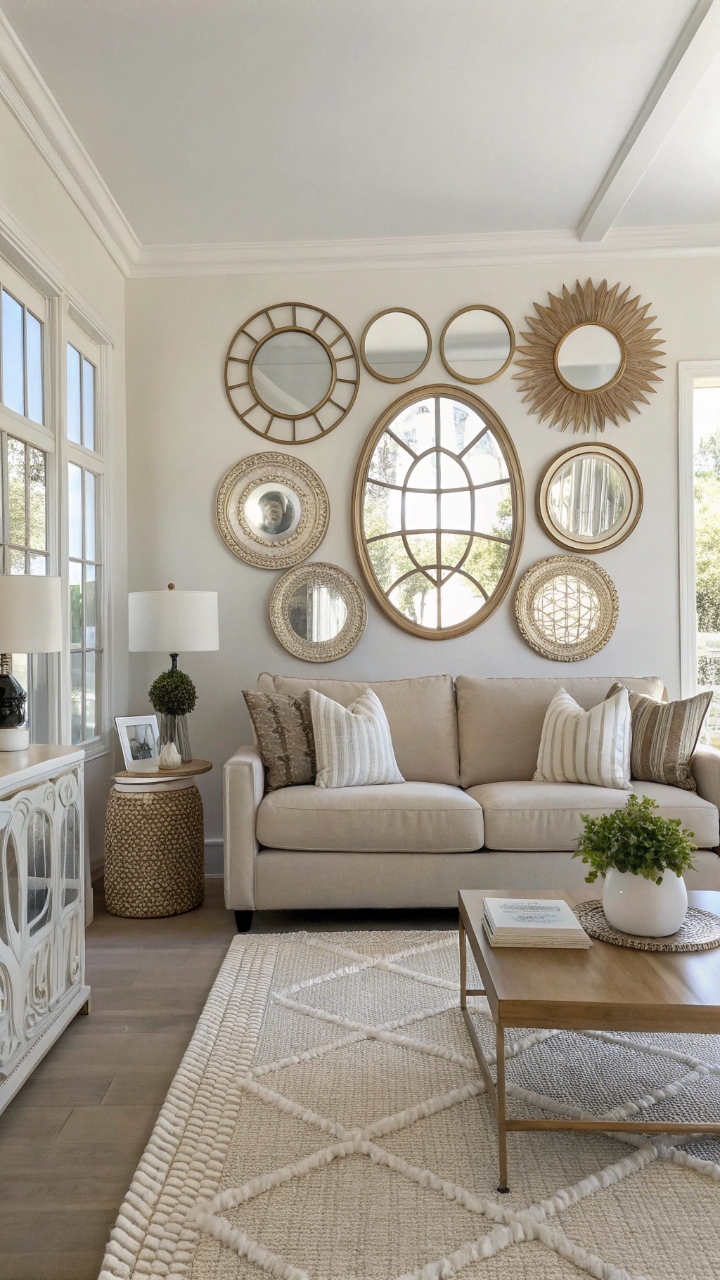
Mirrors aren’t just functional—they can be art too, and creating a mirror collage added light and depth to my living room in the best way. I arranged different shapes in a balanced layout, and the reflections made the space feel bigger and brighter. It’s both practical and beautiful, which is always a win. Have you ever noticed how reflective surfaces instantly elevate a room? It’s like built-in glam.
Pro Tip: Use adhesive strips designed for mirrors to keep everything secure.
16. DIY Canvas with Raised Patterns
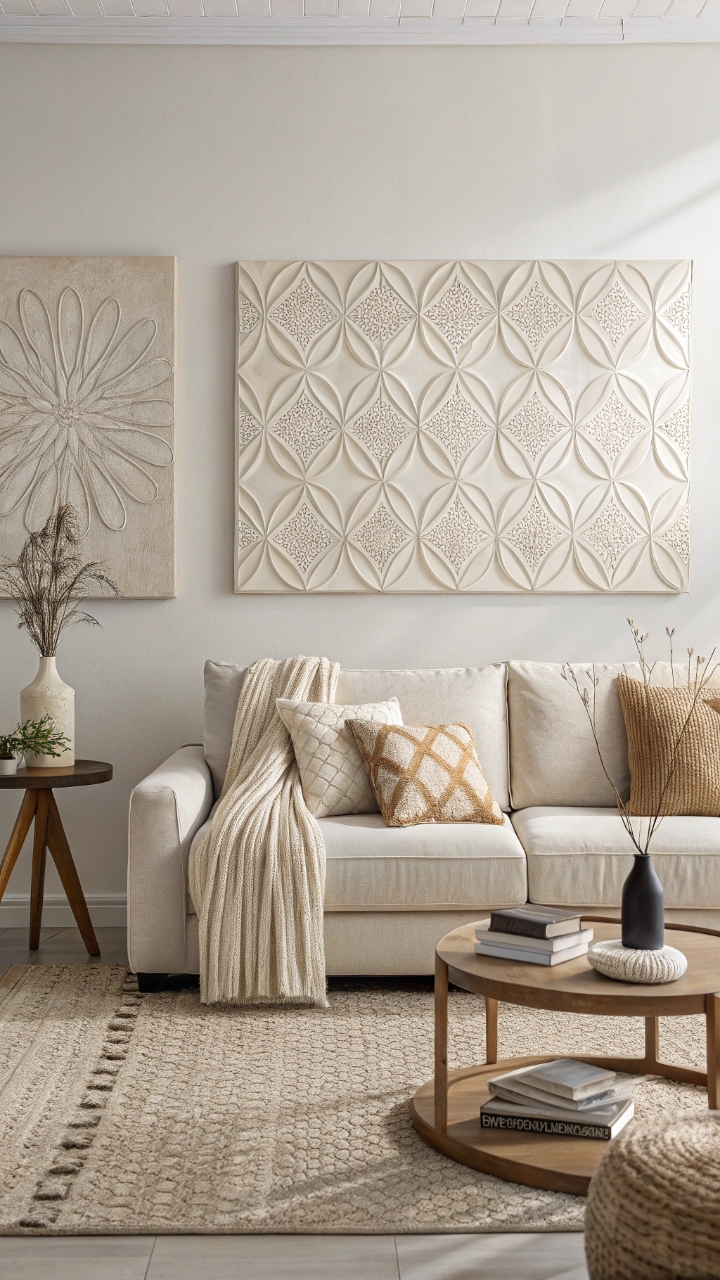
This one surprised me the most, because the raised patterns created such a tactile, high-end effect. Using materials like caulk or modeling paste, I built subtle designs on a canvas and painted over them, and the result looked incredibly custom. The texture adds depth that flat art just can’t replicate, making the piece feel more dynamic. Isn’t it amazing how dimension changes everything? It draws you in without being overwhelming.
Pro Tip: Keep patterns simple and repetitive for a modern, cohesive look.
Conclusion
At the end of the day, creating a living room that feels beautiful and intentional isn’t about how much money you spend—it’s about how much of yourself you put into it. Each DIY piece you create carries a bit of your personality, your story, and your creativity, and that’s something no store-bought artwork can replicate. When you look around your space and recognize your own hands in it, there’s this quiet sense of pride that settles in. It’s not just decor anymore—it’s an extension of you. And honestly, that’s what makes a space feel truly luxurious.
What I’ve learned through all of this is that “expensive-looking” isn’t about perfection—it’s about intention, texture, and confidence in your choices. When you stop trying to copy and start creating, something shifts, and your home begins to feel more authentic and alive. So whether you’re painting your first abstract canvas or experimenting with textures for the first time, give yourself permission to explore. You might surprise yourself with what you can create, and who knows—you might even end up with a living room that looks straight out of a design magazine, without the price tag to match.