
I look back at the first wooden stool I ever painted and just have to laugh at my past self. I tackled it with a massive amount of confidence and a complete lack of patience—two things that definitely do not mix when you’re trying to manage wet paint and tiny, careful brushstrokes. It was an old kitchen stool from my grandmother’s back porch, the kind with worn edges, faint scratches, and one stubborn ring mark from years of coffee mugs being set down without a coaster. I thought a quick coat of white paint would magically turn it into a charming farmhouse accent, but halfway through, I realized the little stool had more personality than I had given it credit for. That project taught me something I still believe today: wooden stool painting ideas work best when they honor the shape, history, and everyday usefulness of the piece.
Over the years, I have painted stools for entryways, plant corners, kids’ rooms, craft spaces, patios, and even one tiny bathroom where the stool held rolled towels like it had been born for the job. I love wooden stools because they are small enough to experiment with, affordable enough to rescue from thrift stores, and practical enough that the finished piece does not just sit there looking cute for five minutes. A painted wooden stool can become a color pop beside a neutral sofa, a sweet bedside stand, a plant perch near a sunny window, or a playful accent in a mudroom full of boots and backpacks. And honestly, if you mess it up, you can sand it, repaint it, and call it “layered character,” which is a pretty solid home-decor loophole.
What makes stool painting so fun is the mix of creativity and usefulness, because you get to play with color, pattern, texture, and mood without committing to a whole wall or a giant piece of furniture. A simple wooden stool can lean rustic, coastal, cottagecore, modern, boho, vintage, whimsical, or sleek depending on the paint colors and finishing details you choose. I always tell friends to start with the feeling they want in the room, because a soft sage stool whispers calm while a glossy black stool adds drama, and a hand-painted floral stool brings instant “I found this at a dreamy little market” energy. So if you have a plain stool waiting in the garage, a thrifted find in the trunk, or a forgotten wooden seat begging for a second life, these stylish and unique wooden stool painting ideas will help you turn it into something personal, practical, and genuinely beautiful.
Classic Whitewashed Wooden Stool
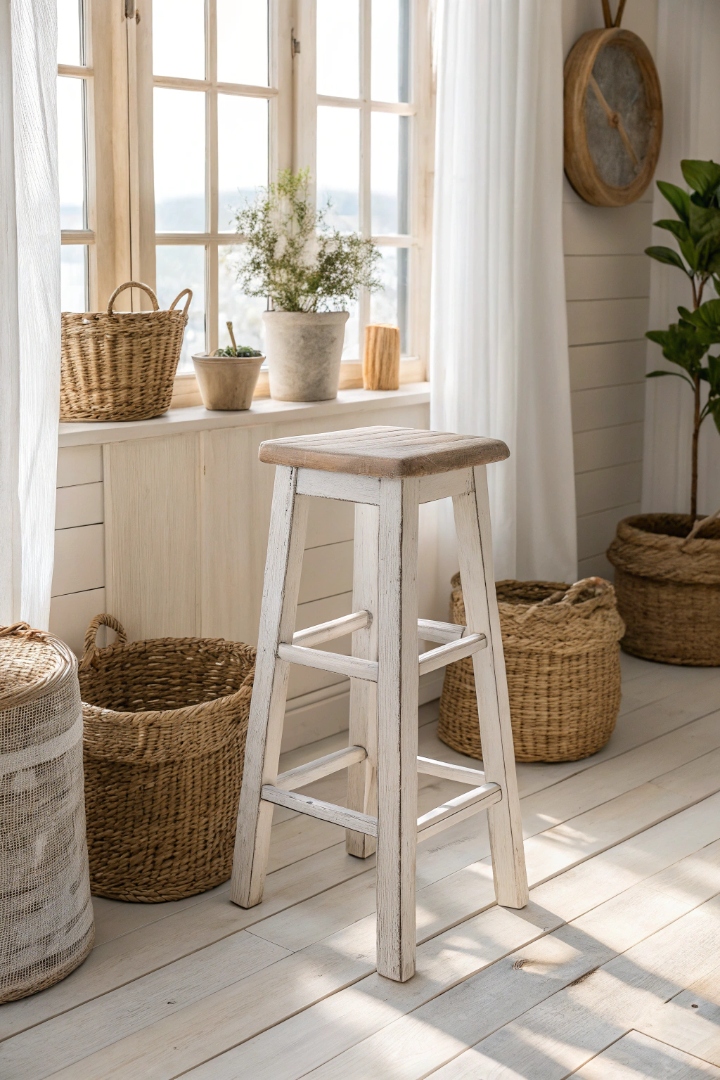
A whitewashed wooden stool feels like fresh linen, morning light, and an open window all rolled into one simple furniture makeover. I love this idea when the stool has pretty wood grain, because the thin paint lets those natural lines peek through instead of hiding every bit of character. Use watered-down white paint or a soft white stain, then wipe it back with a rag so the finish looks airy, relaxed, and slightly sun-faded. The beauty of whitewashing is that it keeps the stool casual while still making it look styled, especially beside woven baskets, clay pots, or pale wood floors. Doesn’t every cozy corner need one piece that feels breezy without trying too hard?
Pro Tip: Sand the edges lightly after the paint dries so the stool looks naturally worn instead of freshly coated.
Matte Black Modern Stool
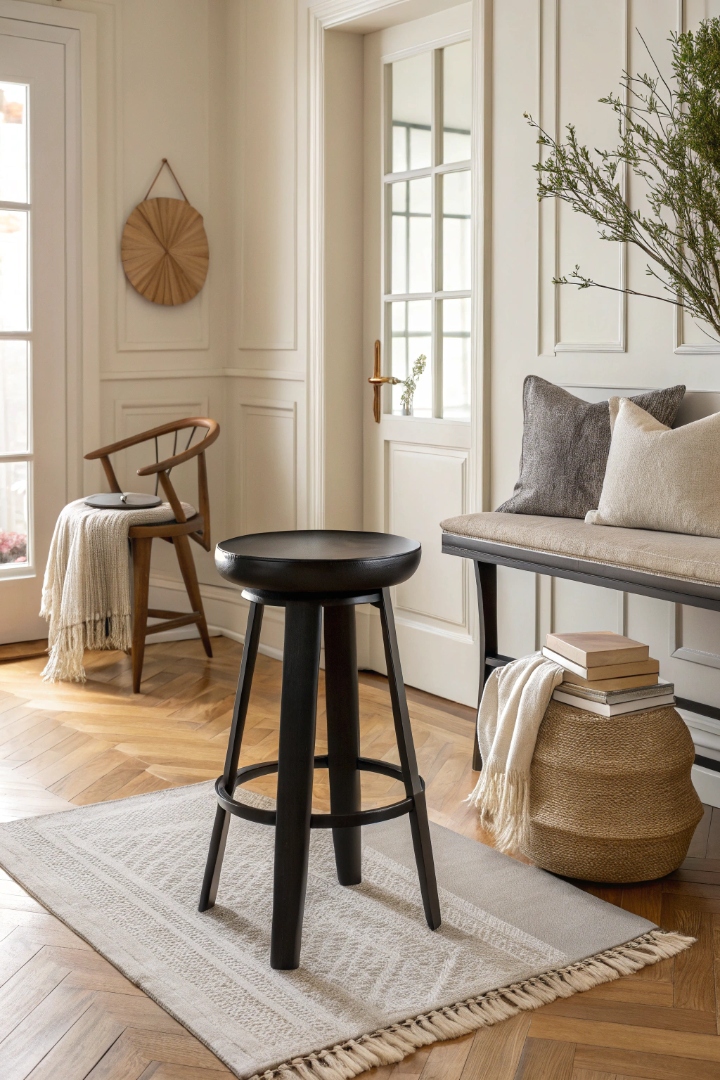
A matte black wooden stool can turn the most basic thrift-store find into a sleek little statement piece with serious designer energy. I like using this look in rooms with warm wood, cream walls, brass accents, or textured rugs because the black paint adds contrast without shouting. Choose a soft matte or eggshell finish so the stool feels velvety rather than shiny, then keep the shape clean and simple for a modern home decor look. Black paint makes scratches, uneven legs, and dated wood tones feel intentional, which is why this idea is a total lifesaver for old stools with awkward finishes. Wouldn’t a small black stool beside a bathtub, reading chair, or entry bench look effortlessly cool?
Pro Tip: Use a bonding primer first, especially if the stool has glossy varnish, so the black paint grips smoothly and lasts longer.
Two-Tone Painted Stool
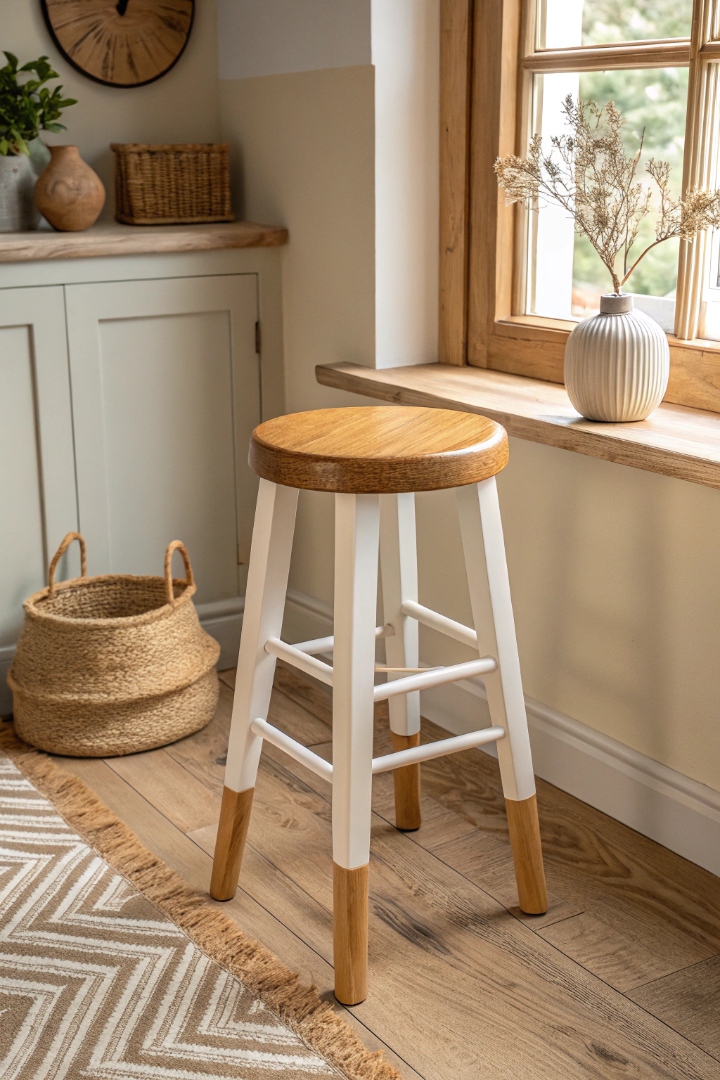
A two-tone painted stool gives you that custom furniture feeling without needing advanced painting skills or fancy tools. I usually paint the legs one color and the seat another, because that simple split creates structure and makes the stool look thoughtfully designed. Try cream legs with a walnut-stained seat, navy legs with a natural wood top, or sage green legs with a warm honey seat for a cozy, collected look. This is one of the easiest wooden stool painting ideas for matching your existing decor, since you can pull one color from your walls and another from your furniture. Why settle for one shade when two can make the whole piece feel more layered and expensive?
Pro Tip: Tape around the seat edge carefully and remove the tape while the paint is still slightly damp for a cleaner line.
Hand-Painted Floral Stool
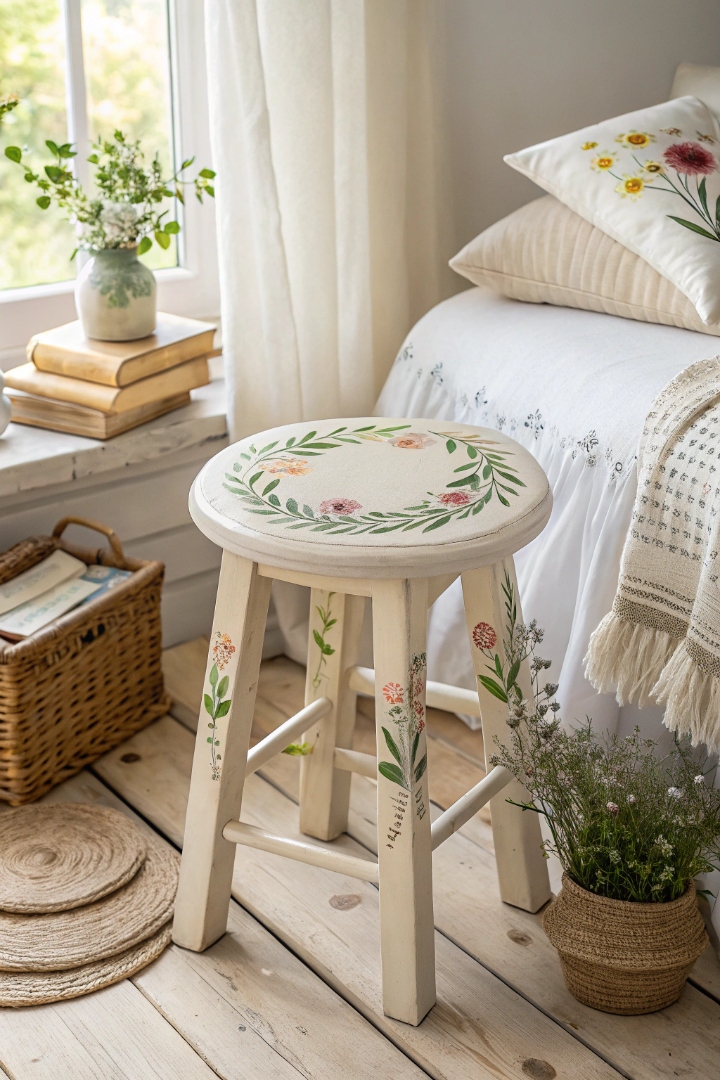
A hand-painted floral stool brings instant charm to a bedroom, sunroom, craft corner, or cottage-style kitchen, and it does not need to look perfect to feel beautiful. I actually prefer flowers that look a little loose and painterly, because they feel more personal than stiff, overly polished designs. Start with a soft base color like cream, blush, pale blue, or sage, then add vines, daisies, roses, wildflowers, or tiny leaves around the seat. Florals work especially well on round stools because the design can curve naturally around the top, almost like a wreath. Isn’t there something sweet about sitting a plant, candle, or stack of books on a stool that looks like it wandered in from a garden?
Pro Tip: Sketch the floral layout lightly with pencil before painting so you can balance the design before committing with color.
Checkerboard Stool Seat
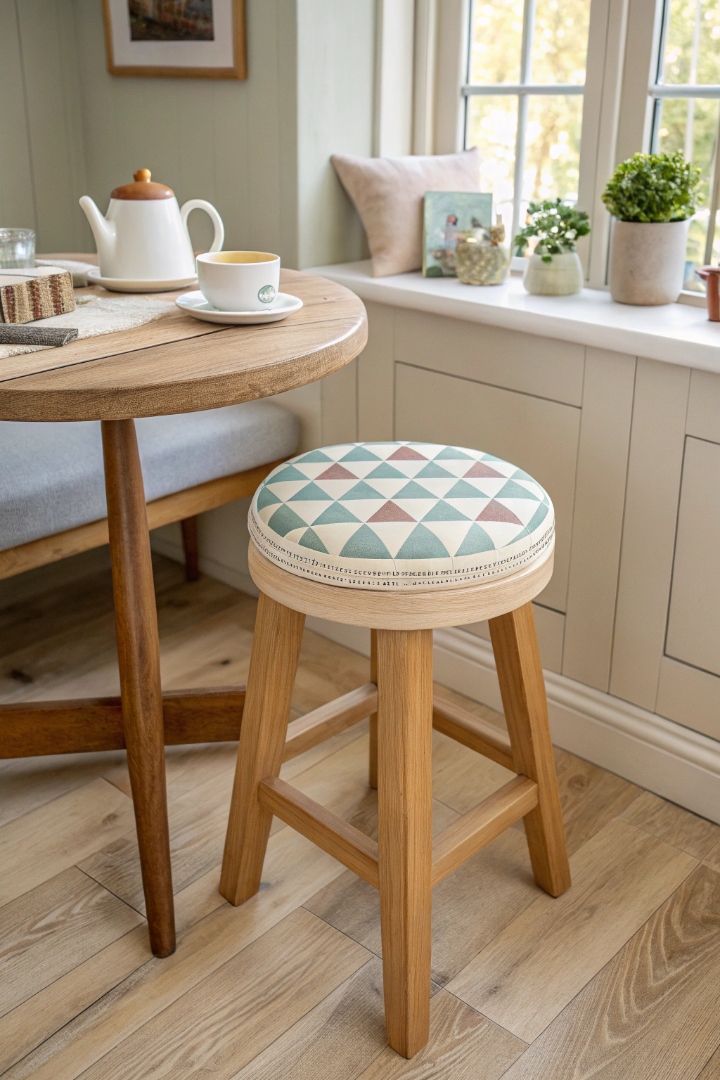
A checkerboard stool seat feels playful, graphic, and surprisingly timeless, especially when you keep the color palette soft or slightly vintage. I love this idea for kitchens, kids’ rooms, creative studios, and breakfast nooks because it adds movement without needing a complicated pattern. Classic black and white looks bold, but cream and taupe, dusty blue and white, or terracotta and beige can feel warmer and more homey. The checkerboard pattern instantly makes a small wooden stool look intentional, like you found it in a boutique instead of buried under old paint cans. And let’s be real, a tiny checkerboard seat has that cool “I made this, no big deal” vibe.
Pro Tip: Measure the seat first and use painter’s tape or a stencil grid so the squares stay even around the edges.
Distressed Farmhouse Stool
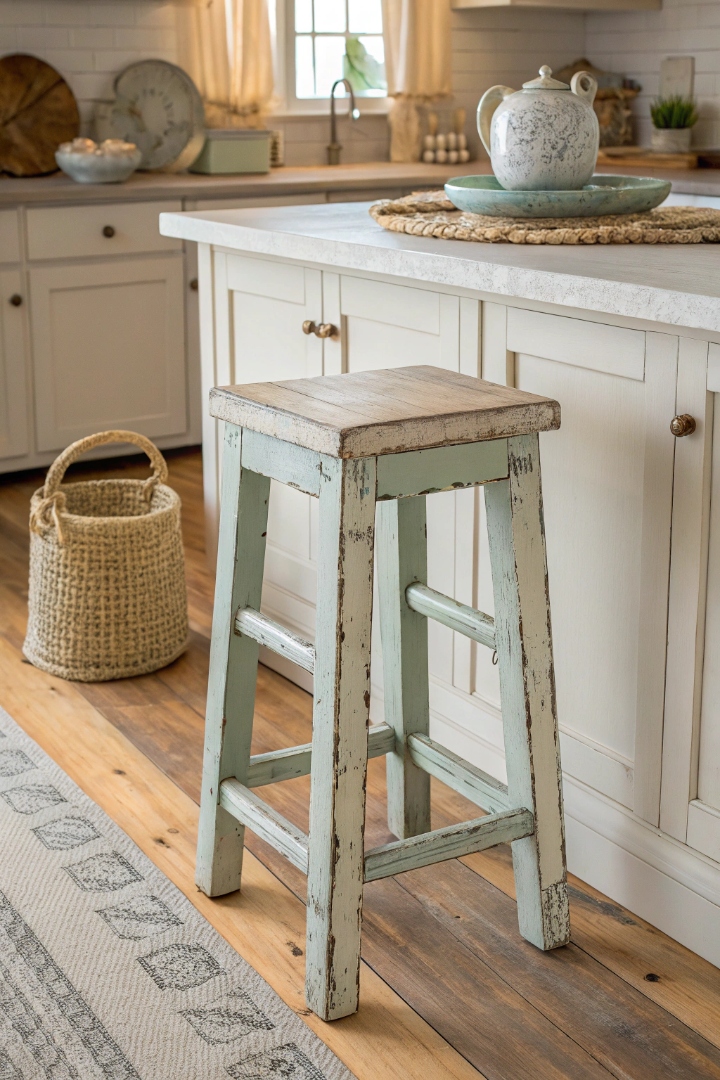
A distressed farmhouse stool feels like it has lived a good life, held a few baskets of laundry, and stood near more than one Sunday pie cooling on the counter. This style works beautifully with soft white, antique cream, muted gray, dusty blue, or faded green paint because those colors already feel timeworn. Paint the stool fully, let it dry, then sand the corners, rungs, and seat edges where hands and feet would naturally rub over time. The key is distressing with restraint, because too much sanding can make the piece look forced instead of naturally aged. Don’t you love furniture that feels like it has a story even if you just painted it yesterday?
Pro Tip: Focus distressing on raised edges and high-touch spots so the worn finish looks believable.
Color-Dipped Stool Legs
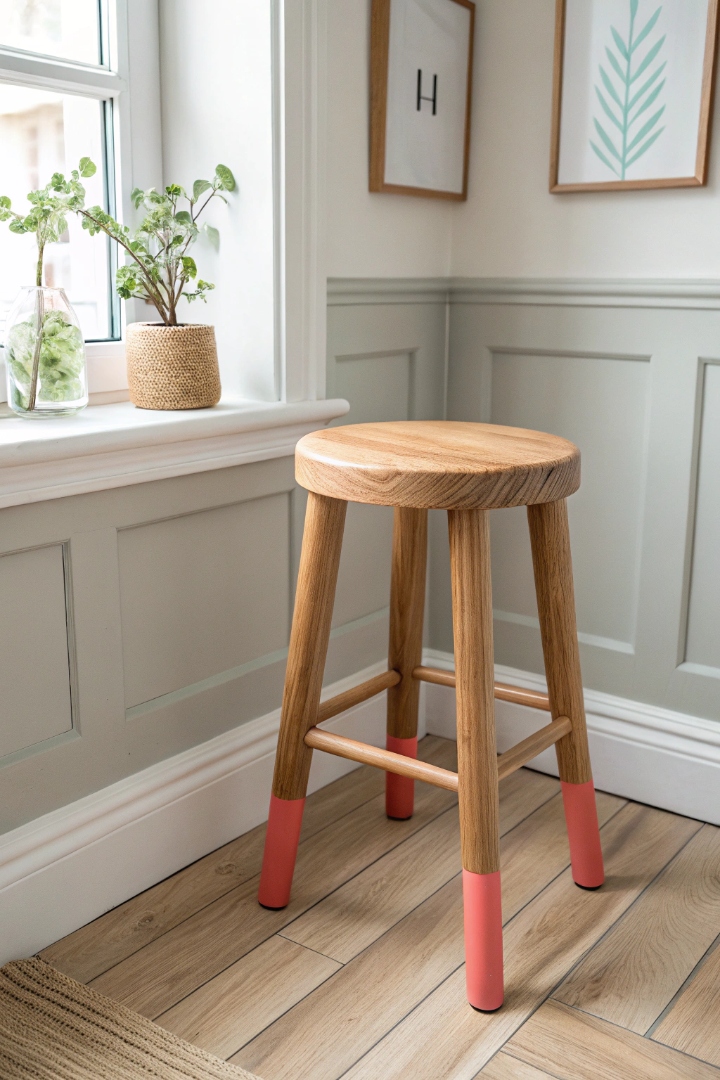
Color-dipped stool legs add a fun, modern twist while keeping most of the wood natural and warm. I like this idea when the stool already has a beautiful seat or interesting grain, because the painted leg tips add personality without covering the whole piece. Choose a bold color like coral, cobalt, mustard, or emerald for a playful look, or go subtle with white, charcoal, or dusty pink. The dipped effect creates a crisp, stylish detail that feels fresh but not overwhelming, which makes it perfect for small apartments or minimalist rooms. Isn’t it amazing how painting just a few inches can change the whole mood of a stool?
Pro Tip: Wrap tape around each leg at the exact same height and press the edges firmly to prevent paint from bleeding.
Sage Green Cottage Stool
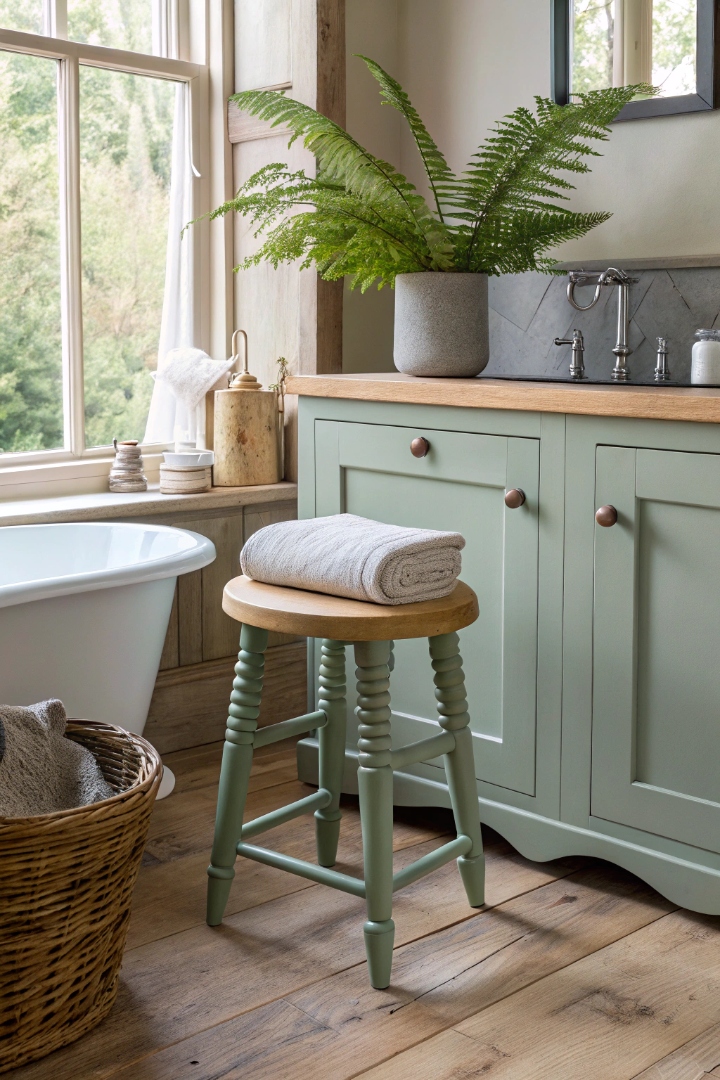
A sage green wooden stool has that calm, earthy charm that makes a room feel softer the second you set it down. I love sage because it works with so many materials, from raw wood and wicker to linen, stoneware, brass, and creamy painted cabinets. Paint the whole stool sage for a gentle cottage look, or pair sage legs with a natural wood seat for a more grounded finish. This color feels fresh without being trendy in a loud way, which matters when you want your painted stool to stay beautiful for years. Wouldn’t it look lovely holding a fern near a window or a folded towel beside a clawfoot tub?
Pro Tip: Choose a muted sage with gray undertones if your room has neutral decor, because it will blend more naturally.
Coastal Blue Painted Stool
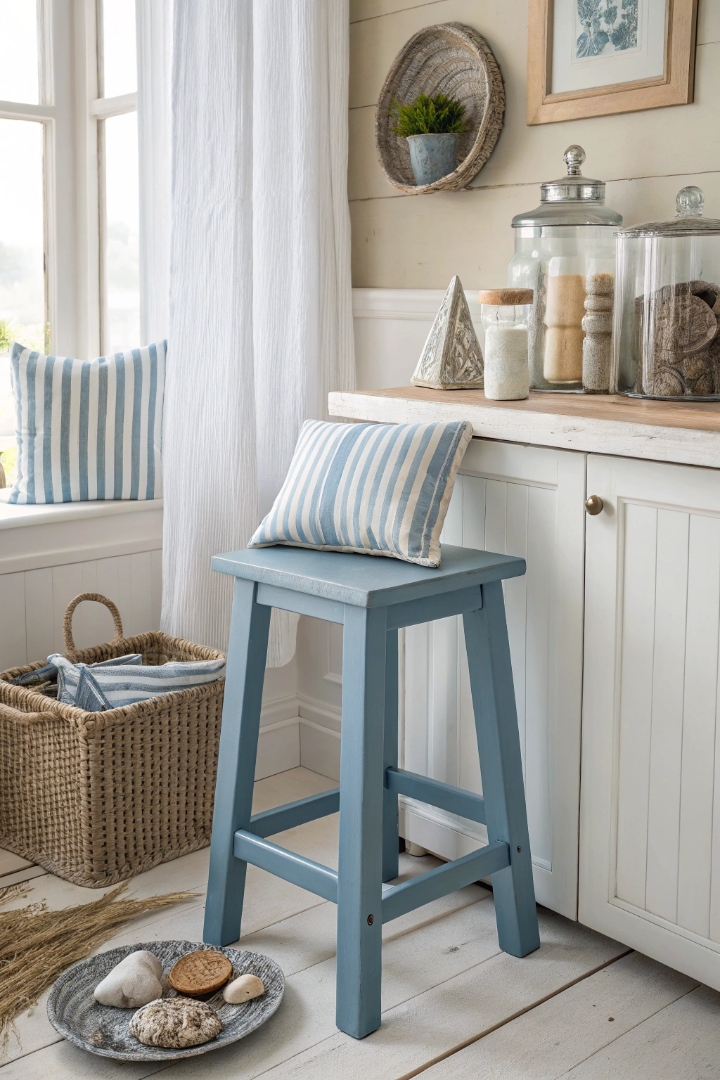
A coastal blue painted stool can make a corner feel like a breezy beach cottage, even if you live nowhere near the ocean. I picture this look beside striped pillows, woven trays, white curtains, and glass jars filled with shells or sea-colored stones. Soft sky blue feels airy, deeper navy feels classic, and weathered blue-gray gives the stool a driftwood-inspired mood. Blue paint pairs beautifully with natural wood because it brings out warmth while adding a clean, relaxed contrast. Who wouldn’t want a little piece of seaside calm tucked into a busy kitchen or bathroom?
Pro Tip: Add a clear matte topcoat instead of glossy sealer so the stool keeps that soft, salt-air feeling.
Boho Patterned Stool
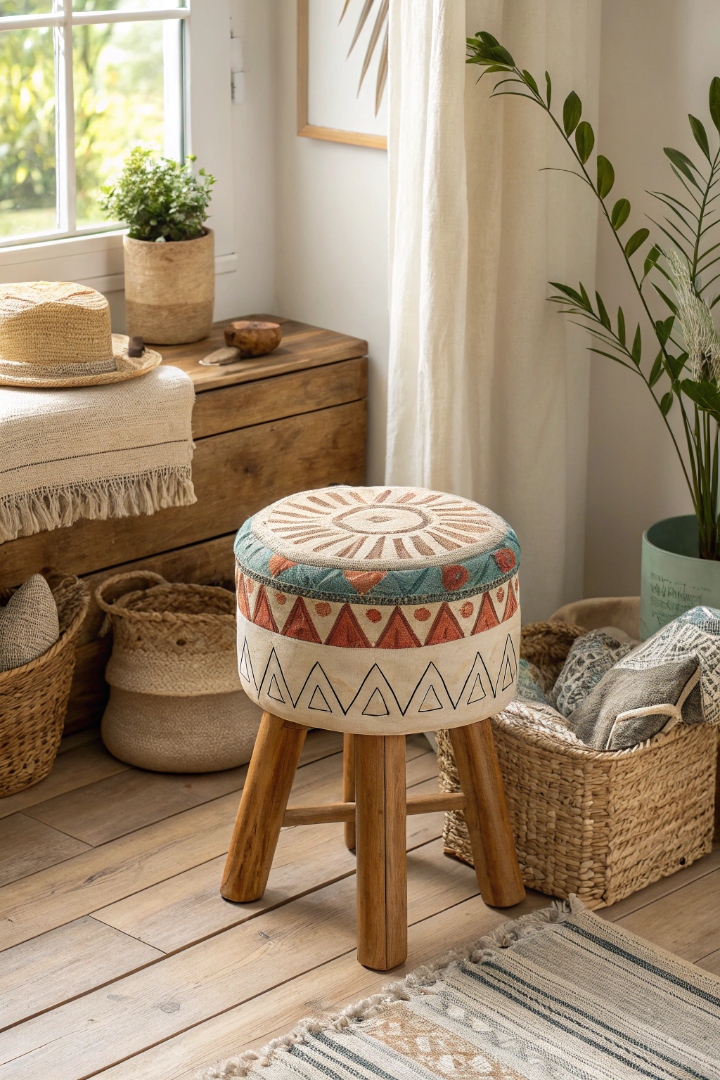
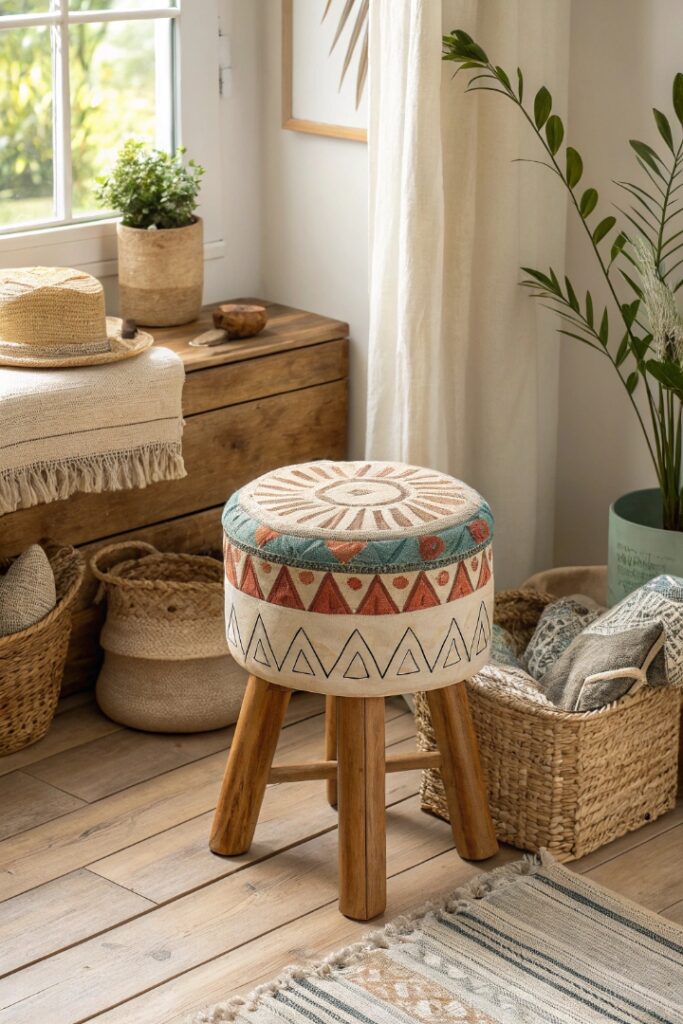
A boho patterned stool gives you room to play with arches, dots, sunbursts, diamonds, stripes, and earthy colors that feel handmade and soulful. I like starting with a warm neutral base, then layering terracotta, ochre, clay, cream, charcoal, or muted teal in simple repeating shapes. The pattern can cover the seat only, wrap around the legs, or travel down one side like a little painted tapestry. Boho designs look best when they feel relaxed and imperfect, so you do not need every dot or line to behave like it belongs in a math textbook. Isn’t that kind of freedom exactly why small painted furniture projects are so satisfying?
Pro Tip: Limit your palette to three or four colors so the pattern feels collected instead of chaotic.
Ombre Painted Stool
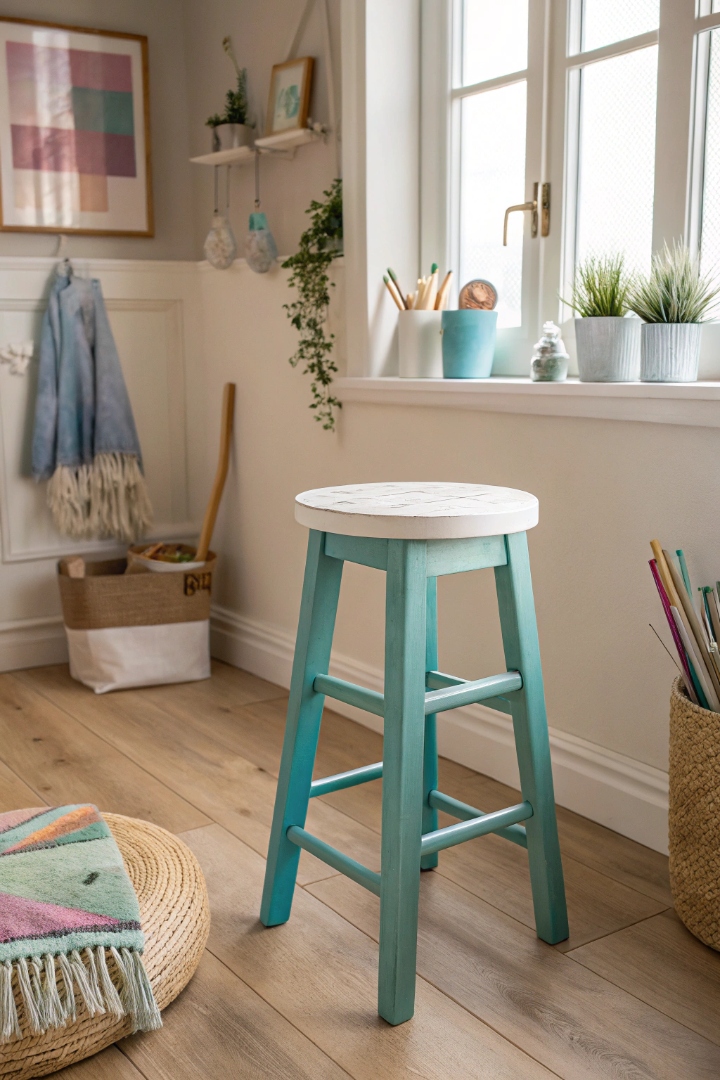
An ombre painted stool brings soft movement and dreamy color to a piece that might otherwise feel plain. I especially love this idea for a child’s room, creative workspace, or plant corner because the fading color feels lighthearted without looking childish. Blend from deep teal to pale mint, coral to blush, navy to powder blue, or charcoal to warm gray depending on your room’s mood. The gradual color shift makes the stool feel artistic while still staying practical, which is a pretty great combo for a weekend DIY. Doesn’t a soft fade make even a tiny stool feel like it has a little magic in it?
Pro Tip: Work while the paint is still wet and use a dry brush between colors to soften the transition.
Stenciled Tile-Inspired Stool
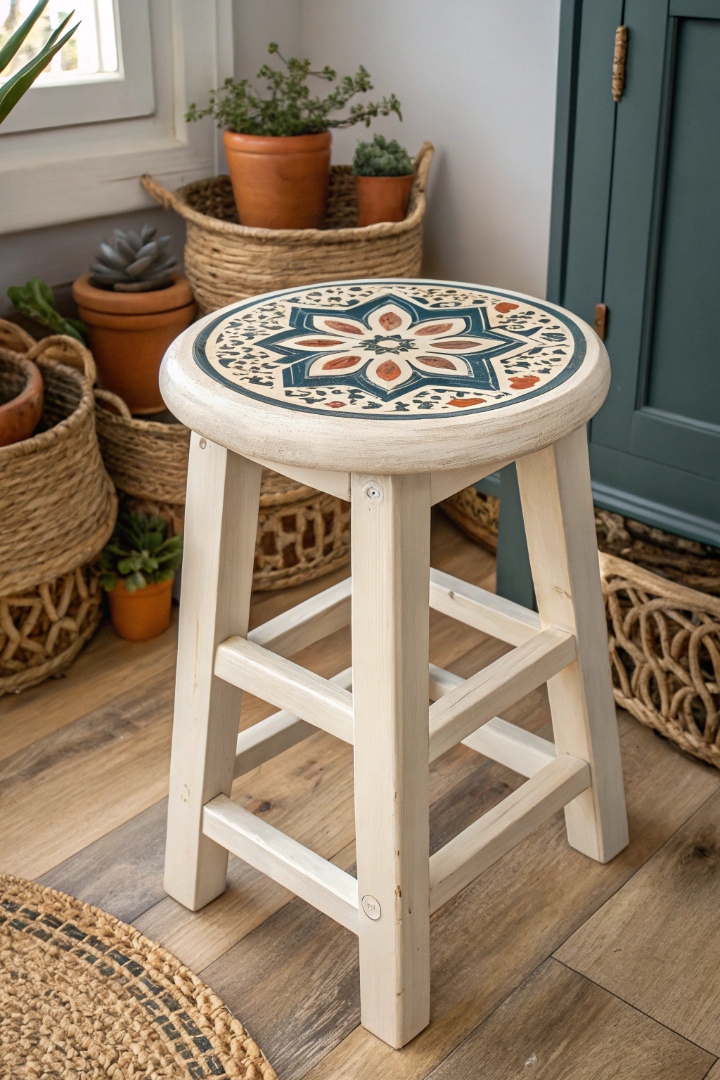
A stenciled tile-inspired stool gives you the look of patterned ceramic without the weight, cost, or breakable drama. I love Moroccan, Spanish, and vintage floor-tile patterns on stool seats because they add instant detail to a simple shape. Start with a pale base coat, then stencil with navy, charcoal, terracotta, or forest green for contrast that feels crisp and decorative. This idea works beautifully in kitchens, patios, laundry rooms, and entryways, especially when you want a small accent that pulls the whole color story together. Why buy a new accent piece when a stencil can make an old wooden stool look custom?
Pro Tip: Use very little paint on the stencil brush and build color slowly to avoid blurry edges.
Warm Terracotta Stool
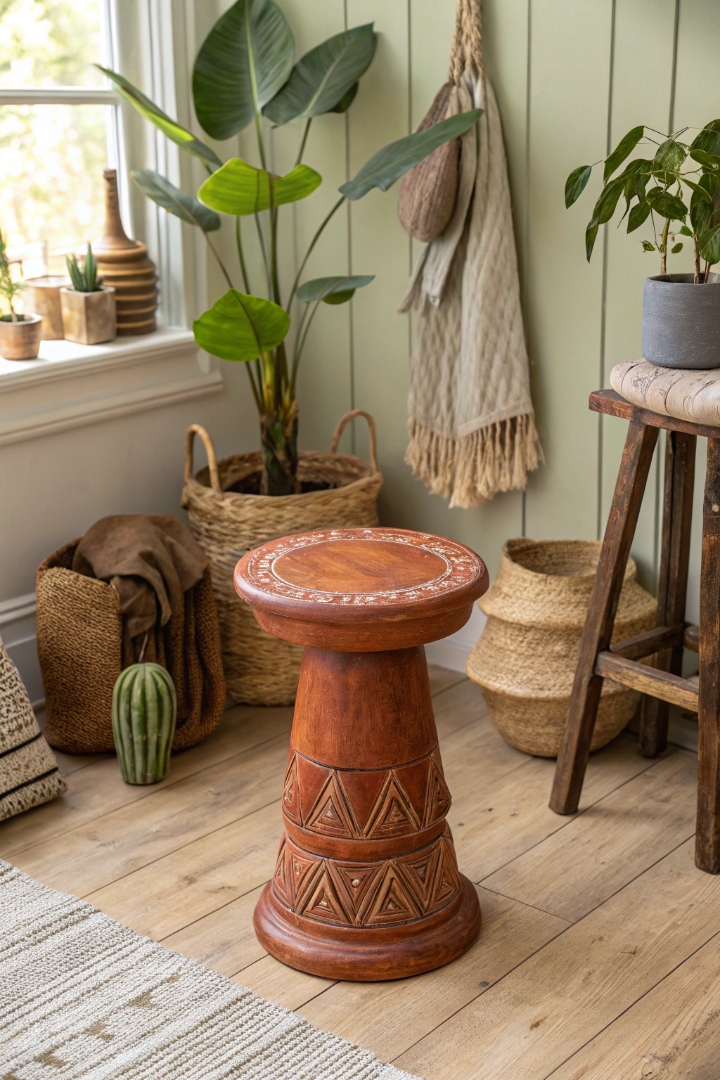
A warm terracotta stool feels earthy, sunbaked, and cozy, like a clay pot sitting on a porch after a summer rain. I reach for this color when a room needs warmth but not the intensity of bright orange or red. Terracotta looks beautiful with olive green, cream, black, rattan, leather, natural wood, and woven textiles, which makes it surprisingly easy to style. This shade gives a wooden stool a grounded, handmade quality, especially when you choose a matte or chalky finish. Doesn’t it make you want to place the stool beside a leafy plant and call the whole corner finished?
Pro Tip: Pair terracotta paint with a dark wax or tinted glaze if you want extra depth and a slightly aged finish.
Painted Mushroom Stool
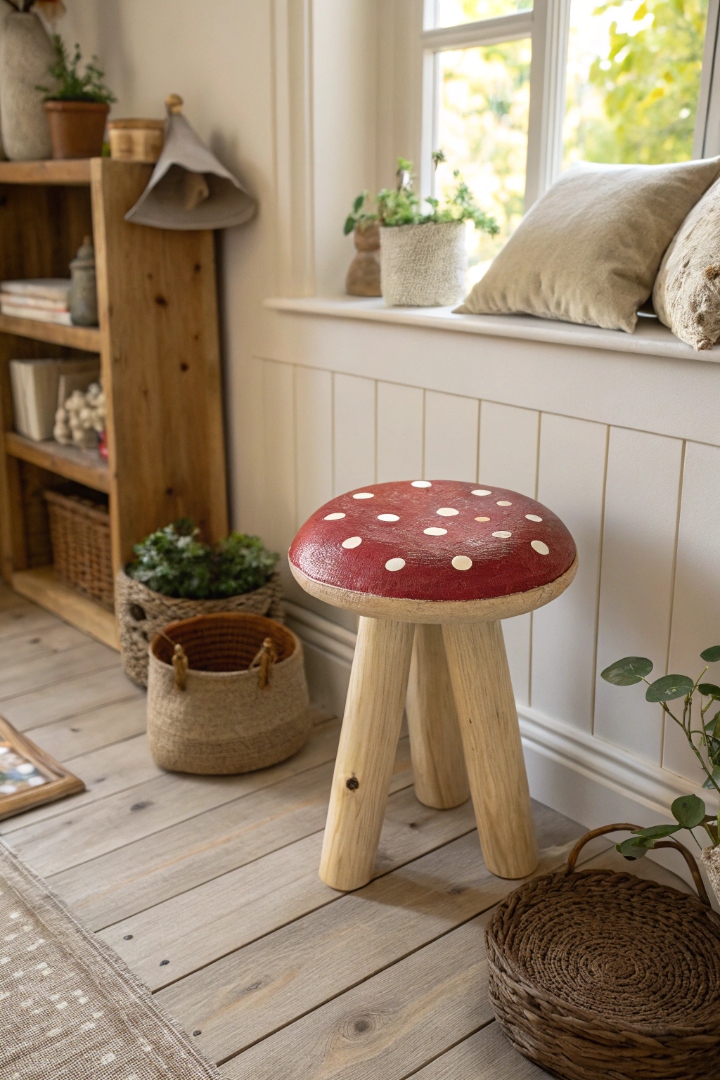
A painted mushroom stool feels whimsical in the best way, especially for a garden room, playroom, reading nook, or cozy cottage corner. Paint the seat red, rust, cream, or soft brown, then add small white spots or subtle shaded details to mimic a woodland mushroom cap. Keep the legs natural or paint them creamy beige so the stool still feels charming rather than costume-like. The trick is balancing whimsy with style, because a restrained palette makes the design feel sweet and intentional instead of overly themed. Isn’t it fun when furniture makes guests smile before they even sit down?
Pro Tip: Seal the painted seat well if children will use it often, because playful designs usually invite extra hands and extra wear.
Minimal Line Art Stool
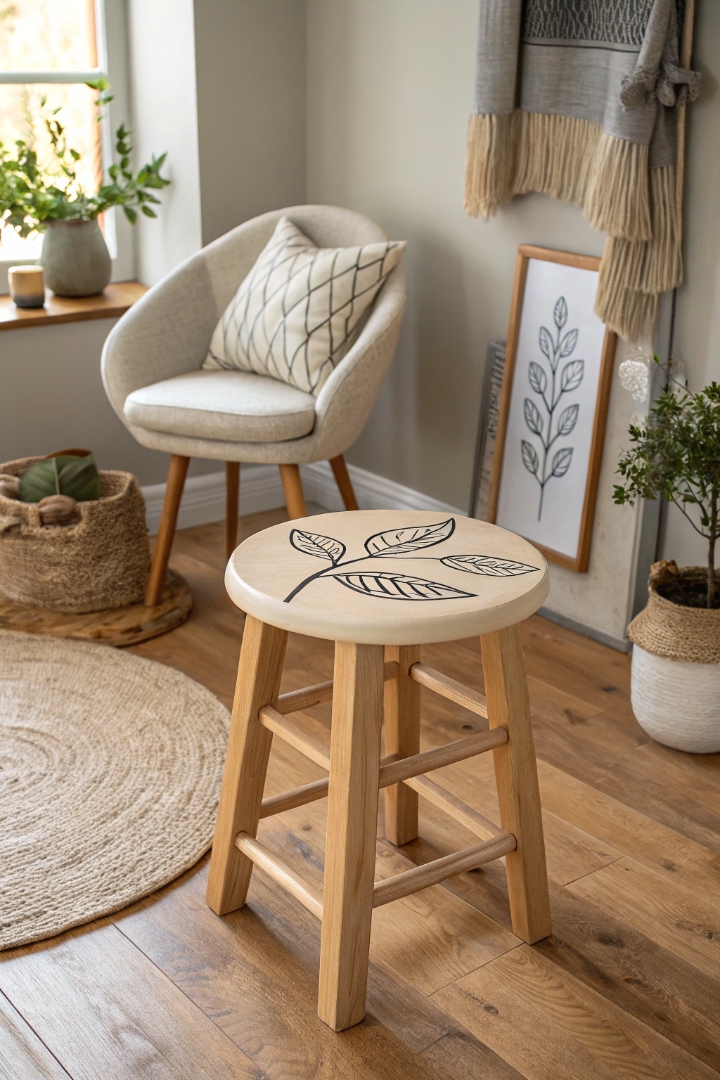
A minimal line art stool feels modern, artsy, and personal without requiring a full painted pattern. I love this idea for a simple round seat, where one continuous black or white line can form a face, leaf, flower, sun, or abstract shape. Use a neutral base like beige, clay, olive, white, or charcoal, then paint the line art with a small detail brush or paint pen. This design works because it leaves breathing room, letting the shape of the stool and the single graphic detail share the spotlight. Wouldn’t a tiny line-drawn leaf on a stool beside your favorite chair feel quietly special?
Pro Tip: Practice the design on paper first, then transfer it lightly with pencil before using paint.
Glossy Red Accent Stool
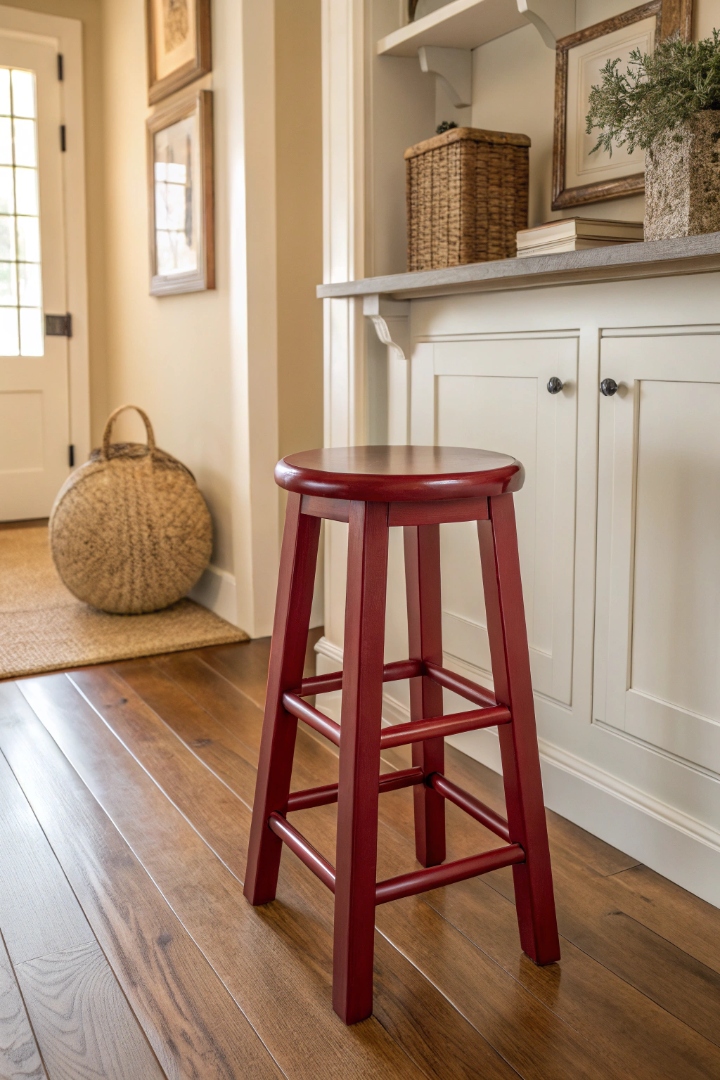
A glossy red accent stool brings confidence, energy, and a little old-school charm to a room that needs a spark. I would use this in a mostly neutral kitchen, a vintage-inspired mudroom, or a cheerful breakfast corner where one bold piece can carry the whole mood. Red can lean cherry, barn, cranberry, tomato, or deep oxblood, so choose the shade that matches your home’s personality. The glossy finish makes the stool feel polished and lively, almost like a tiny exclamation point in the room. Isn’t one brave color choice sometimes better than a dozen safe little accessories?
Pro Tip: Apply several thin coats instead of one thick coat so the glossy red finish looks smooth, rich, and durable.
Natural Wood Seat With Painted Base
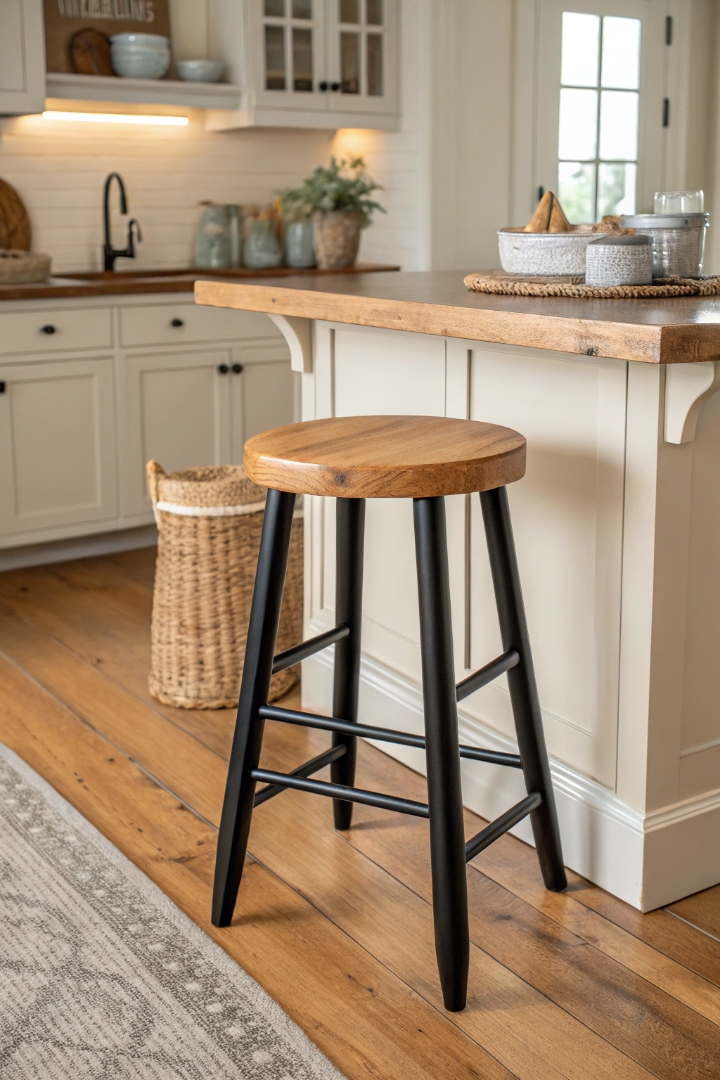
A natural wood seat with a painted base gives you the best of both worlds: warmth on top and color underneath. I love this idea for sturdy kitchen stools because the seat keeps that touchable wood texture while the painted legs add style and coordination. Try black, sage, navy, cream, or charcoal on the base, then stain or oil the seat so the grain looks rich and inviting. This combination feels classic, practical, and easy to live with, especially in homes where fully painted furniture might feel too heavy. Why hide beautiful wood when you can frame it with a color that makes it stand out even more?
Pro Tip: Seal the natural seat with a durable clear coat, especially if people will use the stool daily.
Conclusion
A painted wooden stool may seem like a small project, but small pieces often carry the most personality in a home. They move from room to room, hold plants, catch books, support tired feet, and somehow become part of the everyday rhythm. That is why I love these wooden stool painting ideas so much, because they turn something ordinary into something that feels chosen. You do not need a huge budget, a perfect workshop, or a professional furniture-painting setup to create a piece you feel proud of. You just need a stool with good bones, a color that makes you feel something, and enough patience to let each coat dry before you start poking at it. In the end, that little painted stool can become the detail that makes a corner feel finished, personal, and full of life.
If you feel unsure where to start, choose the idea that matches the mood you already love in your home. Go whitewashed if you crave softness, matte black if you want contrast, sage green if you want calm, or checkerboard if you want a playful wink. Let the stool tell you what it needs too, because rough old wood often looks beautiful distressed, while a clean modern shape can handle bold color like a champ. The best DIY painted stool projects do not look copied from a catalog; they look like someone cared enough to make something useful feel special. And honestly, that is the magic of home decorating, because the most memorable rooms usually hold a few handmade touches with stories behind them. So pull out the sandpaper, open the paint can, and give that humble wooden stool the stylish second life it deserves.