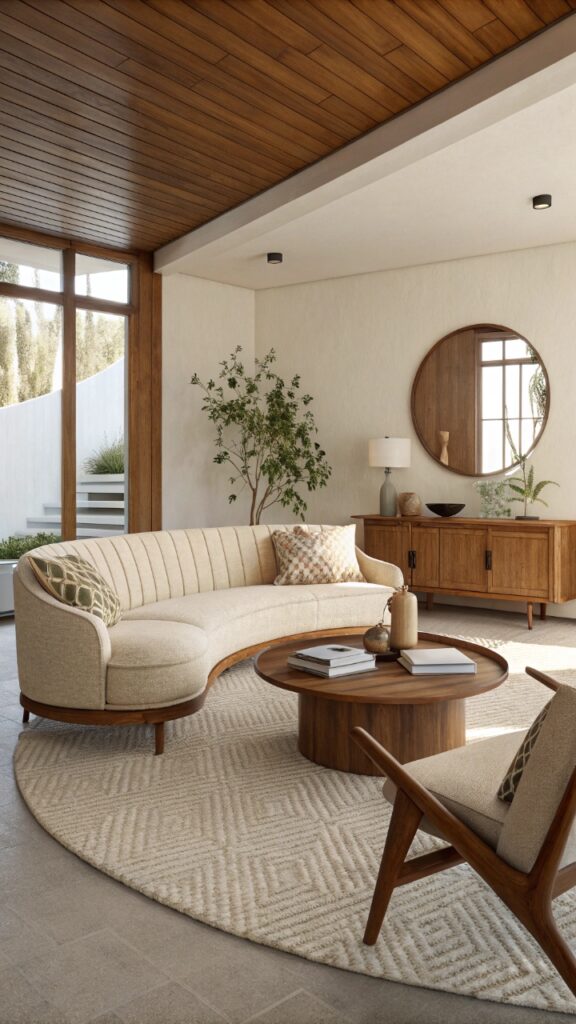

The first time I truly understood the charm of mid century modern design, I was sitting in my aunt’s living room on a slow Sunday afternoon, sunlight spilling across a low teak coffee table that seemed to glow in its own quiet way. Everything felt intentional but never stiff, like the space had been designed to breathe with the people in it rather than around them. I remember thinking, why does this room feel so calm yet so stylish at the same time, almost like it’s whispering instead of shouting? That feeling stuck with me for years, quietly shaping how I look at living spaces even now when trends keep changing every other season.
When I started decorating my own place, I kept coming back to that same balance I felt in her home—warm wood tones, simple silhouettes, and just enough personality to make the space feel lived-in. I made a few mistakes at first, like overfilling corners or chasing too many “statement” pieces that didn’t actually belong together, and honestly, it was a bit of a hot mess at one point. But slowly, I learned that mid century modern design isn’t about perfection; it’s about rhythm, restraint, and letting materials speak for themselves. And once it clicks, oh man, it really clicks.
Now, whenever I walk into a well-designed mid century modern living room, I feel that same quiet excitement again, like I’m stepping into something timeless but still deeply personal. It’s the kind of style that doesn’t scream for attention but somehow always gets it anyway. So if you’re trying to create that same effortlessly elegant vibe at home, I’ve pulled together 15 ideas that feel both practical and deeply inspiring, like little design stories you can actually live inside.
Embrace Warm Wood Tones as Your Foundation
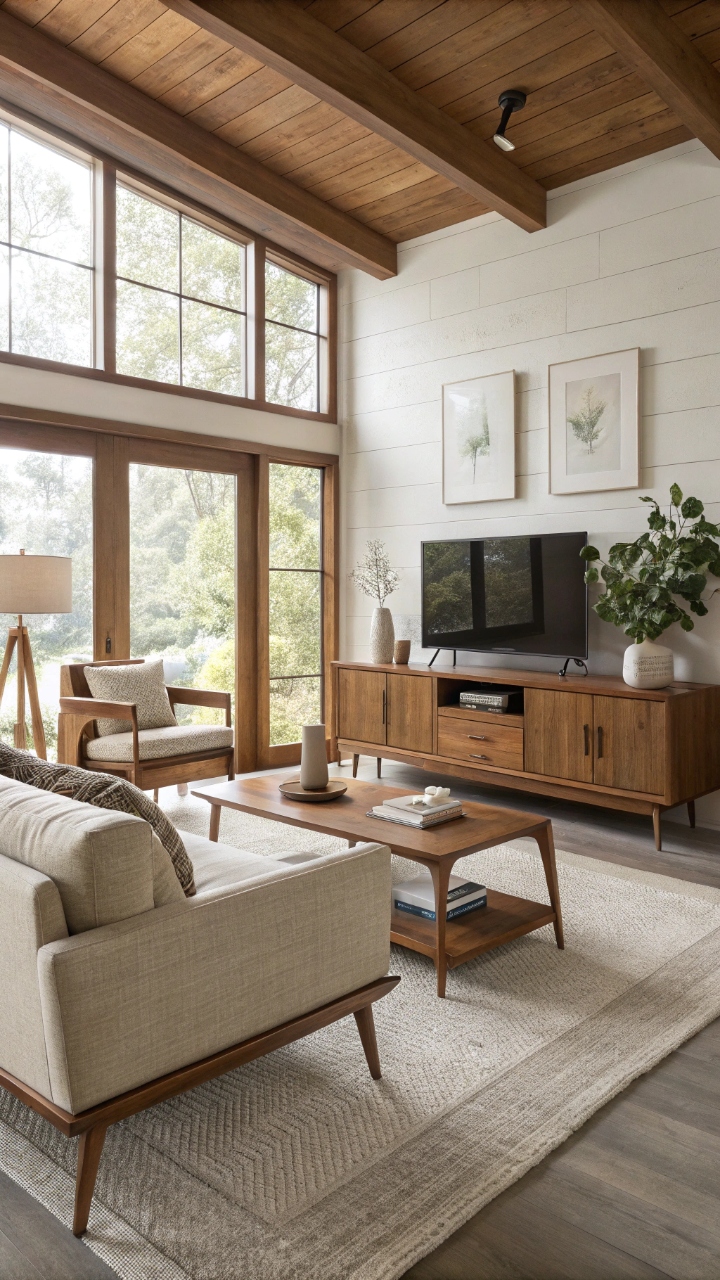
A mid century modern living room almost always begins with wood, and not just any wood but those warm, honeyed tones that feel like they’ve been kissed by time. I once swapped a glossy white coffee table for a walnut one, and the entire room suddenly felt like it had exhaled. The space became softer, calmer, more grounded in a way I didn’t expect. Isn’t it funny how one material can shift the entire mood of a room? Think teak, walnut, or oak in clean, simple shapes that let the grain do the talking. The beauty of wood in this style is that it never tries too hard; it just exists beautifully. You’ll notice how light moves across it differently throughout the day, almost like a living surface. Pair it with neutral upholstery and suddenly everything feels intentional without being overdesigned.
Pro Tip: Stick to one dominant wood tone in your living room to avoid visual clutter and maintain harmony.
Choose Low-Profile Sofas for Effortless Elegance
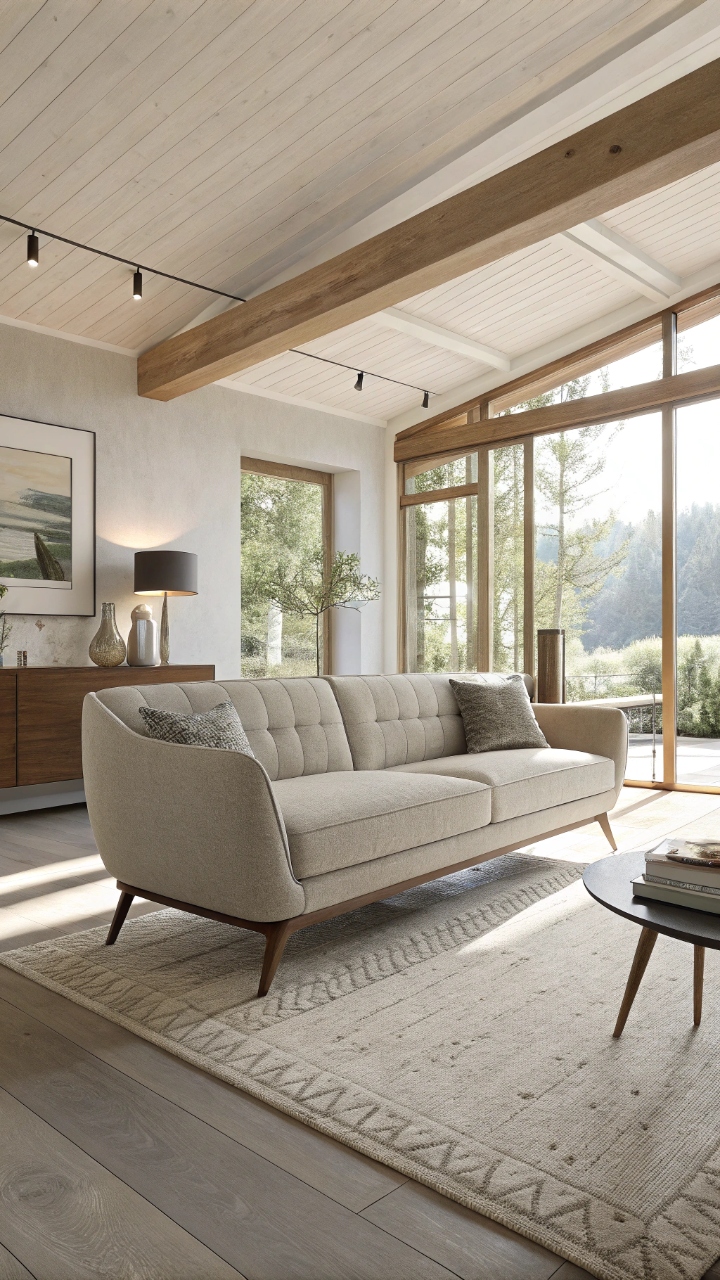
There’s something undeniably cool about a low, streamlined sofa that hugs the floor just enough to feel relaxed but still refined. I remember sinking into one at a friend’s apartment and thinking, “Okay, this is dangerously comfortable in the best way.” Mid century sofas aren’t bulky; they’re sculptural, almost floating in the space. They create breathing room in your living area, making even smaller spaces feel more open and intentional. Pair them with slim legs and structured cushions, and you’ve got that signature clean silhouette. It’s comfort without the visual weight, and honestly, that’s the sweet spot.
Pro Tip: Choose sofas with exposed legs to maintain that airy mid century visual flow.
Add Iconic Accent Chairs That Make a Statement
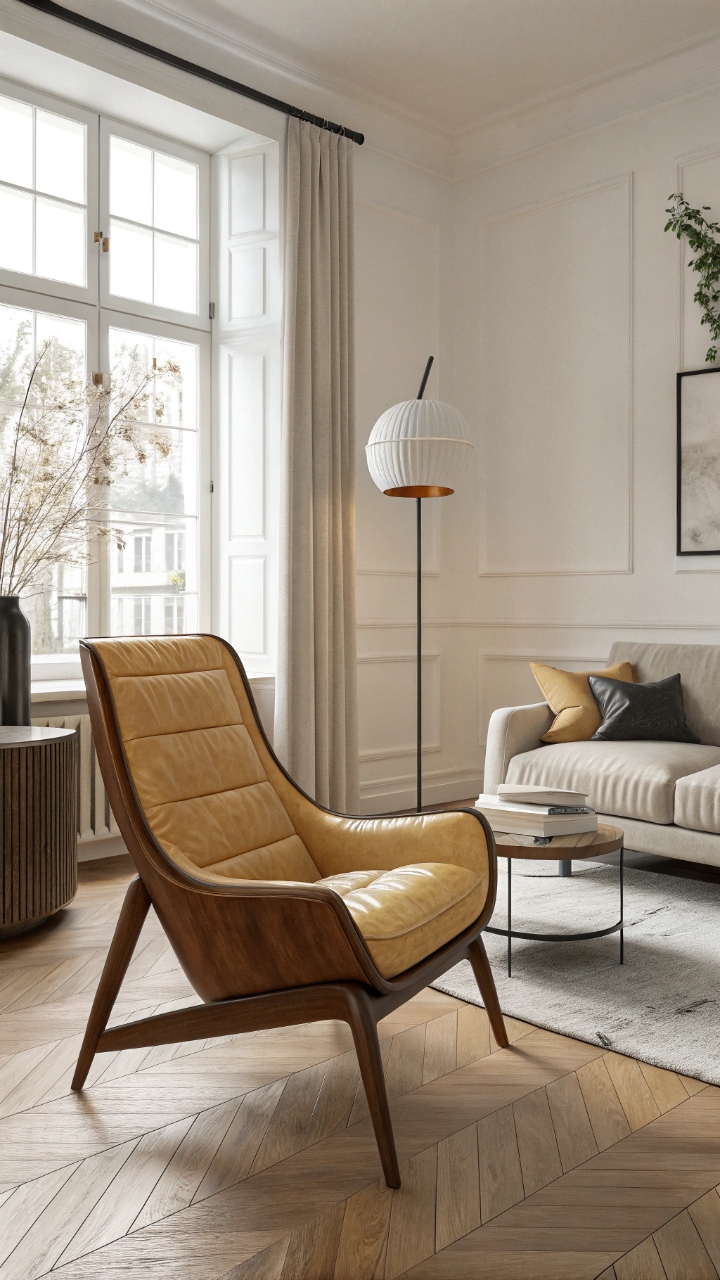
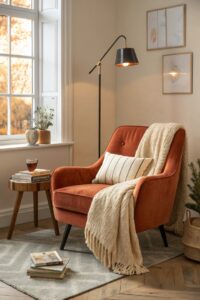
Every mid century modern living room needs at least one chair that makes people pause for a second longer than usual. Think molded wood frames, angular silhouettes, or buttery leather seating that feels like it belongs in a vintage design magazine. I once found a thrifted chair that instantly became the star of my living room, no competition needed. These pieces act like punctuation marks in your design story, giving rhythm and personality without overwhelming the space. Place them near a window or beside a minimalist floor lamp for maximum impact.
Pro Tip: Don’t match accent chairs perfectly—slight variation adds character and authenticity.
Layer Earthy Color Palettes for Depth
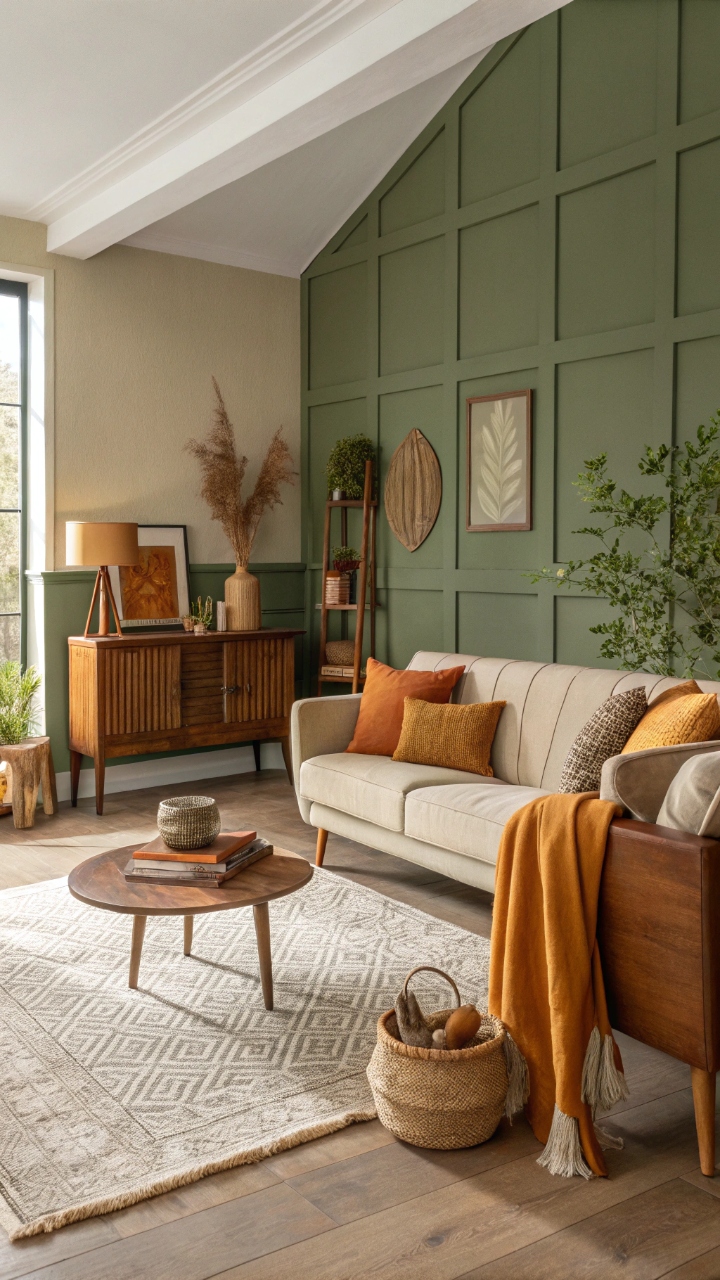
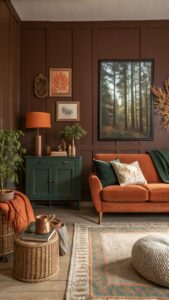
Mid century modern design thrives on earthy, grounded tones that feel natural rather than overly polished. Think olive greens, burnt oranges, muted mustard, and soft browns blended with creamy neutrals. I once painted a feature wall a dusty sage green and, no joke, the whole room felt instantly calmer. These colors don’t fight for attention; they sit together like old friends at a dinner table. The trick is layering them gently through textiles, art, and decor rather than overwhelming the space with one loud tone.
Pro Tip: Balance bold earthy hues with warm neutrals to keep the room visually breathable.
Use Geometric Patterns with Subtle Confidence
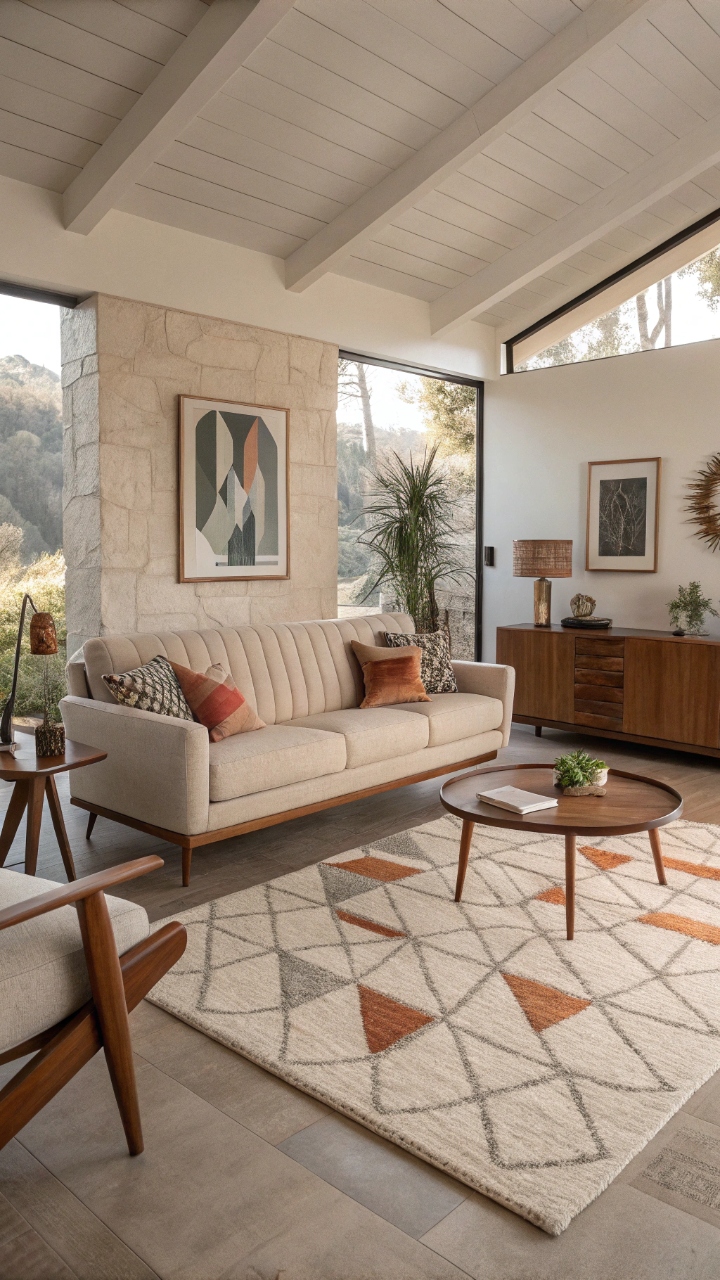
Geometric patterns are a mid century staple, but the key is restraint, not chaos. I learned this the hard way after overloading a room with too many bold prints and thinking it would look “designer”—spoiler: it didn’t. Now I treat patterns like seasoning, not the main dish. Think rugs with soft angular shapes or cushions with minimal retro-inspired prints. They add movement without stealing focus from the rest of the room. It’s all about rhythm, not repetition overload.
Pro Tip: Stick to one dominant geometric pattern per room to maintain visual balance.
Incorporate Statement Lighting Fixtures
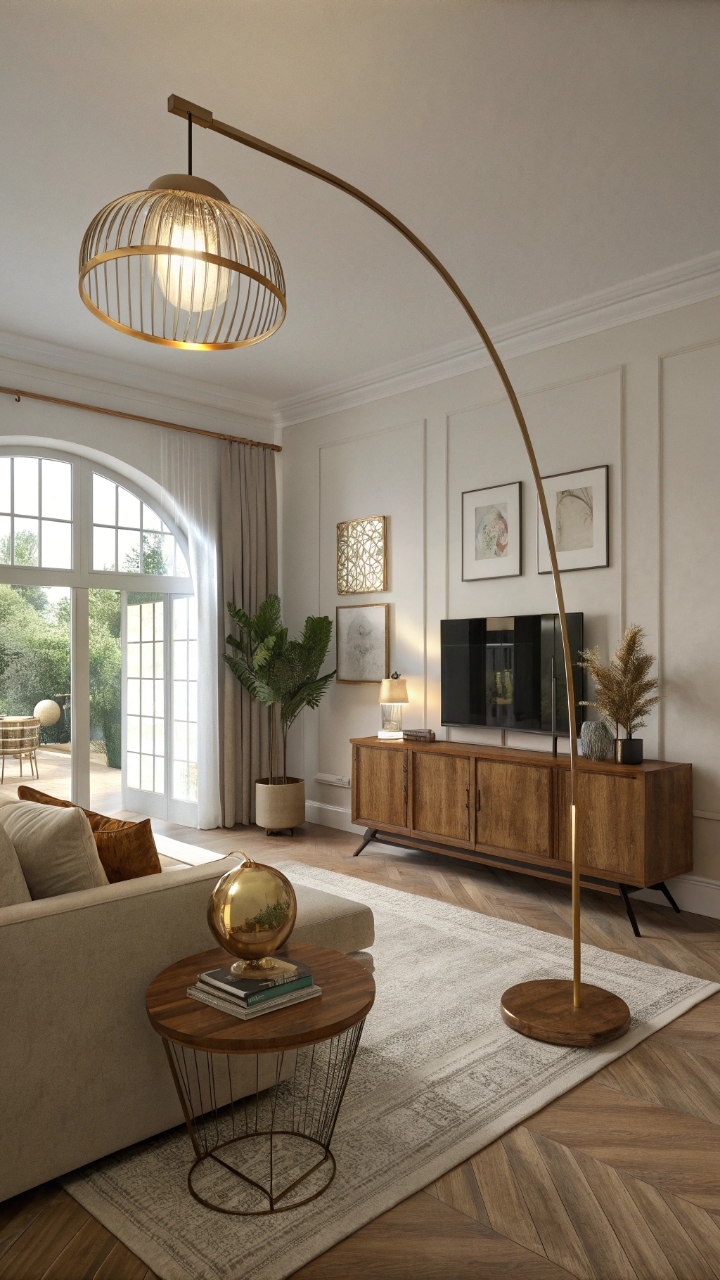
Lighting in mid century design is never an afterthought—it’s part of the personality. I still remember walking into a room with a sculptural arc floor lamp and thinking, “Okay, that’s art.” These fixtures often feel like floating sculptures rather than functional objects. Brass finishes, globe bulbs, and asymmetrical designs all help create that iconic retro-modern vibe. The right lighting can completely shift the emotional tone of your living room from flat to cinematic.
Pro Tip: Layer overhead lighting with floor and table lamps for a warm, dimensional glow.
Keep Decor Minimal but Meaningful
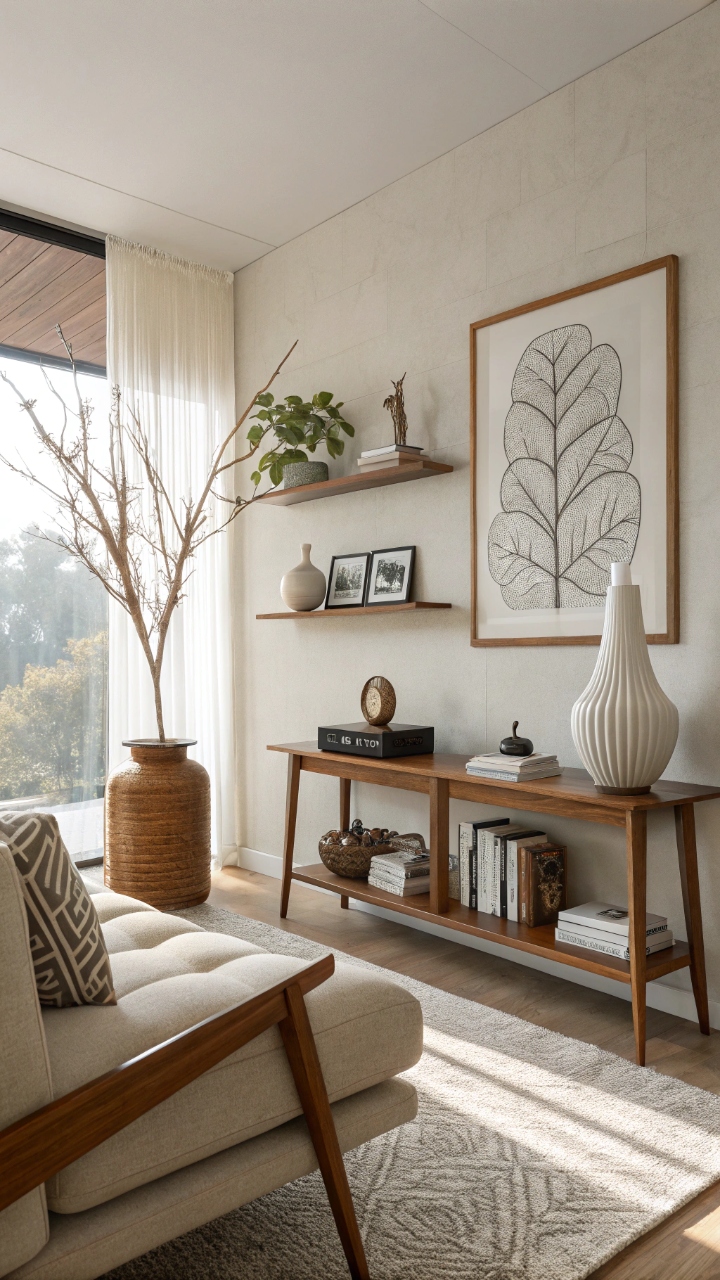
Mid century modern doesn’t mean empty; it means intentional. I used to over-decorate shelves until they looked like a lifestyle store exploded in my living room. Now I focus on fewer, more meaningful pieces that actually tell a story. A single ceramic vase, a framed abstract print, or a vintage object can carry more weight than ten random accessories. It’s about editing, not accumulating. And honestly, it feels way more peaceful that way.
Pro Tip: Step back after decorating and remove one item—your space will usually feel better instantly.
Mix Natural Textures for a Cozy Balance
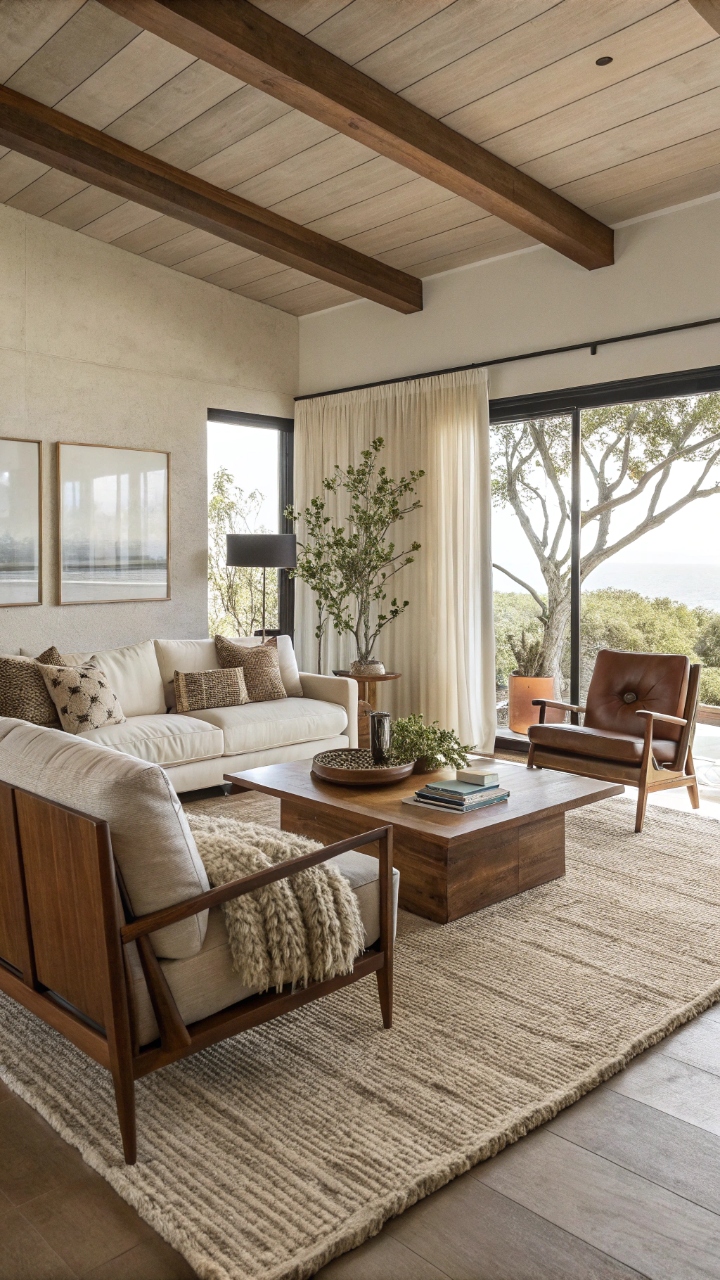
Wood alone isn’t enough—you need contrast to bring warmth alive. I love combining linen, leather, wool, and woven textures in subtle layers. It keeps the room from feeling too “perfect” or showroom-like. A chunky knit throw on a sleek sofa or a jute rug under a modern coffee table creates that lived-in harmony mid century spaces are known for. It’s cozy without being cluttered.
Pro Tip: Aim for at least three different textures in your living room for balanced depth.
Highlight Open Space and Flow
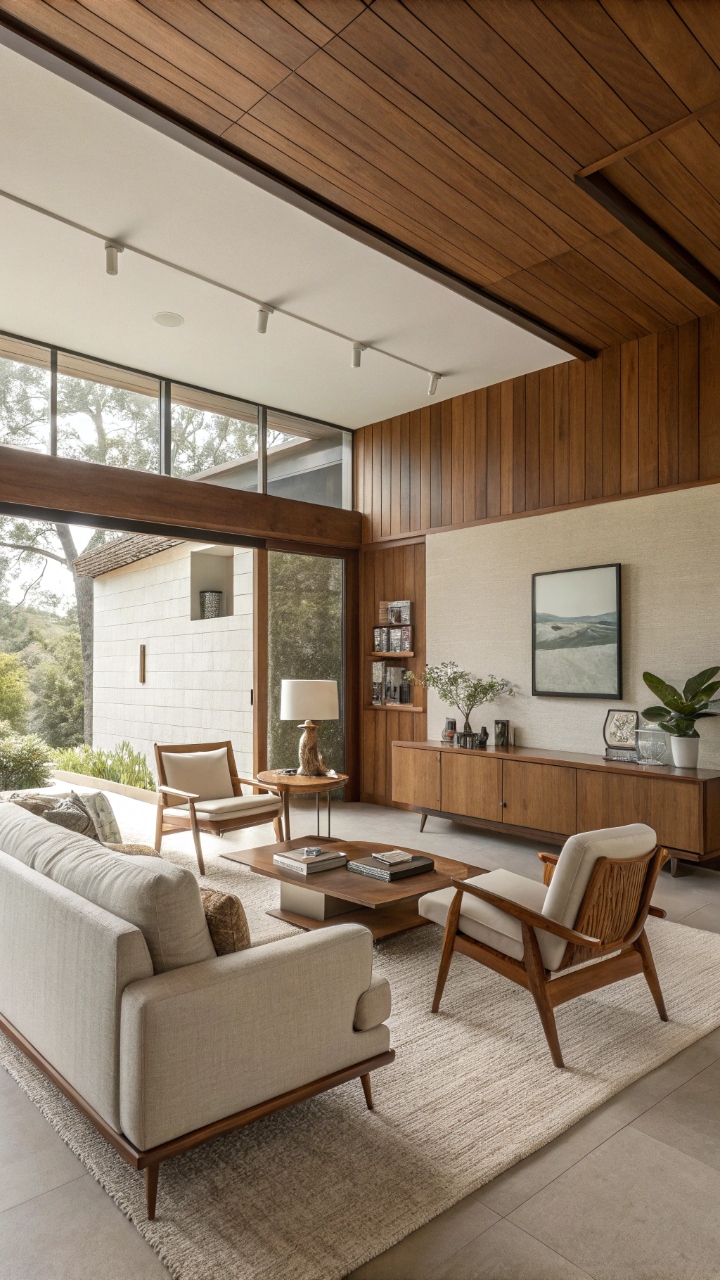
One thing I learned over time is that negative space is just as important as furniture. I used to fill every corner until the room felt tight and restless. Now I let areas breathe, and it makes everything feel more intentional. Mid century design values openness, so don’t be afraid of empty space—it actually enhances the furniture you do have. Think of it like silence in music; it makes the notes matter more.
Pro Tip: Avoid pushing all furniture against walls—float key pieces for better flow.
Bring in Organic Shapes for Softness
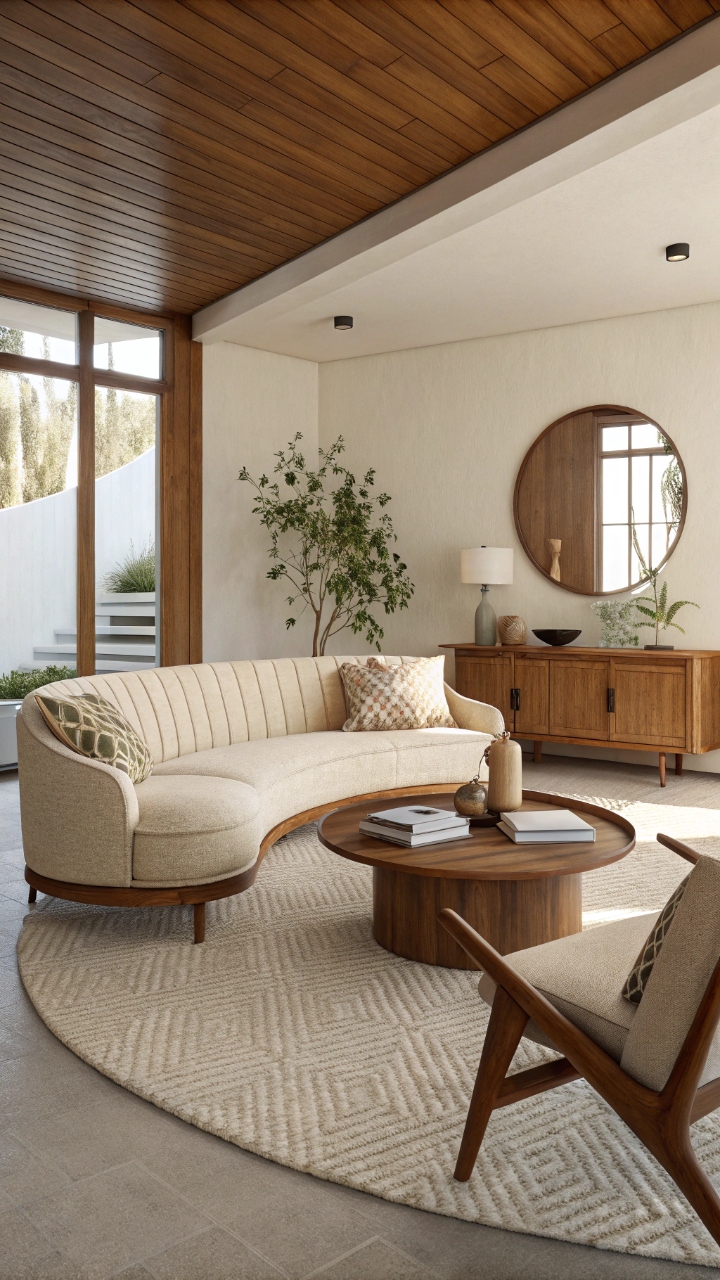
While mid century modern often leans structured, organic curves balance everything beautifully. I once added a round coffee table to a very angular room, and it instantly softened the entire vibe. Curved sofas, oval mirrors, and rounded decor elements break visual rigidity and make the space feel more human. It’s that subtle contrast that keeps things interesting.
Pro Tip: Pair at least one curved piece with every angular furniture set.
Use Abstract Art as a Focal Point
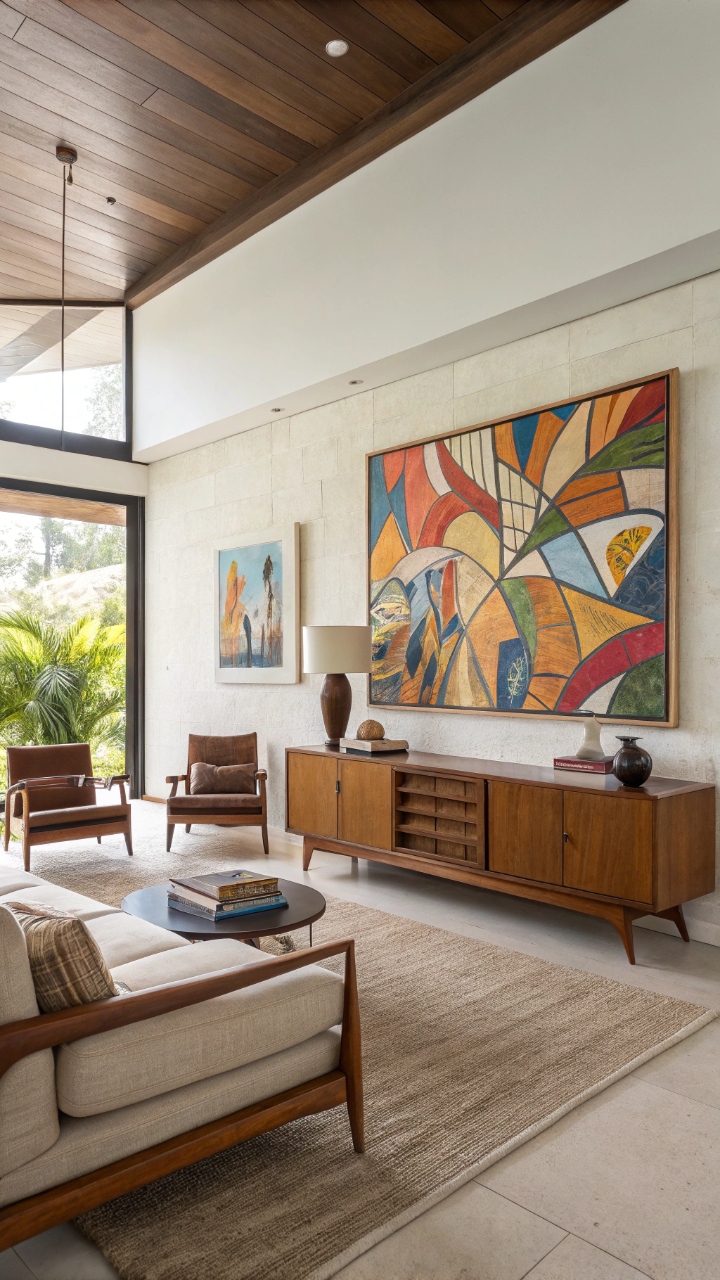
Abstract art fits mid century spaces like it was made for them. I still remember hanging a bold, colorful canvas in my living room and suddenly feeling like the whole space had a personality shift. These pieces don’t need to be literal—they just need emotion, movement, and balance. Keep frames simple so the artwork remains the star.
Pro Tip: Choose art that complements your color palette rather than matching it exactly.
Add Indoor Plants for Natural Energy
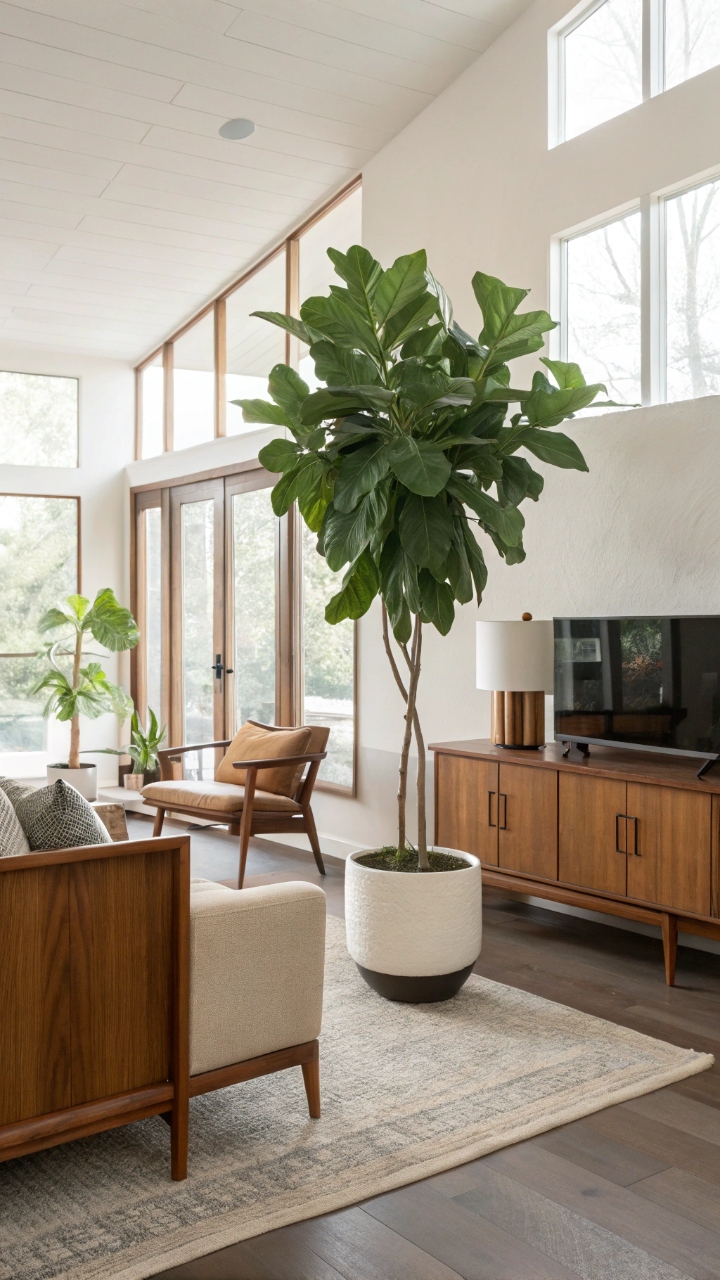
Plants bring life into mid century modern interiors in the most effortless way. I swear, the moment I added a tall fiddle leaf fig to my living room, everything felt fresher. Their sculptural shapes naturally complement the clean lines of mid century furniture. Plus, they soften edges and add that organic touch the style thrives on.
Pro Tip: Choose one large plant instead of multiple small ones for stronger visual impact.
Focus on Functional Furniture Design
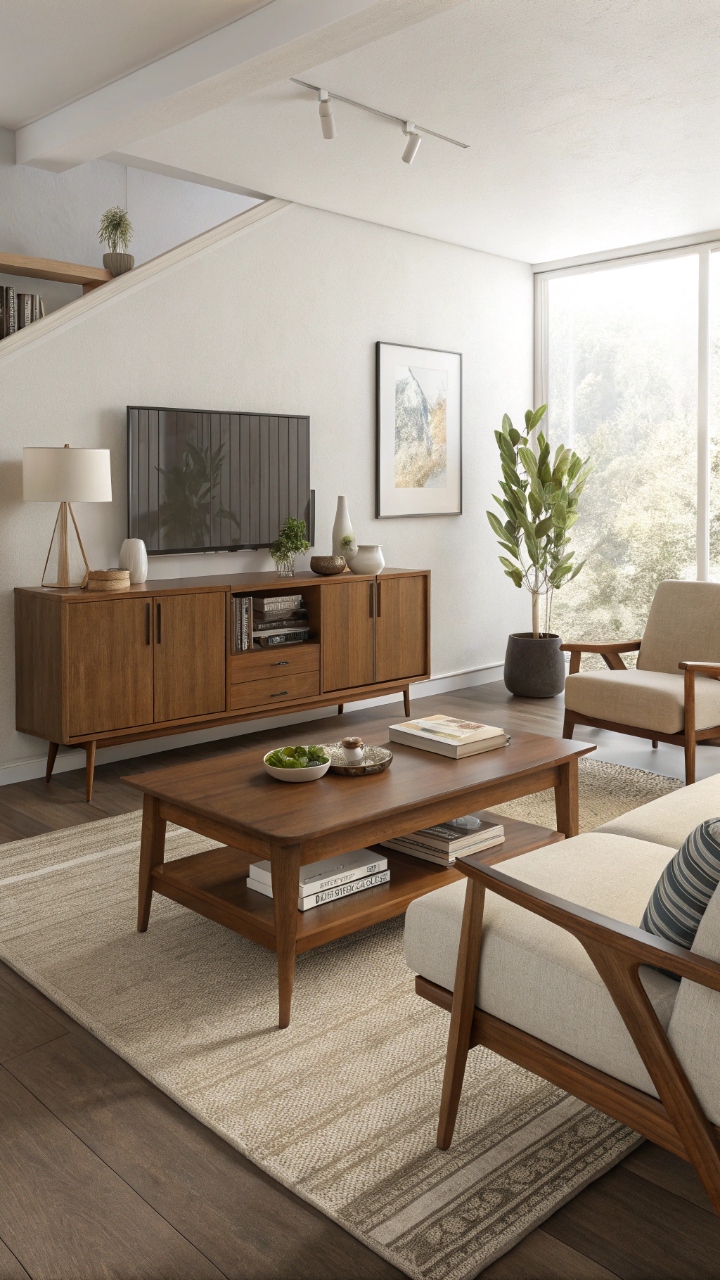
Mid century modern design is rooted in practicality, not excess. Every piece should serve a purpose while still looking beautiful. I learned to appreciate this after realizing how much easier it is to live in a well-edited space. Storage-friendly coffee tables, sleek sideboards, and modular seating all contribute to a functional yet stylish environment. No fluff, just smart design.
Pro Tip: Prioritize multi-functional furniture to keep your space clean and efficient.
Blend Vintage and Modern Pieces Seamlessly
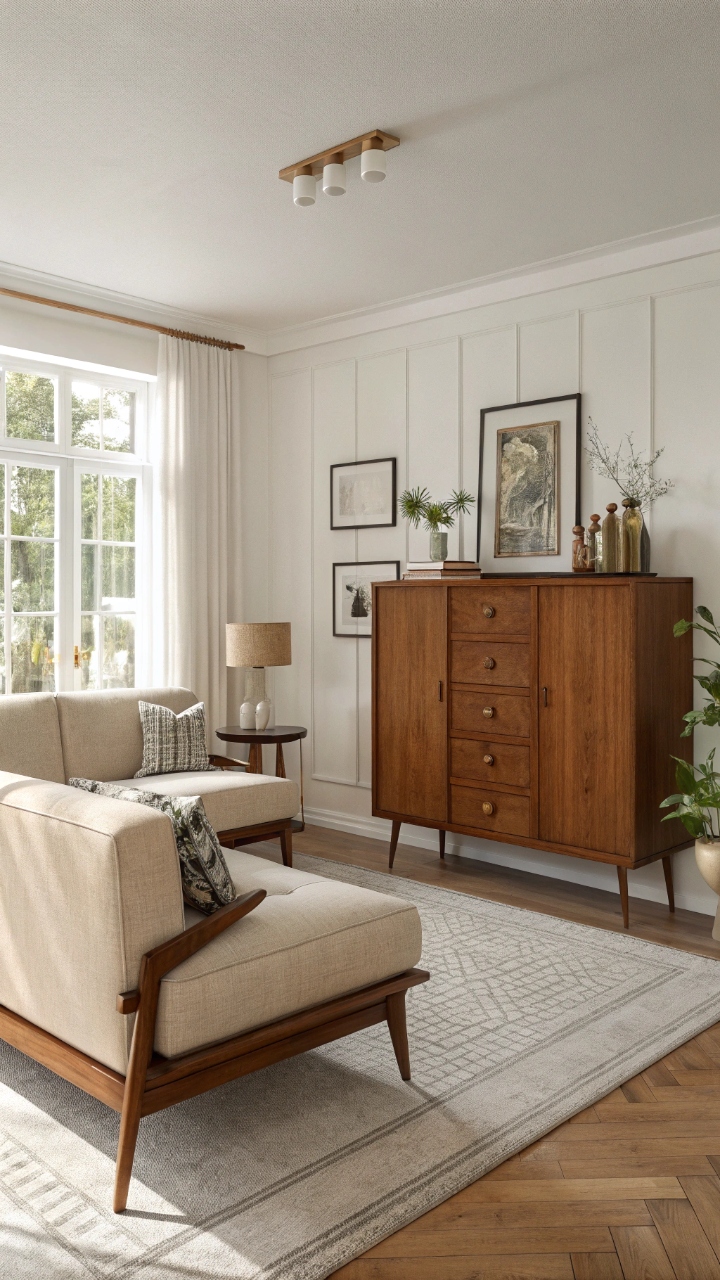
One of my favorite parts of this style is how effortlessly old and new coexist. I once paired a vintage wooden cabinet with a modern sofa, and it felt surprisingly natural, like they were always meant to be together. This contrast creates depth and personality in your living room. It keeps the space from feeling like a showroom and instead makes it feel collected over time.
Pro Tip: Limit vintage pieces to one or two statement items to avoid visual clutter.
Keep the Atmosphere Light, Airy, and Timeless
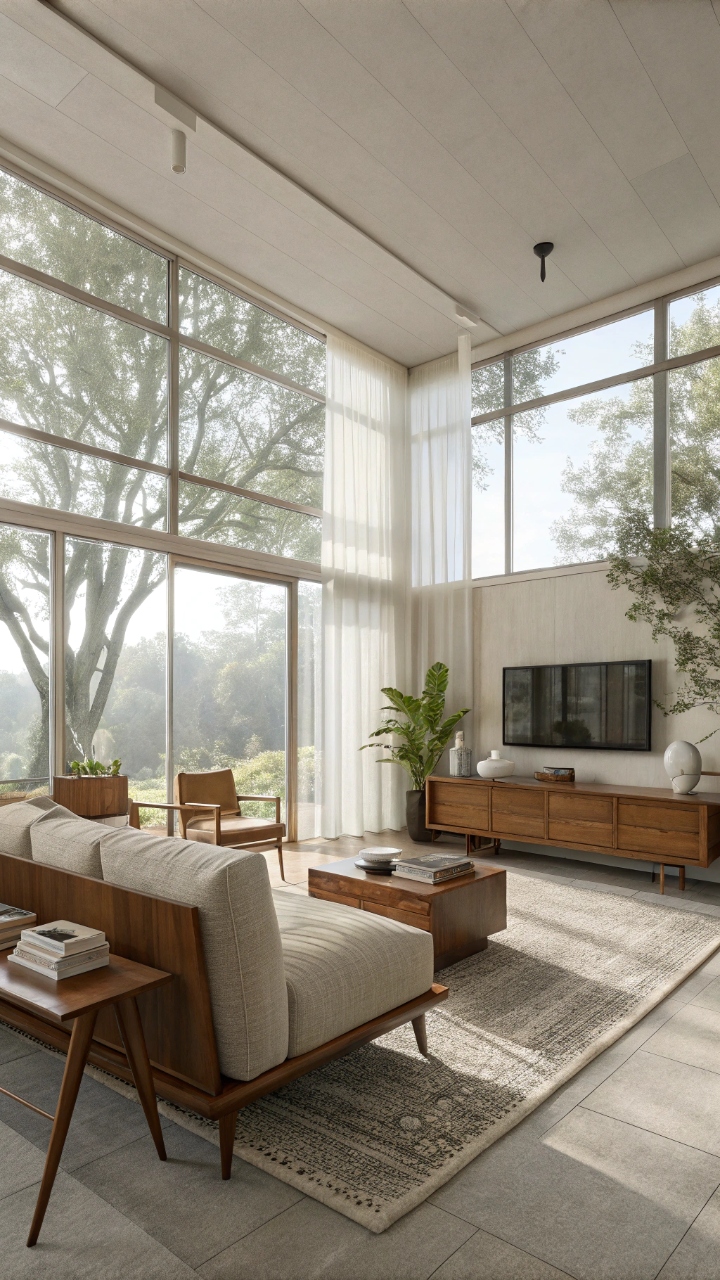
At its core, mid century modern design is about feeling light—visually, emotionally, and physically. I always aim for spaces that feel easy to walk into and even easier to stay in. Natural light, open layouts, and uncluttered surfaces all contribute to that timeless atmosphere. It’s not about chasing trends; it’s about creating a space that simply feels right year after year.
Pro Tip: Maximize natural light by using sheer curtains or leaving windows minimally covered.
Conclusion
Designing a mid century modern living room has always felt like a slow, thoughtful conversation between form and feeling. I’ve learned that it’s less about copying a style and more about understanding how space affects your mood every single day. When I walk into a room that feels balanced, warm, and intentional, I notice how my shoulders relax without even thinking about it. That’s the real magic of this design approach—it quietly improves how you live without demanding attention.
Every idea in this list comes back to one simple truth: good design should feel effortless, even if it’s carefully planned behind the scenes. I’ve had my fair share of trial-and-error moments, but each one taught me to trust simplicity a little more. And honestly, once you find that balance, it’s hard to go back to anything overly complicated.
So whether you’re starting from scratch or just refreshing your space, take your time and let your living room evolve naturally. Don’t rush the process or chase perfection too hard, because the best rooms always feel lived-in, not staged. And when it all comes together, you’ll know—you’ll walk in, take a breath, and think, yeah… this feels like home.